Chinese Afternoon Tea on The Lake: Amanyangyun's Best Hour, an Hour From Central Shanghai
Amanyangyun serves an afternoon tea beside the lake at the center of its camphor forest, and it is the quietest hour the property sells. The service is called Chinese Afternoon Tea on The Lake, it runs year-round, and the setting does most of the work. Aman opens its restaurants to non-residents, and its own experience guide marks almost every other activity here as in-house guests only while leaving this one unmarked, so it is worth asking. The water sits in Minhang district, roughly 27 kilometers southwest of central Shanghai, ringed by ten thousand trees that were not standing here twenty years ago.
What the tea actually is
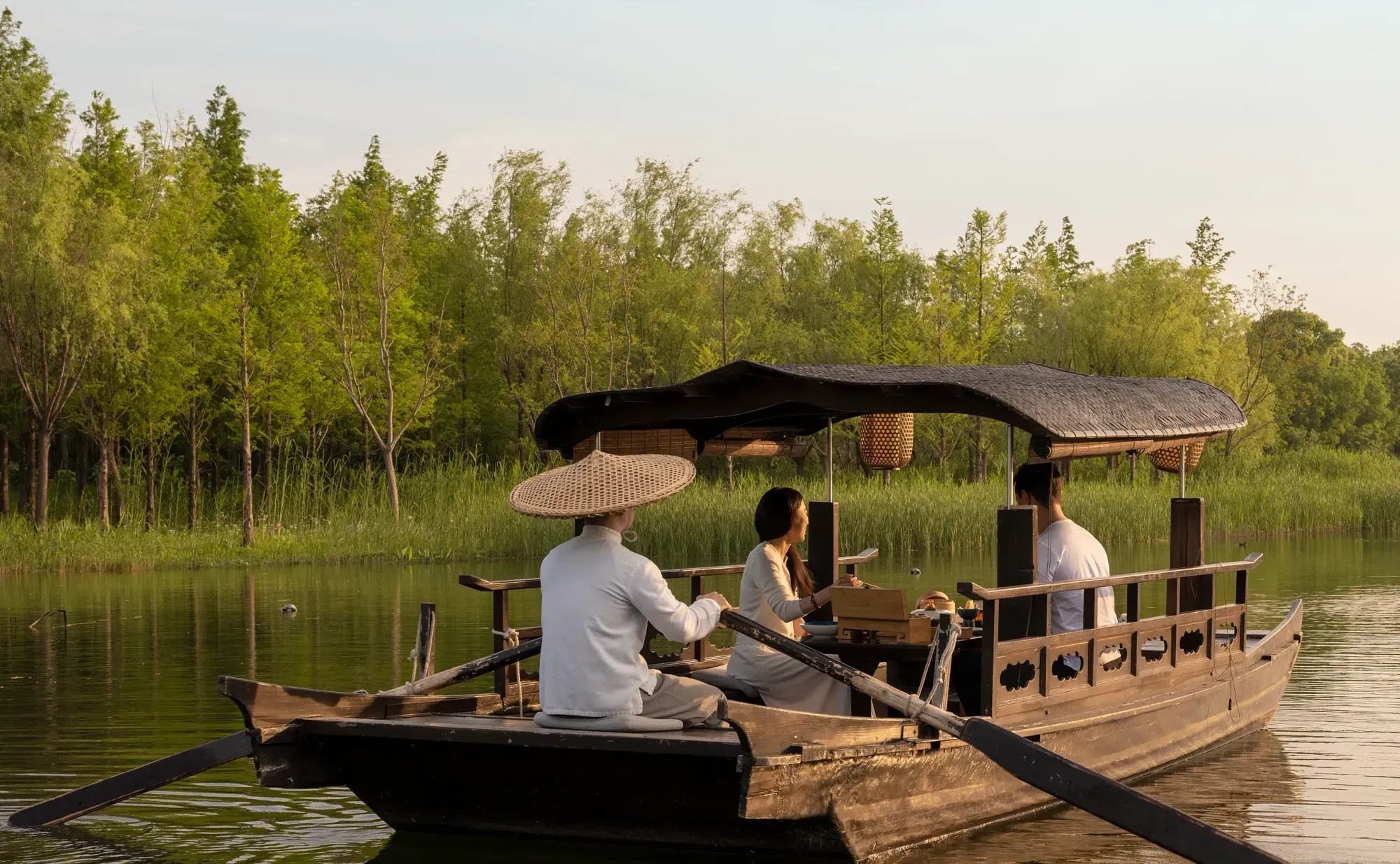
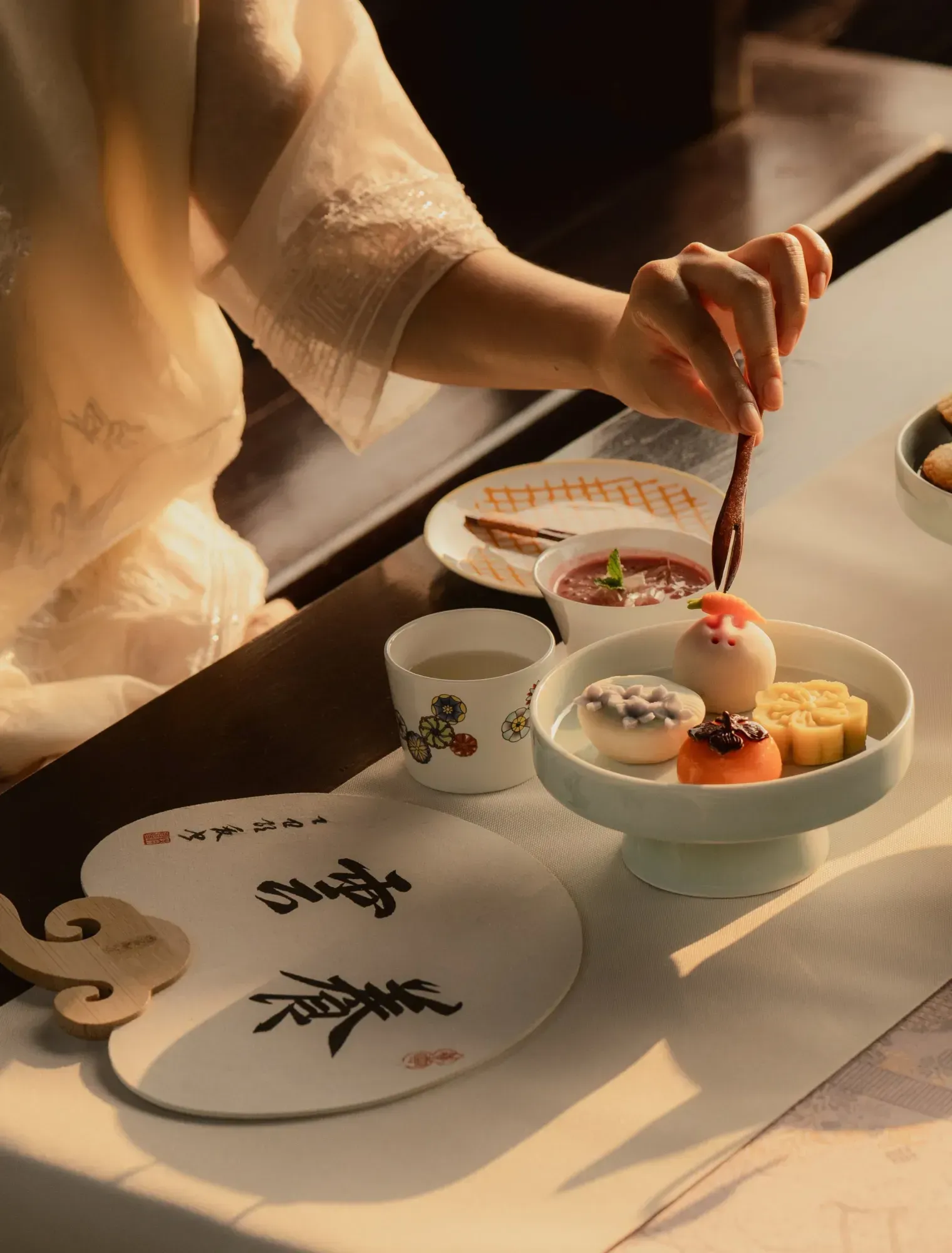
The format is a freshly brewed cup of tea and a spread of sweet and savoury treats prepared by the resort's head chef, taken aboard a roofed wooden boat that is rowed out onto the lake rather than in a dining room. Neither the tea nor the tray is long, and neither is meant to be. This is an hour of sitting still, not a tasting menu.
The thing to know before you write in is that the boat is the lake service, not a separate booking from it. Aman runs it daily in fixed slots: 2:30pm to 3:30pm and 4pm to 5pm from November to March, and 2pm to 3pm, 3:30pm to 4:30pm and 5pm to 6pm from April to October. The seasonal Floral Boat, the lakeside tent and the indoor tea ritual are the separate bookings, each on its own schedule, so name the one you want.
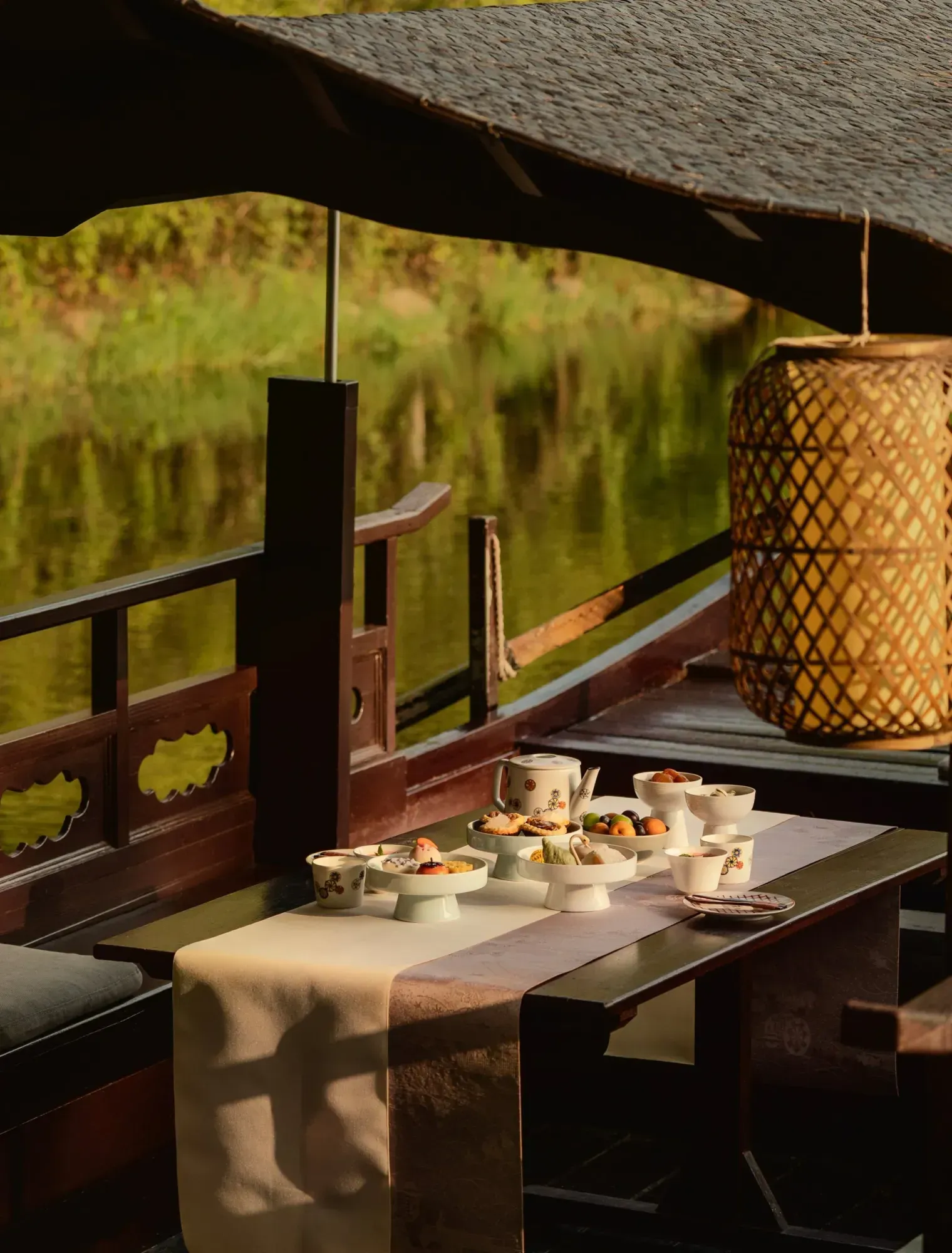
The lake and what lives on it
A 1,000-acre forest park borders the water, and the wildlife is the reason to look up between bites. Black swans work the surface, close enough to watch from the boat and far enough that none of it is tame.
Why there is a forest here at all
The trees are the point, and they are imported. In 2002 a reservoir project in Fuzhou, in Jiangxi province, put a valley of ancient camphors and a cluster of Ming and Qing dynasty houses in the path of rising water. Fuzhou-born entrepreneur Ma Dadong bought the problem and moved it. Over the following sixteen years, a team of botanists, engineers, architectural historians and craftsmen dismantled fifty historic villas stone by stone and lifted ten thousand trees, then carried all of it more than 700 kilometers northeast to the outskirts of Shanghai.
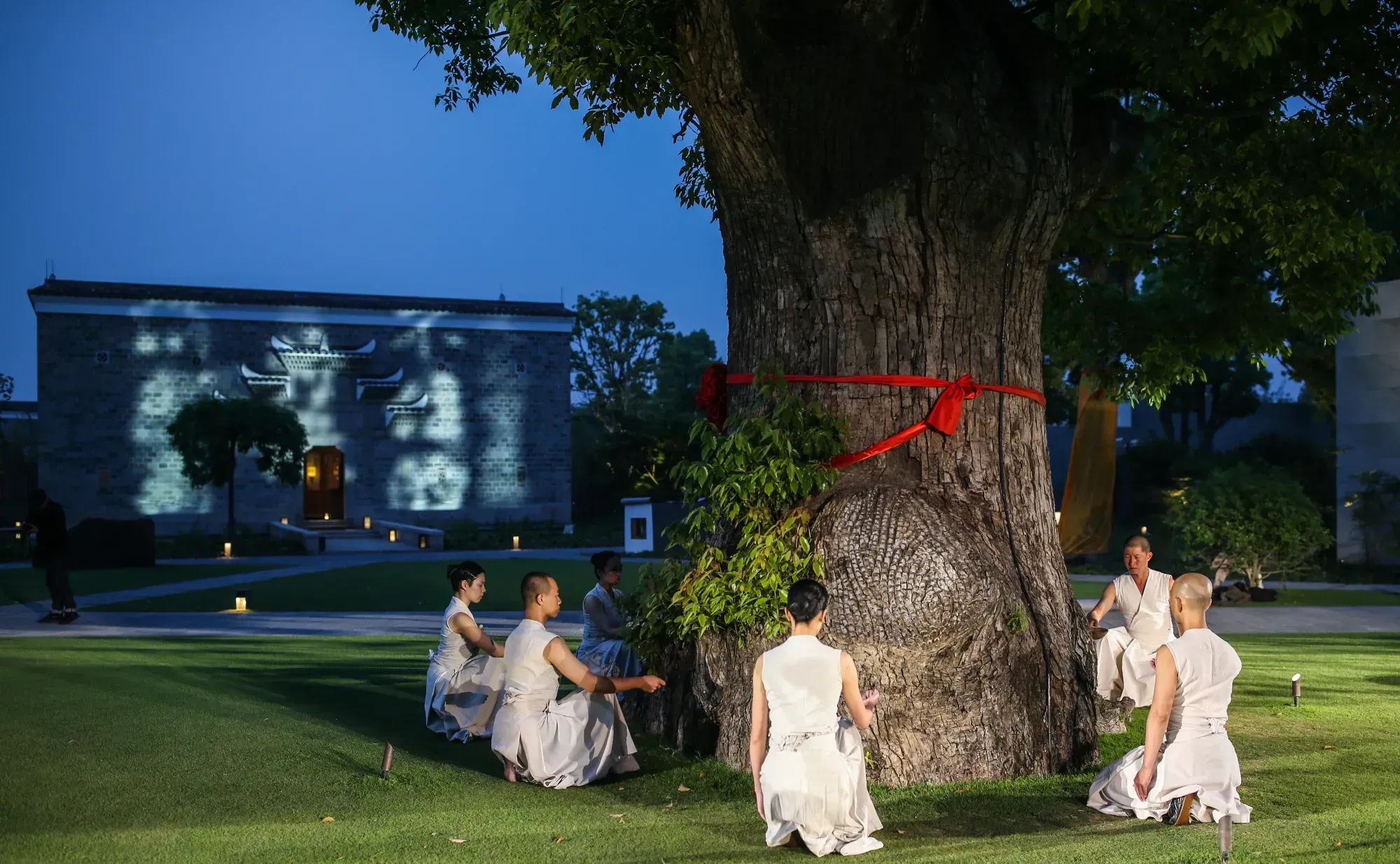
The largest camphor at the heart of the property weighs eighty tonnes. The trees went north by flat-bed truck, with new roads and bridges built along the route to get the cargo through. Roughly eighty percent of the ten thousand survived the move.
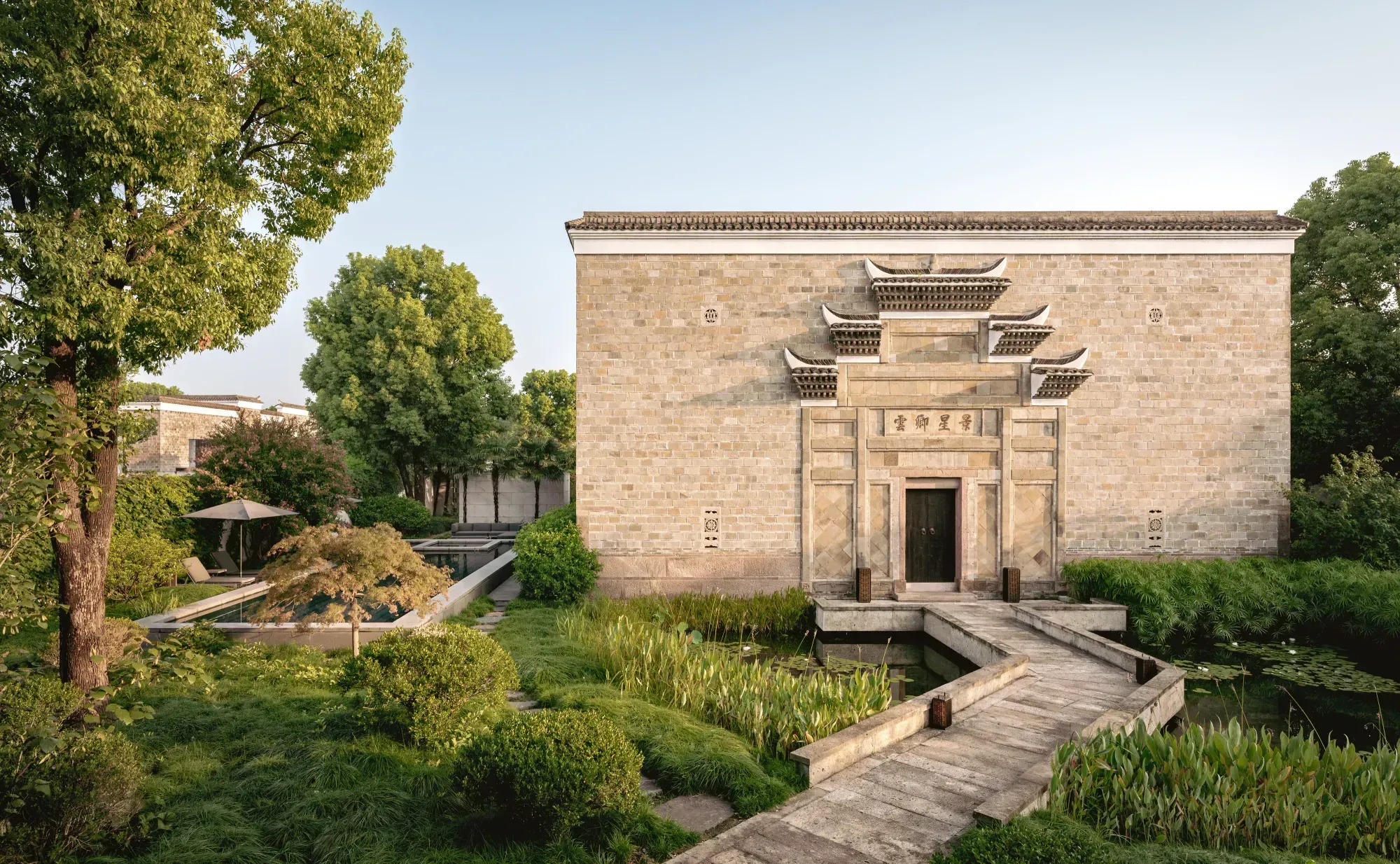
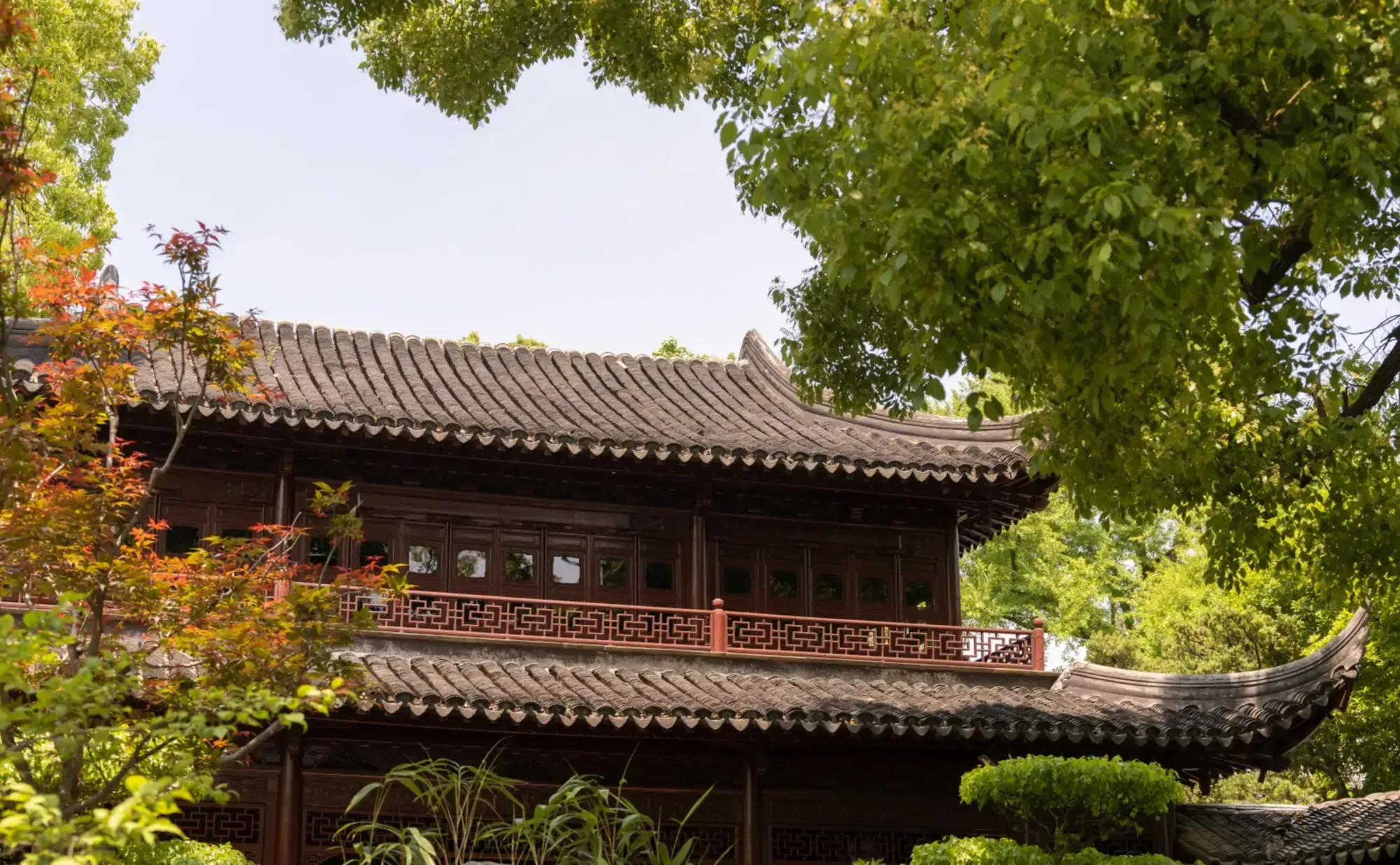
Kerry Hill Architects designed the resort around what arrived. Dan Pearson Studio handled the landscape. The old houses were rebuilt as eleven antique villas, and twenty-four contemporary suites were slotted into the grove between them. Amanyangyun opened on 8 January 2018 as the fourth Aman in China. Seeds still drop from the largest tree, and the resort runs a seedling program that puts them in the hands of guests to grow on.
That history is what separates this from a hotel garden. The lake was engineered, but the canopy over it was not manufactured. It was carried here.
The rest of the tea programme
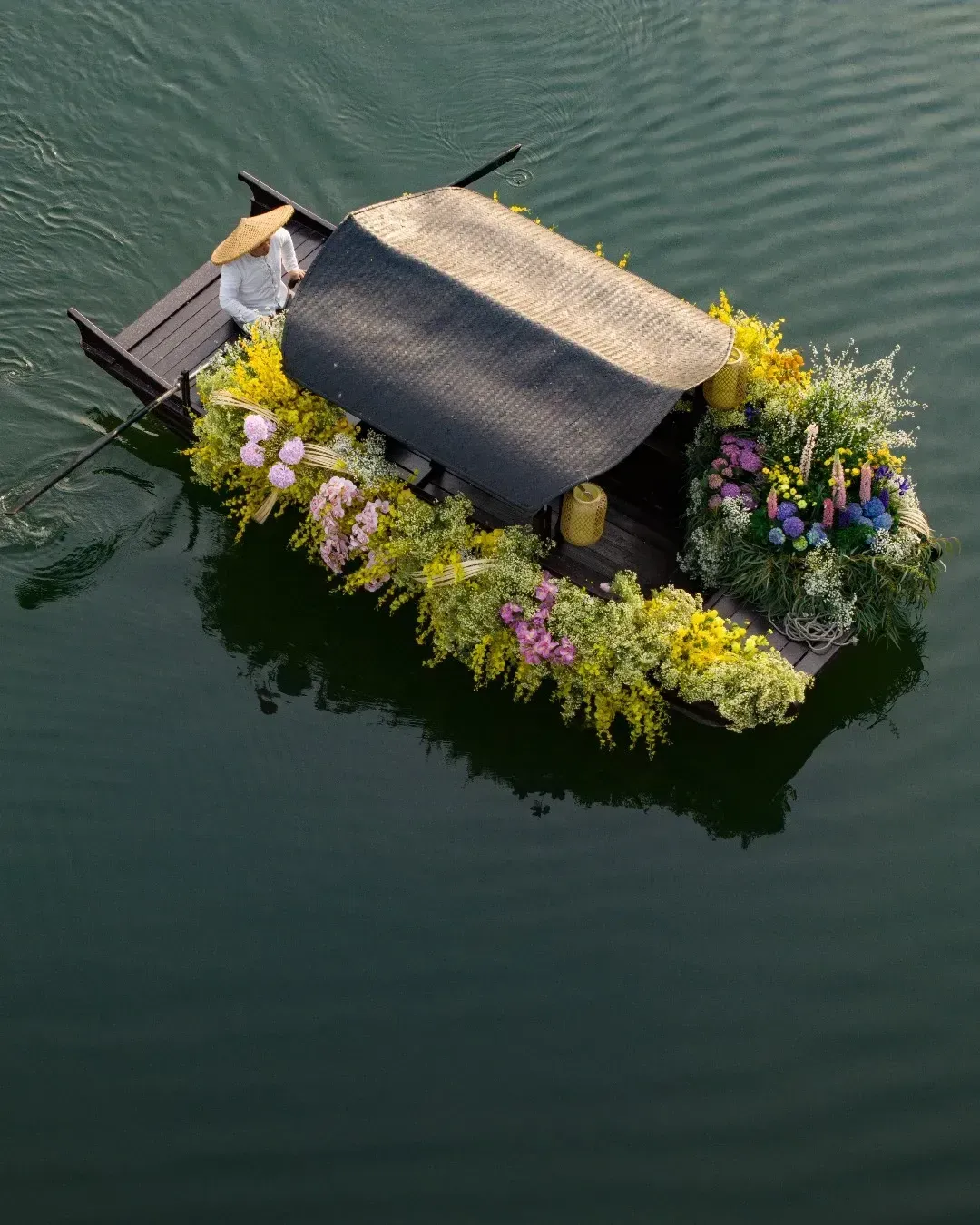
Floral Boat Afternoon Tea. A wooden boat dressed with seasonal blooms is rowed down the lake with pastries and tea aboard, the seasonal counterpart to the year-round service. It is not on Aman's current listings, so check whether it is running before you plan around it.
Lakeside Tent Afternoon Tea. Listed by Aman as An Afternoon Tea Among Nature, which undersells where it actually is: a tent pitched on the lawn beside the water, not out among the trees. The menu is Arva's Italian rather than the Chinese spread from the boat. Daily 3pm to 5pm, running through 31 October 2026.
Sunset Tea Ritual. Every evening at 6pm the Lounge shifts for a signature tea served as the light goes. It is the closest thing the resort has to a nightly ceremony that requires nothing of you. Running through 30 November 2026.
Bei TeaHouse and Nan Shufang. Bei TeaHouse is the dedicated tea room, built around brewing ritual rather than a pastry tray. Nan Shufang, named after the royal reading pavilion in the Forbidden City, is the cultural building at the center of the property, where guests sit for tea ceremony alongside guqin, calligraphy and incense. Aman lists both as in-house guests only, so neither is a day-trip option.
Getting there and booking
Amanyangyun is at 6161 Yuanjiang Road in Minhang district, about 27 kilometers southwest of central Shanghai. Reservations go through the resort on +86 21 8011 9999. The restaurants are open to non-residents, which makes a half-day trip out of the city viable rather than a reason to book a room. Most of the cultural programme is not, so a day visit is dining and tea rather than the run of the property.
The rest of the dining is worth knowing about if you are already making the drive. Lazhu cooks Jiangxi food in tribute to the province the trees came from, alongside Shanghainese and Cantonese. Arva is the lakeside Italian. Yinlu is a small hot pot room on the water built around high-grade seafood. The Lounge pours rare spirits and cocktails alongside the tea from 10am to 8pm.
The honest caveat
The lake is a constructed waterway on flat ground, and the grounds read as designed rather than found, which is exactly what they are. If you want wilderness, this is not it. If you want an hour of quiet with black swans on a lake an hour from one of the loudest cities on earth, served properly, it holds up.