Six Balloons That Never Leave the Ground: Beaverbrook Puts a Yakiniku Grill in the Italian Garden
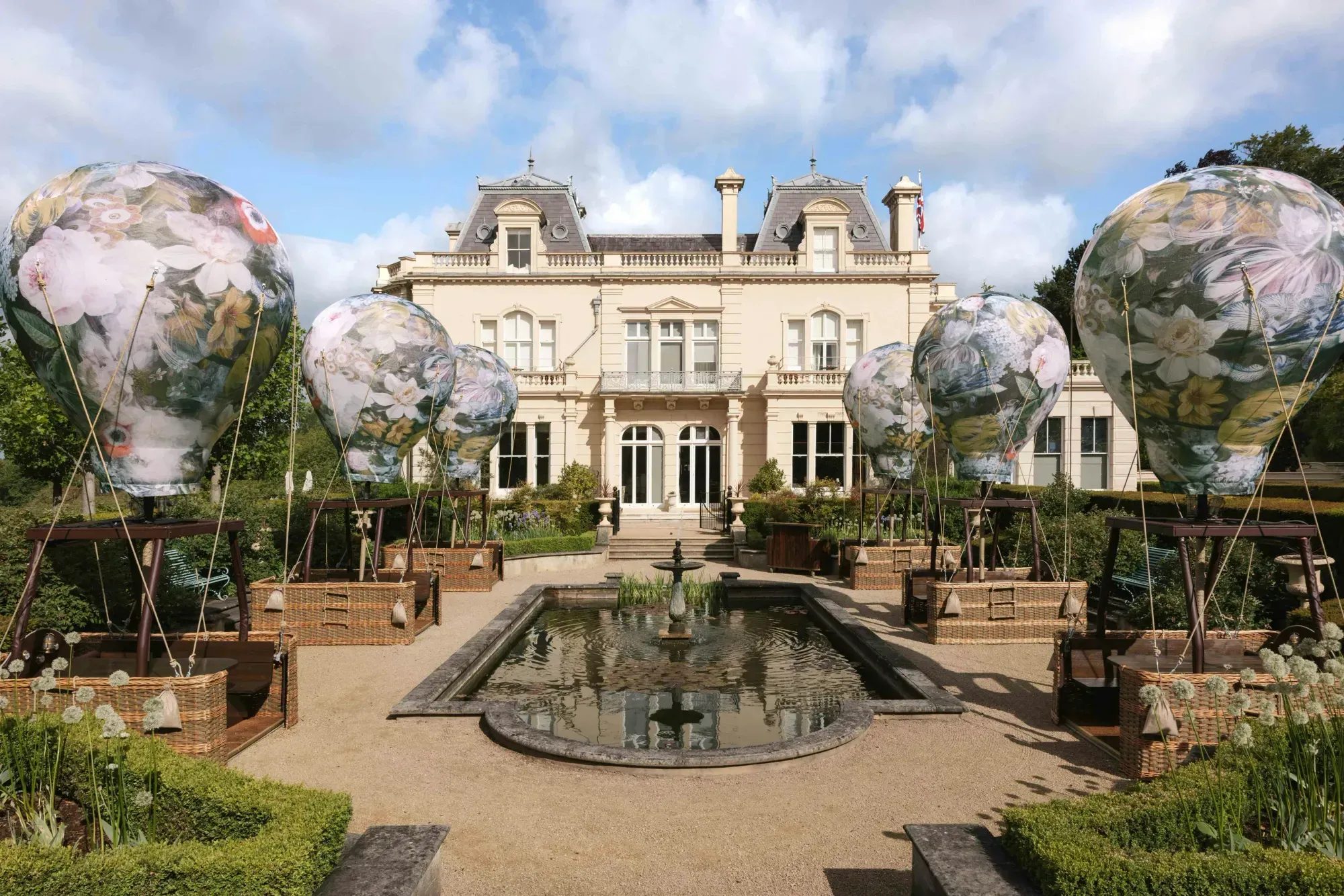
Beaverbrook has parked six stationary hot air balloons in the Italian Garden of a Surrey estate a press baron bought in 1911, dressed them in a floral print from a London tablescaping house, and serves a five-course Japanese menu inside them Wednesday to Sunday. 165 pounds a head, four seats per basket, no flying involved. The balloons are the least strange part of it.
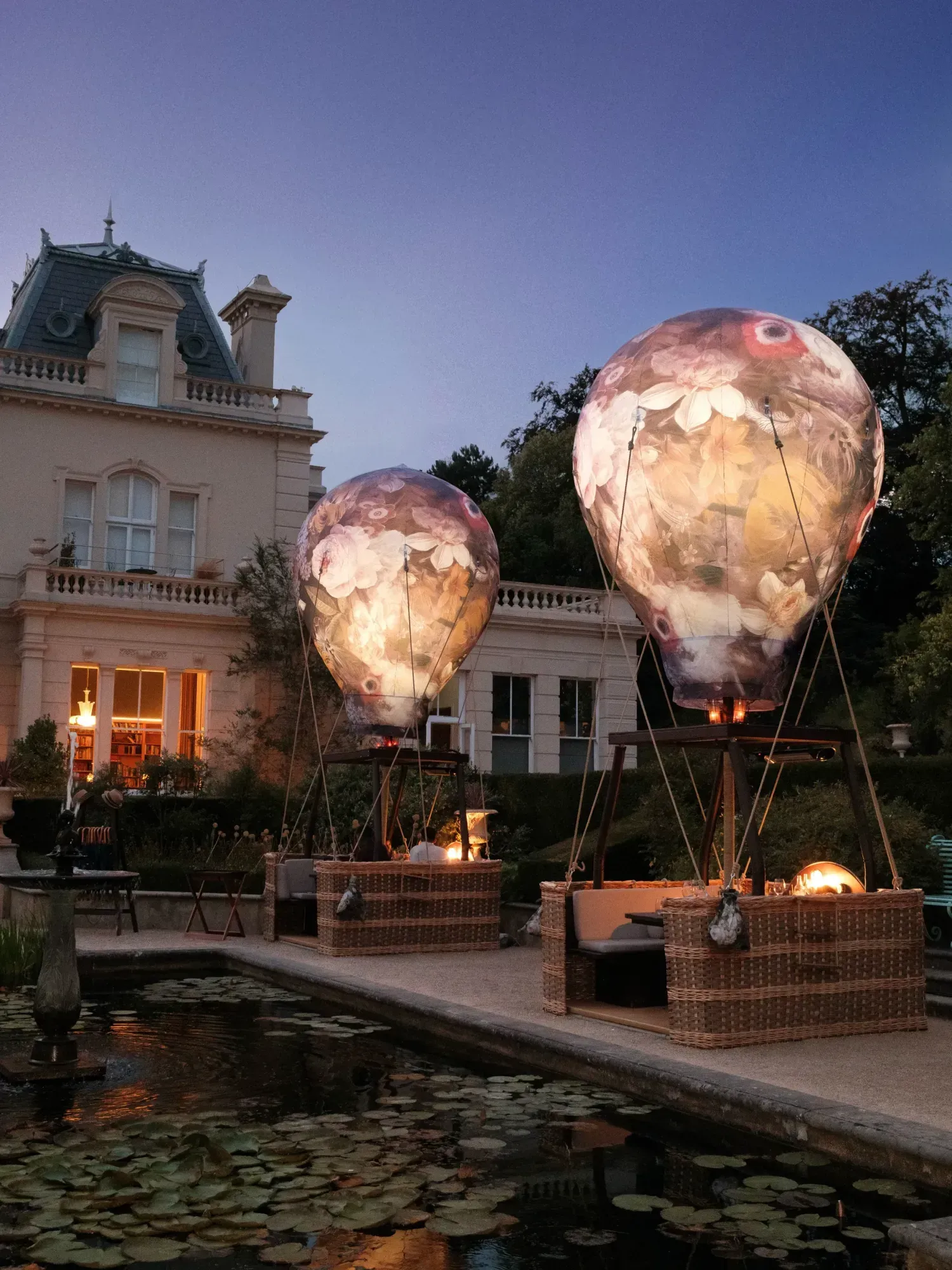
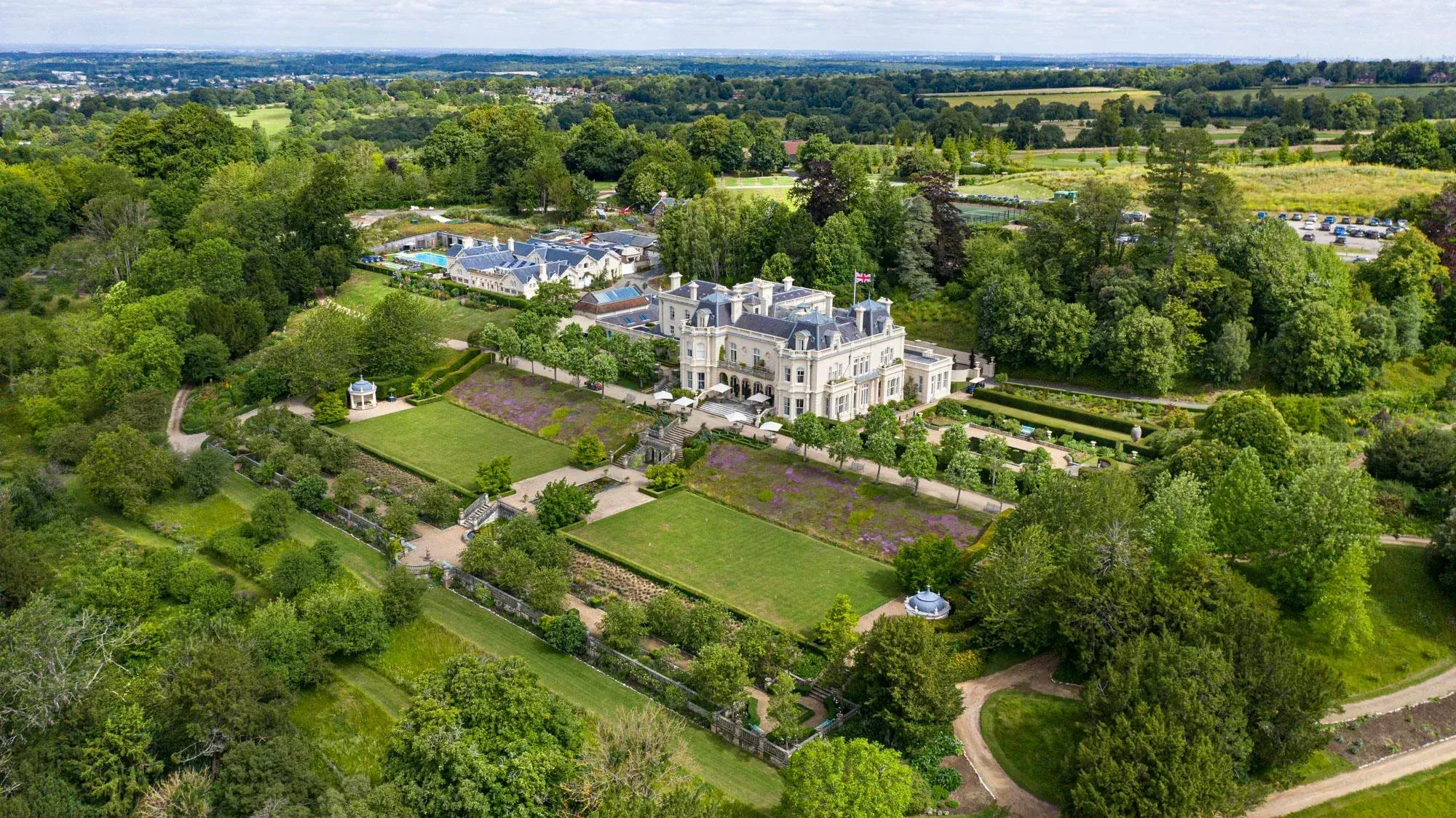
Beaverbrook has put six hot air balloons in the Italian Garden of its Surrey estate and filled them with dinner. The balloons do not fly. They stand in two rows along a rectangular fountain pool, wicker baskets down on the gravel, each one dressed as a private dining room for up to four, and the meal inside is a five-course Japanese menu built around a yakiniku grill. The season opened on 20 May and runs through the summer, Wednesday to Sunday, lunch and dinner.
Nothing about that sentence should work. It does, and the reason has less to do with the balloons than with what was already on the property.
The balloon is a tablecloth, scaled up
The envelopes are printed with Still Life 1815, a pattern from Summerill & Bishop, the London house that sells linen napkins to people who care about linen napkins. The print layers roses, peonies and red anemones in chalky, faded tones against darker chiaroscuro passages, in open homage to the Dutch still life painters. It is not a Beaverbrook commission but a pattern already in the Summerill & Bishop range, lifted onto the envelopes. Seb Bishop, the brand's chief executive and creative director, wants flowers that feel "seemingly gathered straight from the Surrey countryside", blurring the line between art and environment.
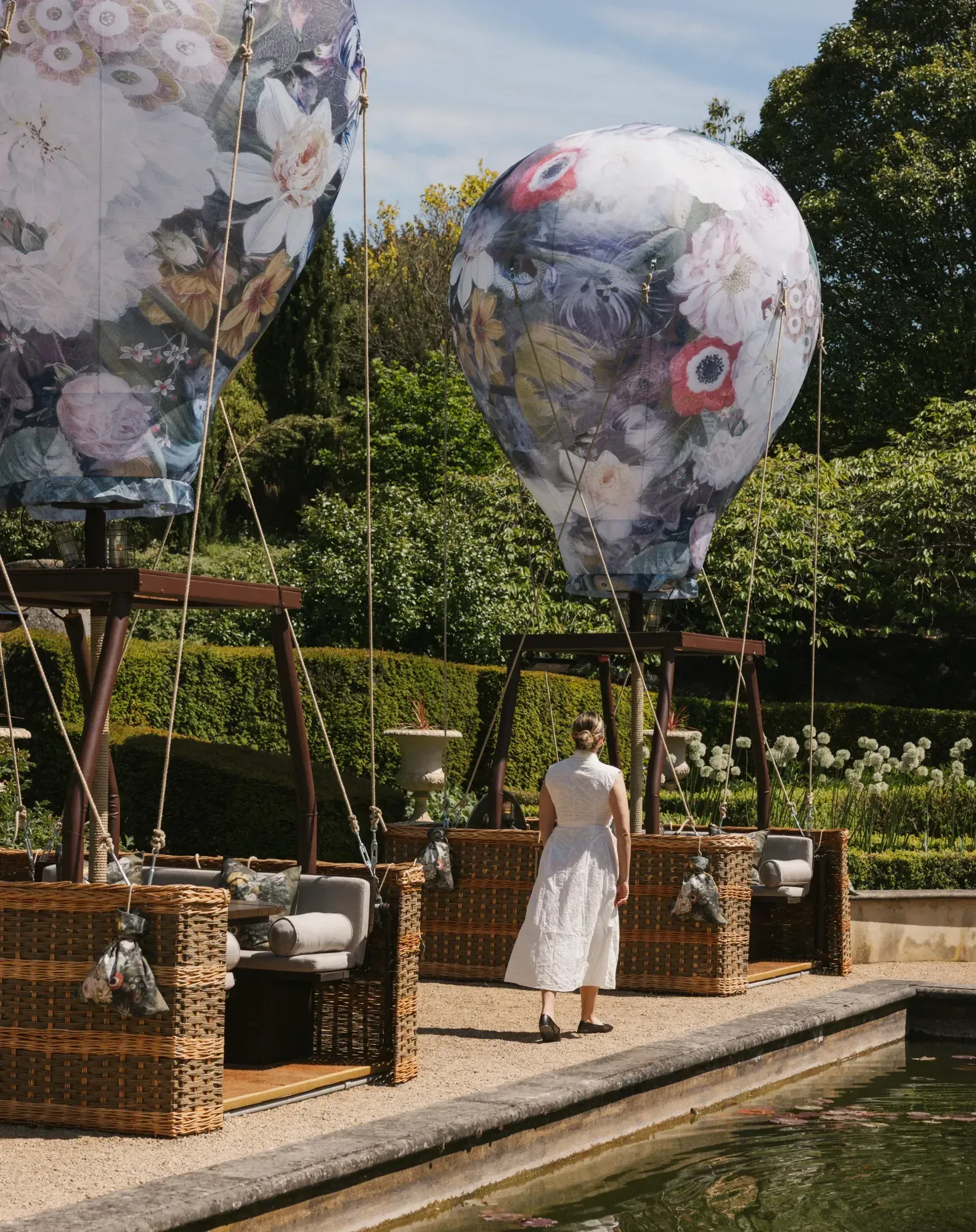
That is marketing language for a real decision. Most experiential dining treats the object as the event: the igloo, the treehouse, the bubble tent, the balloon. Here the balloon is simply the largest piece of tableware in a set that runs down through the linens and the tabletop accessories in the basket, all from the same house. The garden supplies real flowers, the print supplies painted ones, and the fabric over your head rhymes with the napkin in your lap. It is a coherent idea rather than a photo backdrop, a lower bar than it sounds and one most of the category fails to clear.
The Japanese menu is not a costume
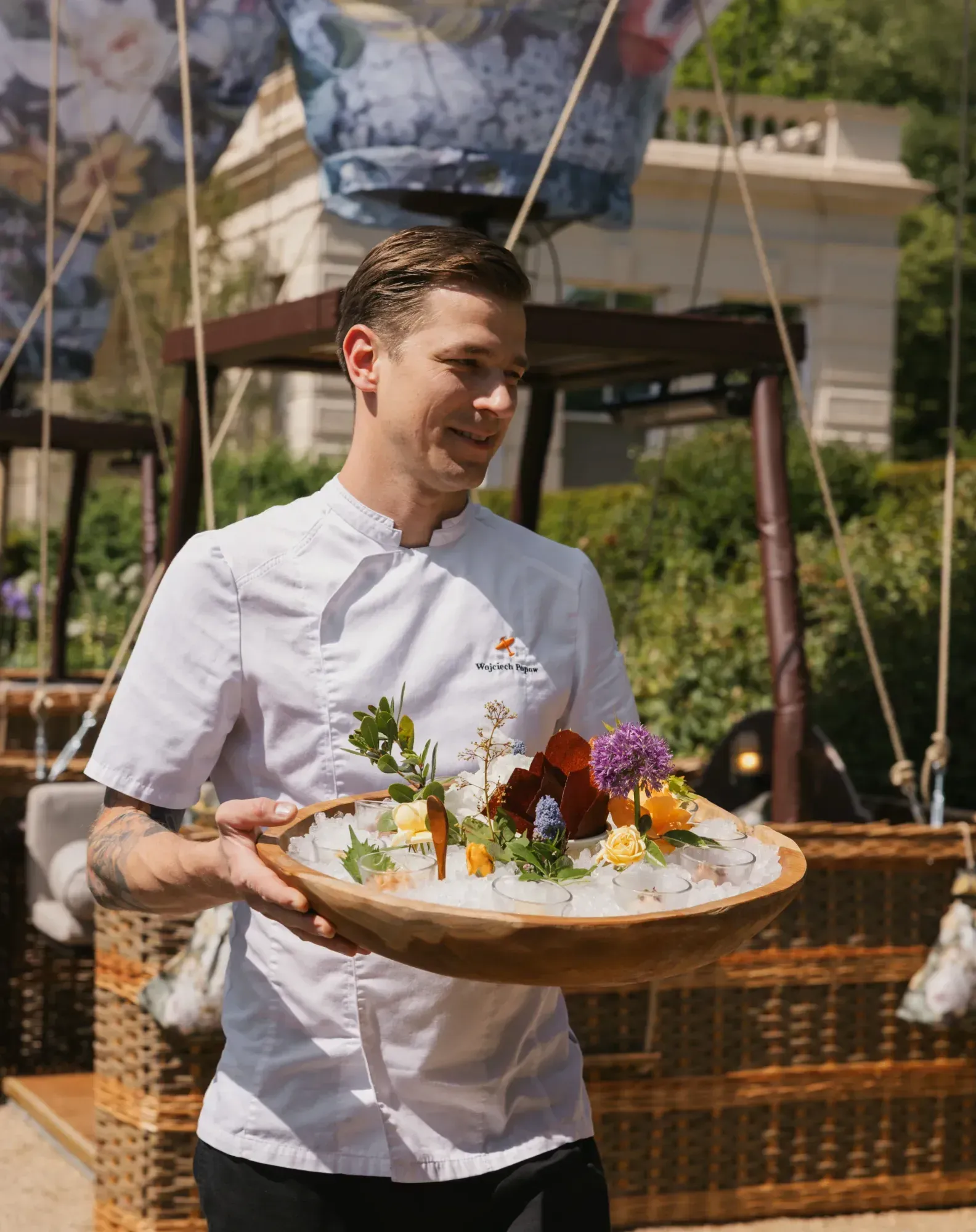
The obvious criticism of yakiniku at an English country house is that it is arbitrary, a cuisine picked for how it photographs. Beaverbrook has an unusually good answer. The Dining Room, the restaurant in the main house, has been Japanese since it opened in 2017. The room launched under Taiji Maruyama, late of Nobu and Kiru in Chelsea, and it is now run by Wojciech Popow, who came up through Gordon Ramsay's kitchens and Noma before working as deputy chef at Yashin in London. Popow curates the balloon menu. A Japanese kitchen that has outlasted a change of chef is a commitment rather than a theme. The estate is not renting a concept for the summer. It is moving its own restaurant outdoors for a few months.
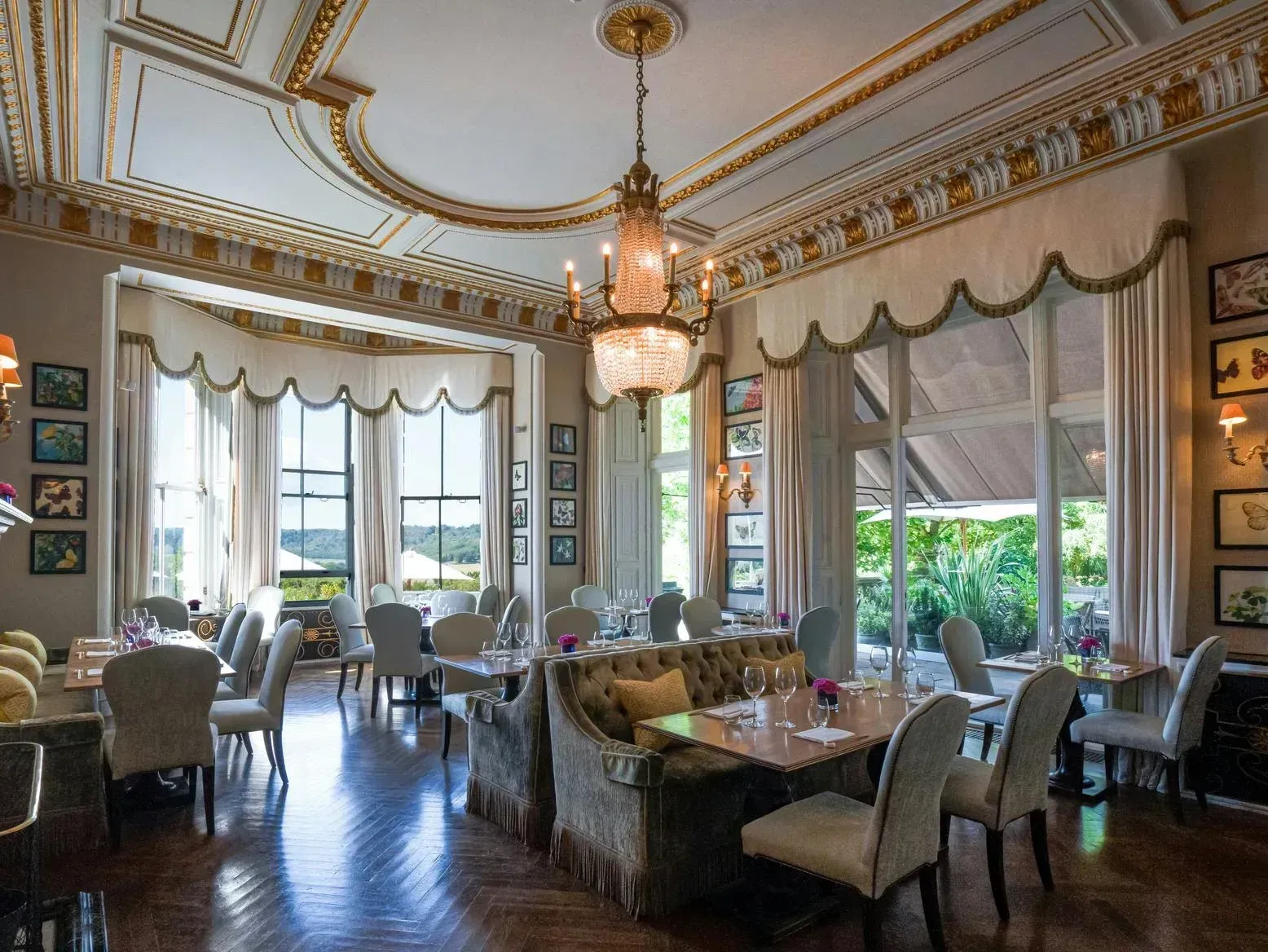
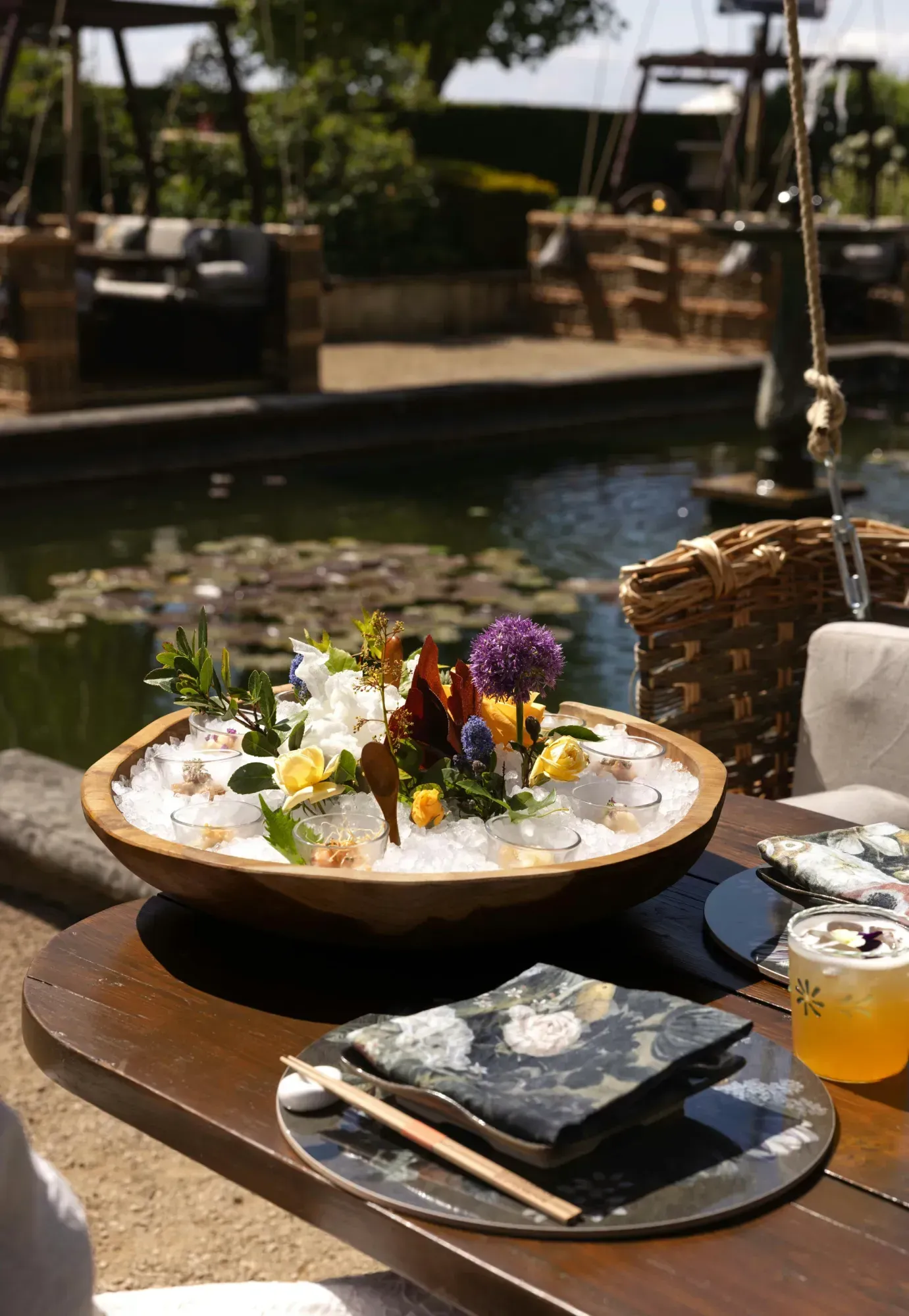
The format helps. Yakiniku is cooked at the table by design, which makes it one of the few fine dining structures that survives being carried into a garden. There is no pass to plate against and no window for food to die in.
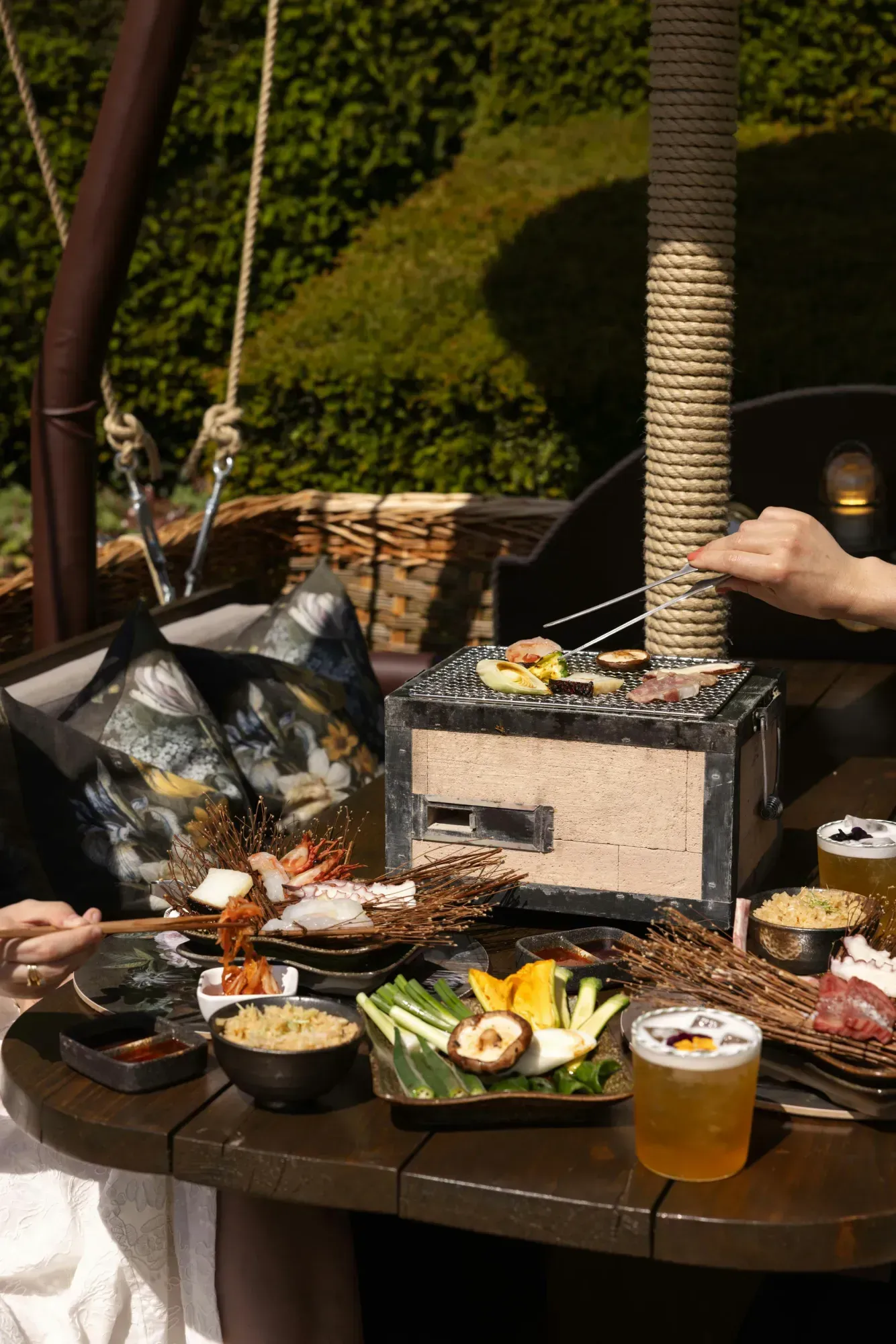
Guests open with a cocktail or a mocktail and work through five courses that have included Hokkaido scallop tartare, a rhubarb and sake kasu salad, and A5 Wagyu sirloin grilled in front of them. The drinks lean local in a way that is more than a gesture, with Albury Estate, the vineyard over towards Guildford, and Silent Pool Gin, distilled on the same stretch of the North Downs.
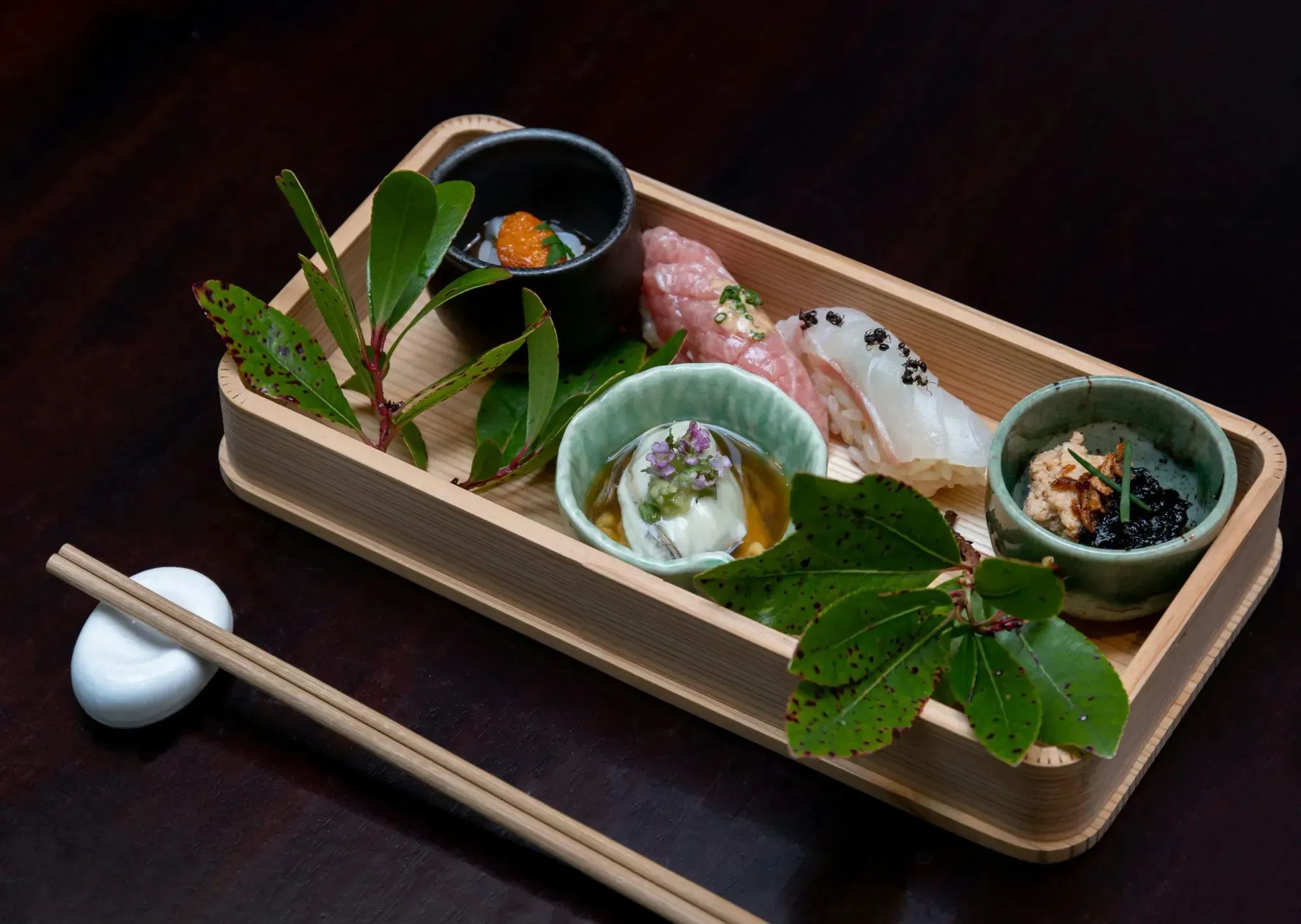
What the estate is carrying
The house went up between 1866 and 1870 for Abraham Dixon, a Birmingham metal goods exporter, under the name Cherkley Court. In about 1910 it was bought by Max Aitken, the Canadian financier who became Lord Beaverbrook, built the Daily Express into a national power and held ministerial posts in both world wars. He kept the place for roughly fifty years and ran it as a political salon. Churchill stayed there, as did Rudyard Kipling.
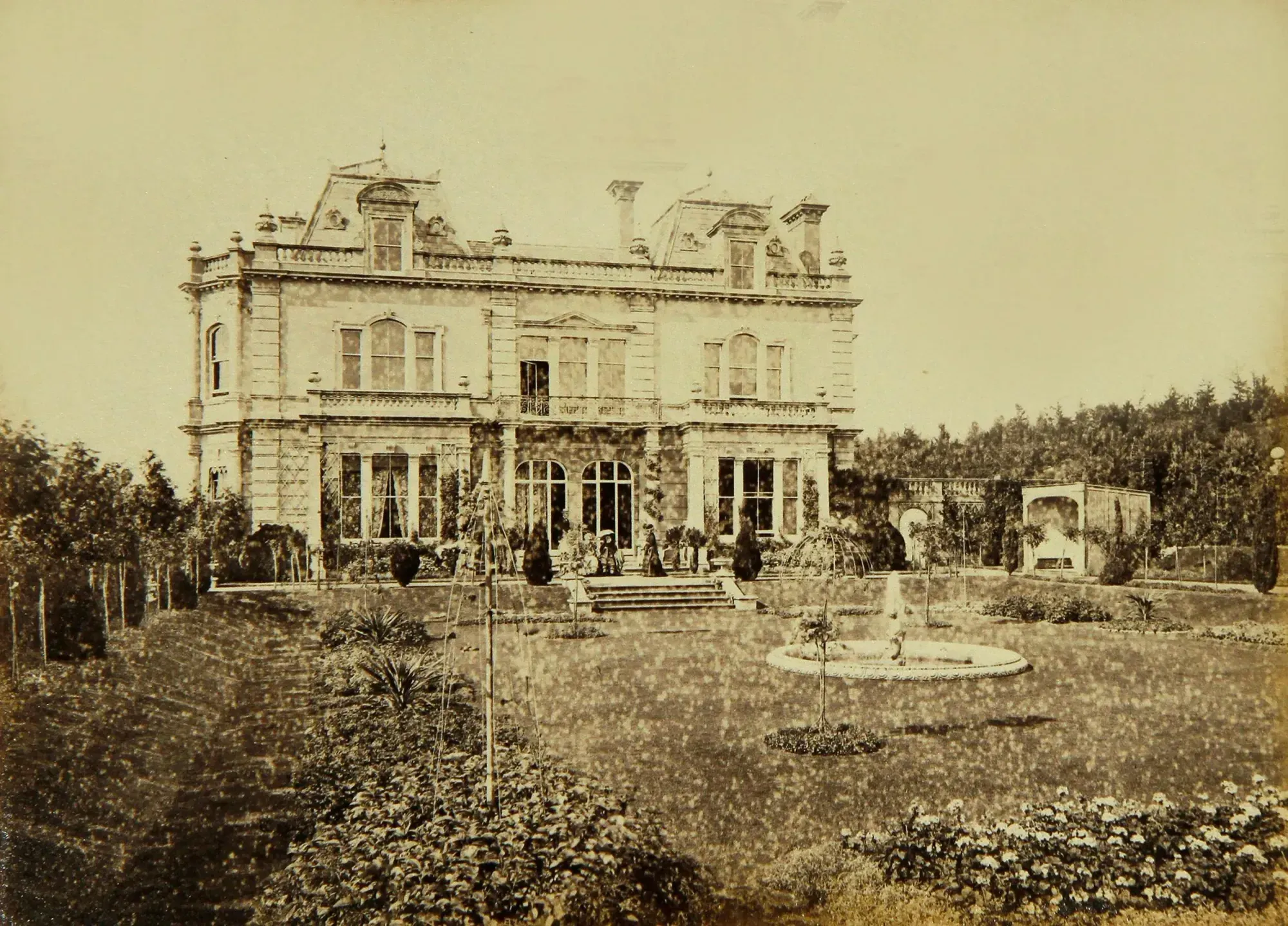
The main house reopened as a hotel in August 2017 with eighteen rooms and suites, set in around 470 acres of private countryside. The Garden House and the Coach House hold another seventeen between them.
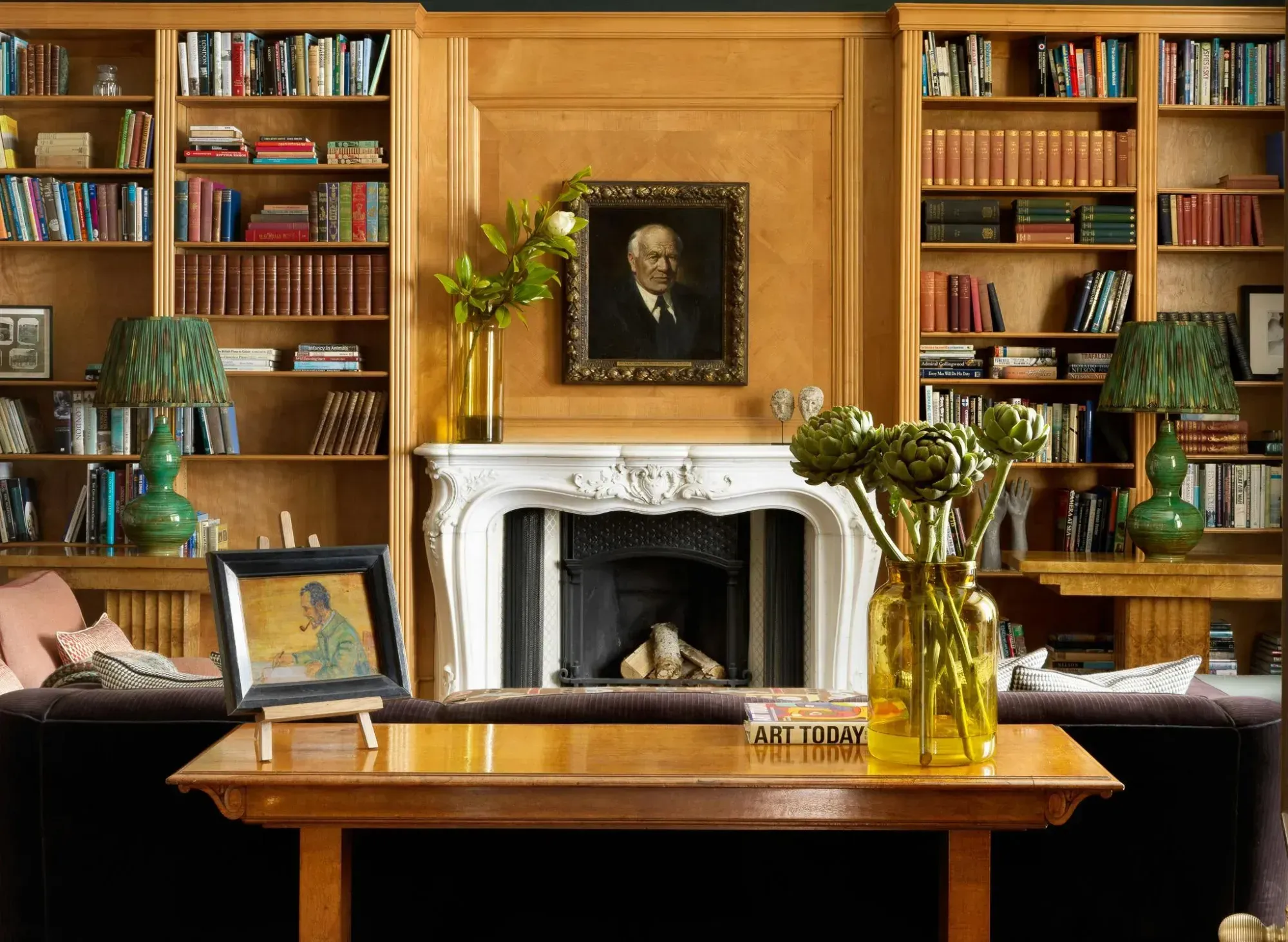
That history is the quiet argument for the whole exercise. A newer property doing balloon dining is doing a stunt. An estate whose entire proposition is that consequential people have been eating dinner on this lawn for a century can absorb a floral balloon without looking desperate, because the grounds were always the point.
The numbers
The standard and pescatarian menus are 165 pounds a head and the vegetarian is 135, before a discretionary service charge of 13.5 per cent. Lunch runs from noon to 2.45pm and dinner from 6pm to 8.45pm, Wednesday through Sunday, with each balloon seating two to four. Dietary requirements have to be filed at least five days ahead, and cancellations inside 48 hours are charged in full, which is a restaurant policy applied to something the estate plainly treats as a ticketed event rather than a table.
The format travelled to Royal Ascot in June 2025 and again this year, when six branded balloons went up in the Royal Enclosure for trackside brunch and lunch. That is the tell for where this is heading. Not a seasonal offer, but a portable set the hotel can install wherever its audience already happens to be.
Whether the balloons need to fly
They do not, and pretending otherwise would be the only real failure available here. Beaverbrook does not claim flight. The balloons are stationary, the booking page says so, and the thing is sold as what it actually is, which is a decorated garden room with a grill in it and a view down the Surrey Hills. At 165 pounds the question was never whether you are getting a balloon ride. It is whether five courses from a kitchen this good, eaten in a garden this specific, is worth roughly what a tasting menu costs in London. Through the summer, when the light on the Downs holds until nine, that is not a difficult sum.