Sleep Beside a Shogun's Castle at Kyoto's Only Three-MICHELIN-Key Hotel
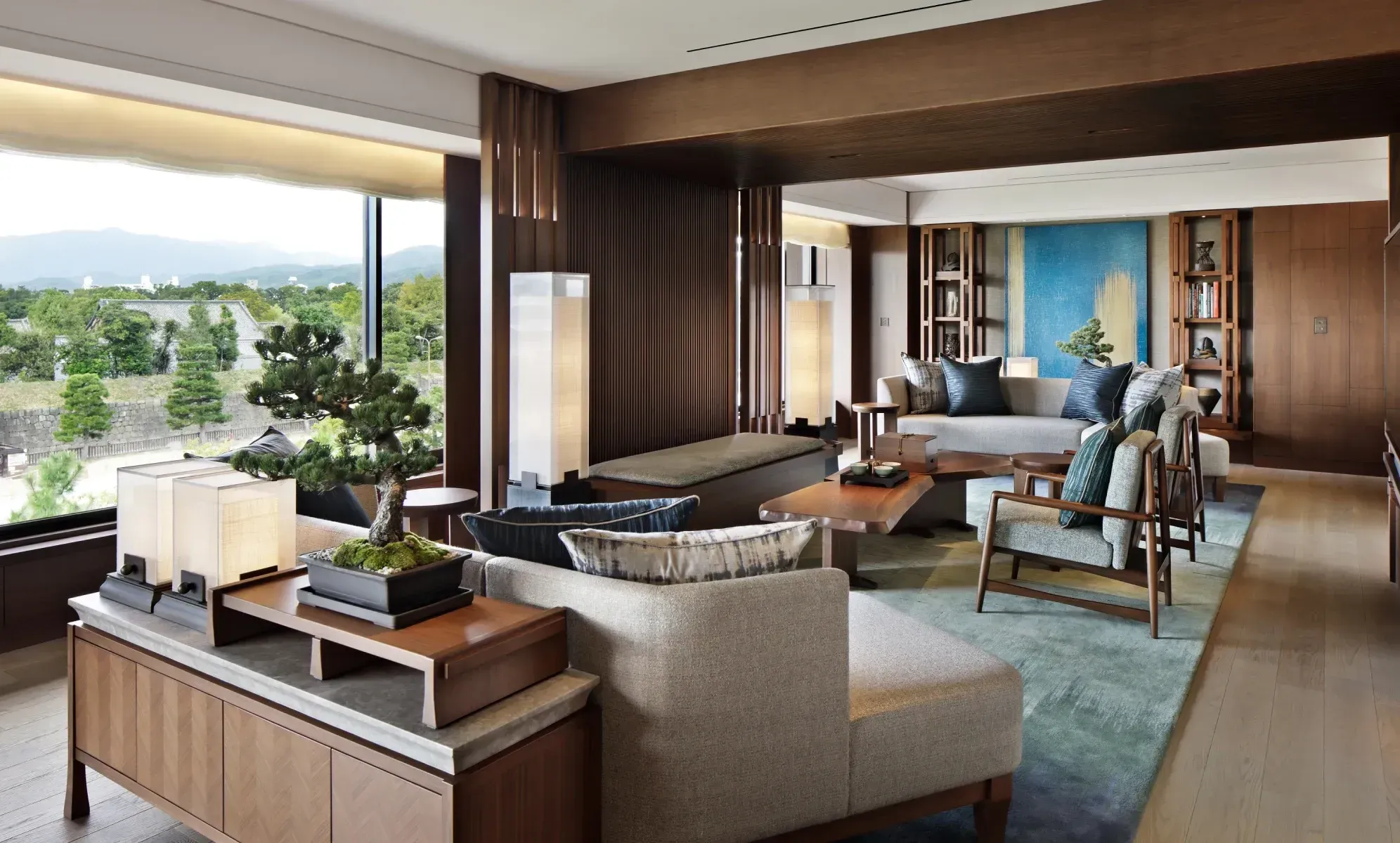
We arrived at HOTEL THE MITSUI KYOTO in the afternoon, from Aburano-koji Street, a narrow side street. The main doors opened onto a garden. Before anyone showed us a room, we were checked in seated in the lounge, looking out at it.
Next door is Nijo-jo Castle, built by the Tokugawa shogunate in 1603 and now a UNESCO World Heritage Site. The hotel's main entrance does not face it. Later that afternoon, on our tour of the building, Megumi, who led it, presented this as a deliberate modesty: a family that did not need to show its power to the street, or to the castle.
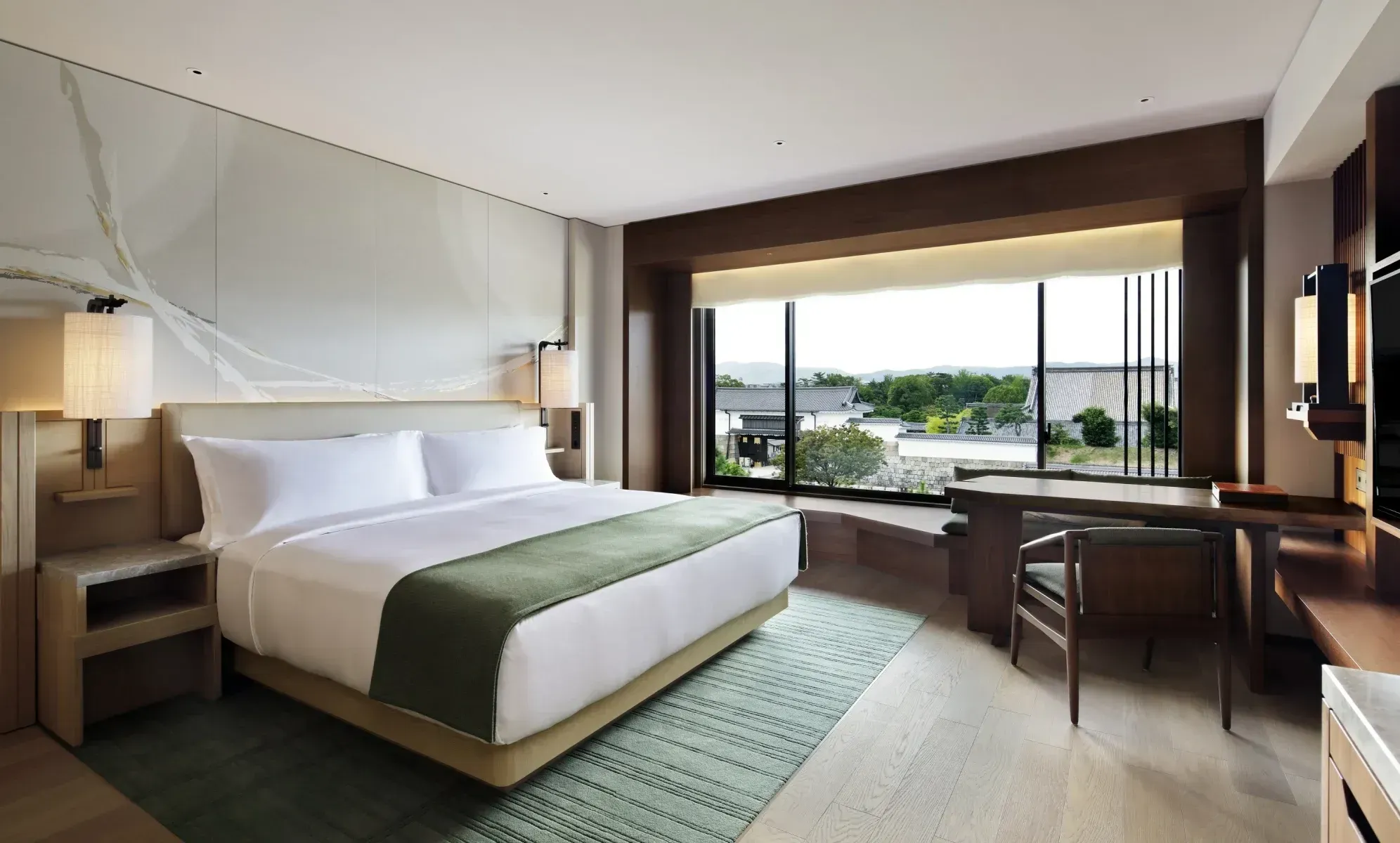
The family was the Mitsui, and for more than 250 years the site was the Kyoto residence of the Kitake, the family's executive branch. The hotel opened here on November 3, 2020, and the same restraint runs through it. Its gate dates from 1703 and was put back together mostly from its own timber. Its grandest room is a garden. We stayed two nights, hosted by the hotel, and spent as much of them as we could beside it.
The garden before the room
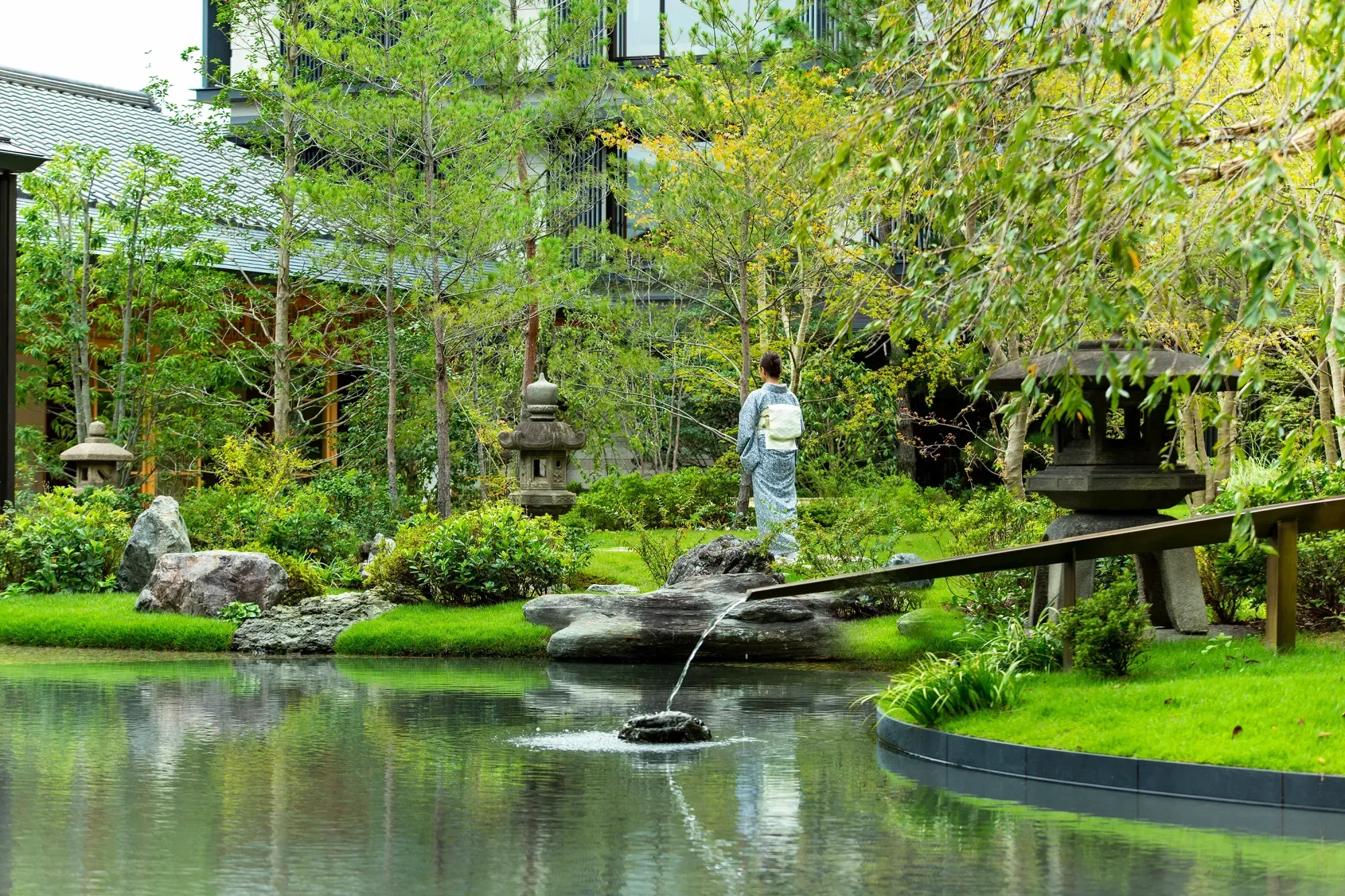
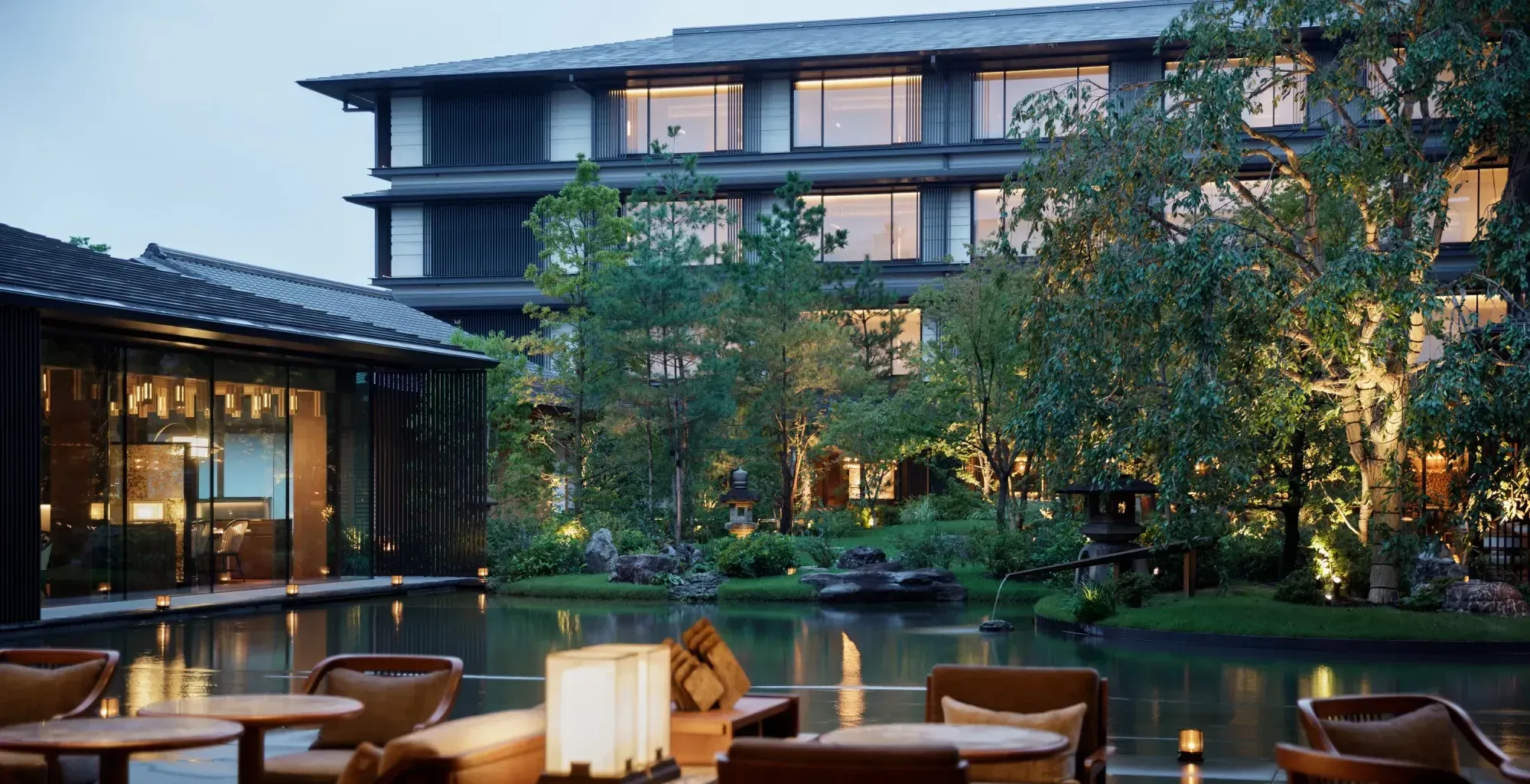
The courtyard garden covers about 1,300 square meters at the center of the property. It is a modern recreation of the Mitsui residence garden by the landscape designer Shunsaku Miyagi, laid out on teioku ichinyo, the old Kyoto idea that house and garden should be one. Red pine, black pine and bamboo grow around the pond, a stone slab bridge crosses it, and a large cherry tree stands near the middle. Several of the stone lanterns and rocks are the ones that stood in the old residence.
The lounge, TOKI, the terrace of FORNI, THE GARDEN BAR and the garden-view rooms all look onto it. The lobby and guest rooms are by André Fu of André Fu Studio, and the lounge is where his work meets the garden most directly: low furniture, a timber ceiling, a long glass edge onto the pond.
The garden is meant to be walked as well as watched. Spend as much of the stay as you can in or beside it: coffee in the lounge, lunch on the terrace, a slow lap before breakfast. We were at peace there.
The Private Onsen
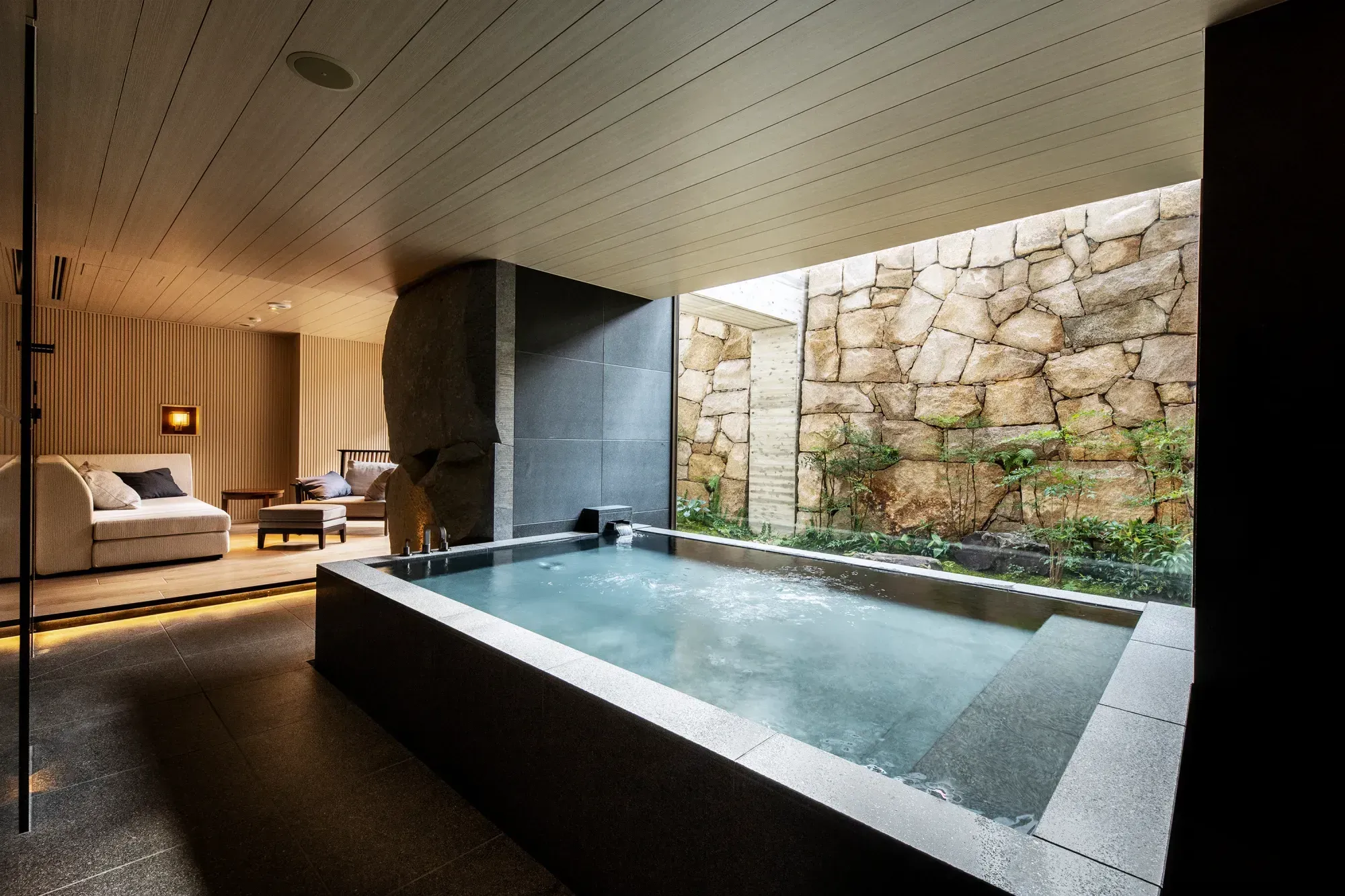
The hot spring water is drawn from about 1,000 meters below the property, and the best way to have it is alone. The Private Onsen, on B1, is more than 100 square meters, booked by the hour for one to four people and entirely yours for that time. A stone bath of spring water opens onto a dedicated Japanese garden against a stone wall. Beside it is an enclosed wet living space with a sofa and lounge chairs, a mist sauna and a dining table.
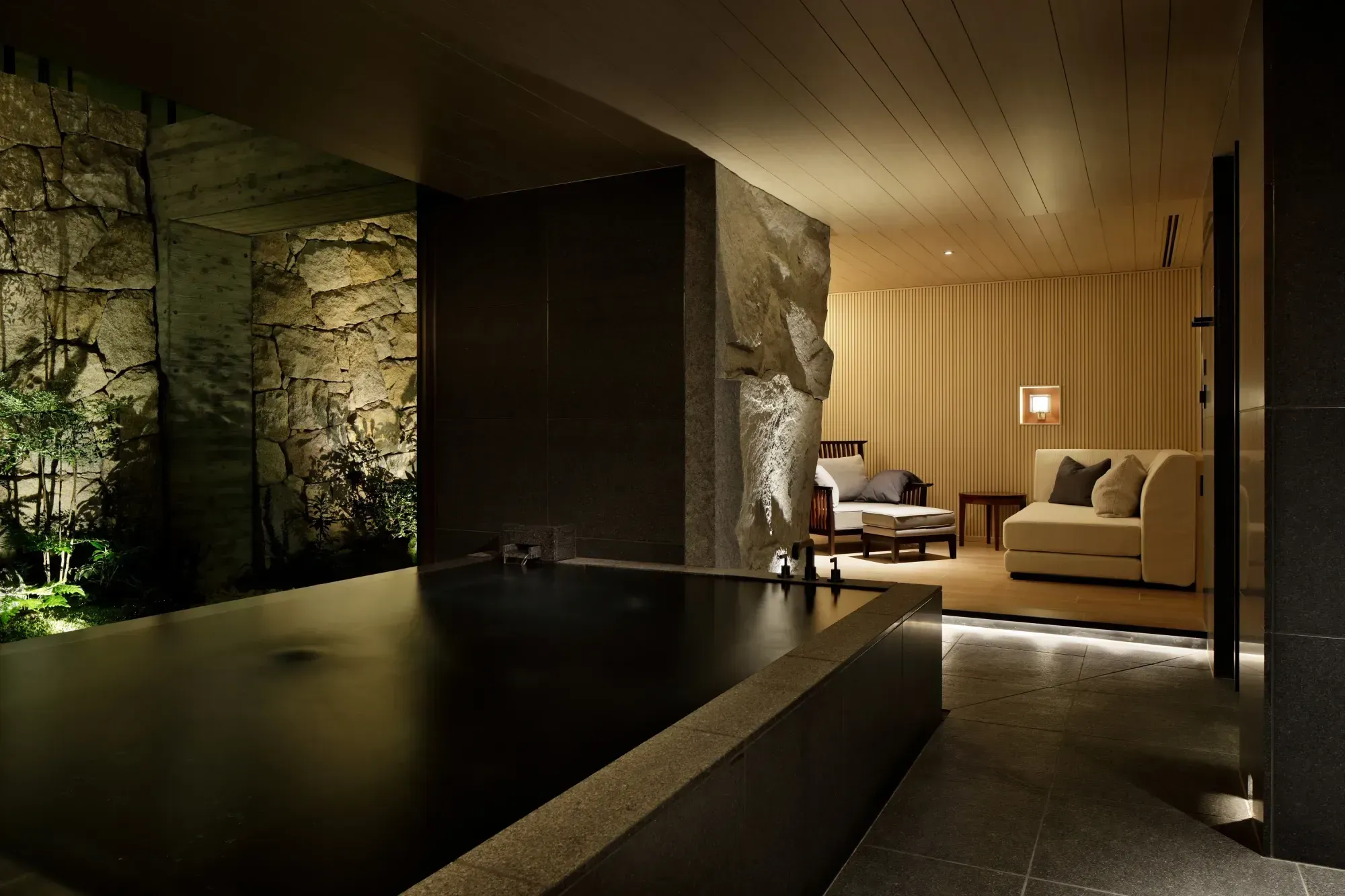
We had it for 60 minutes on our first morning. It felt like a large living room and a spa in one, and of everything the hotel offers, it is what we would book first.
Sessions run 60, 90 or 120 minutes, at 25,000, 32,000 or 39,000 yen, between 7am and 11pm, with last entry at 10pm. It is for registered hotel guests only. The breakfast session, 45,000 yen for two, adds breakfast to 90 minutes in the onsen, starting at 7am or 10am. Book it when you book the room.
The Thermal Spring SPA
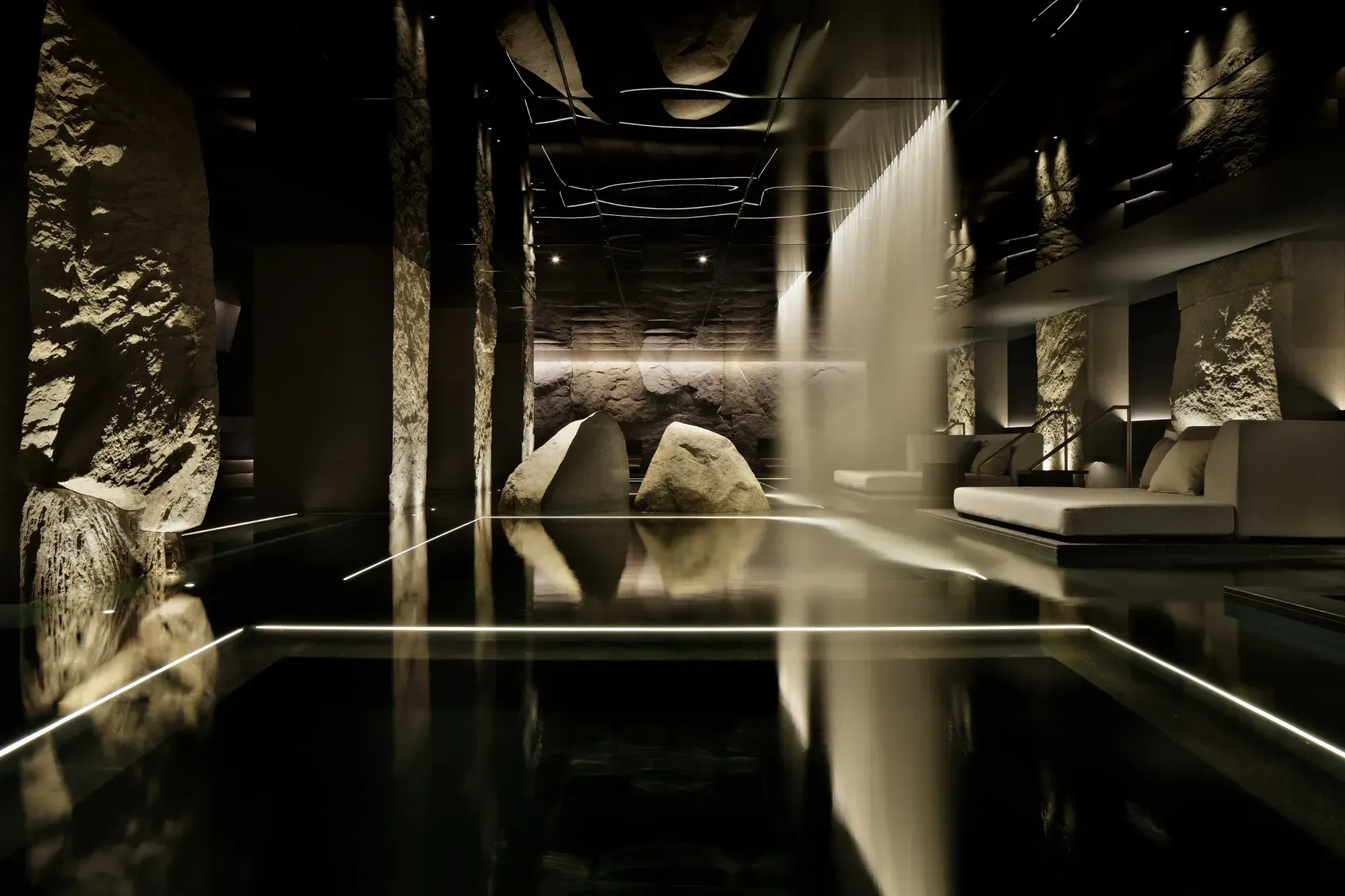
The same spring feeds the Thermal Spring SPA, also on B1, which is designed around five things: time, sound, light, fragrance and water. In February 2026 it received Five Stars in the spa category of Forbes Travel Guide.
The Thermal Spring itself is a dark pool between rough stone walls, with a rain shower falling into it. Swimsuits are worn and men and women bathe together. Bathers must be 13 or over, though children aged 4 to 12 may use it from 9am to 5pm with a parent or guardian. Since October 1, 2026, the treatment menu has included five treatments developed exclusively for the hotel by MIKIMOTO BEAUTY.
A gate rebuilt mostly from its own timber
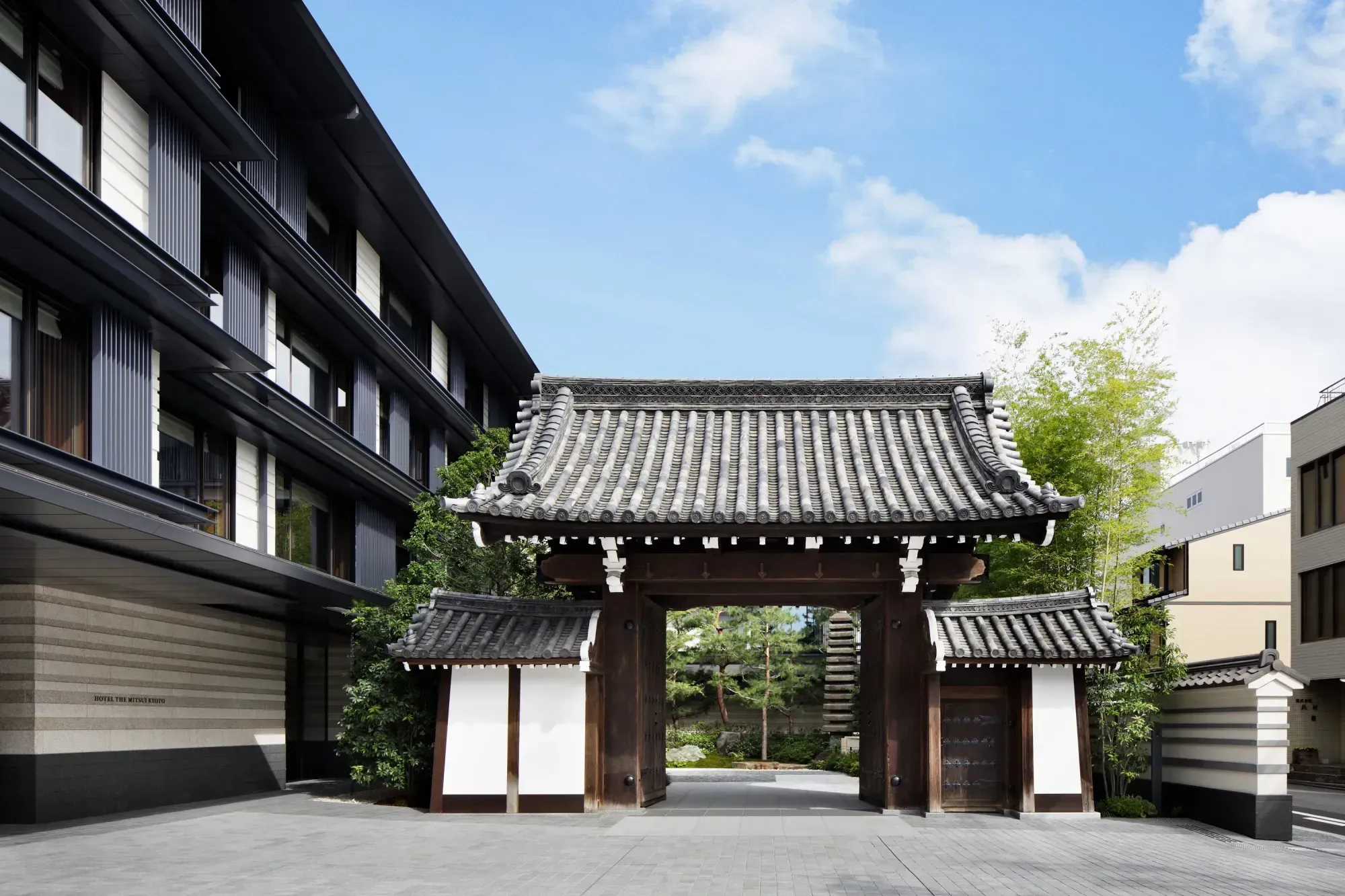
The gate at the street is the Kajiimiya Gate, built in 1703 as the gate of the Kajiimiya court and moved to the Mitsui family's Aburakoji Residence in 1935. For the hotel it was taken apart completely and every piece examined, and more than 80 percent of the original wooden parts went back in. In July 2021 it was registered as a Tangible Cultural Property. It is more than 300 years old, and it was repaired rather than replaced.
The family's fortune was made in kimono: Takatoshi Mitsui opened Echigoya, a kimono fabric shop, in 1673. From 1710 the Oomotokata, the council that oversaw all of the family's businesses, was run from this site until the early Meiji period. The residence was rebuilt in the mid-Meiji period, and one of its rooms, the Okusho-in, also called the Shiki-no-Ma, has been rebuilt again. The hotel's SHIKI-NO-MA is a modern reconstruction of it in Japanese cypress, seating 16 for private dining, celebrations and tea ceremony gatherings.
What the tour points out
Akira Kuryu was master design advisor. Yohei Akao designed the spa and restaurant interiors, and the artist Takafumi Asakura painted fusuma-e, sliding door panels, for the hotel. The ceramic works in the reception hall and the guest rooms are by Yukiya Izumita, an Iwate ceramic artist who works with clay from the Sanriku coast.
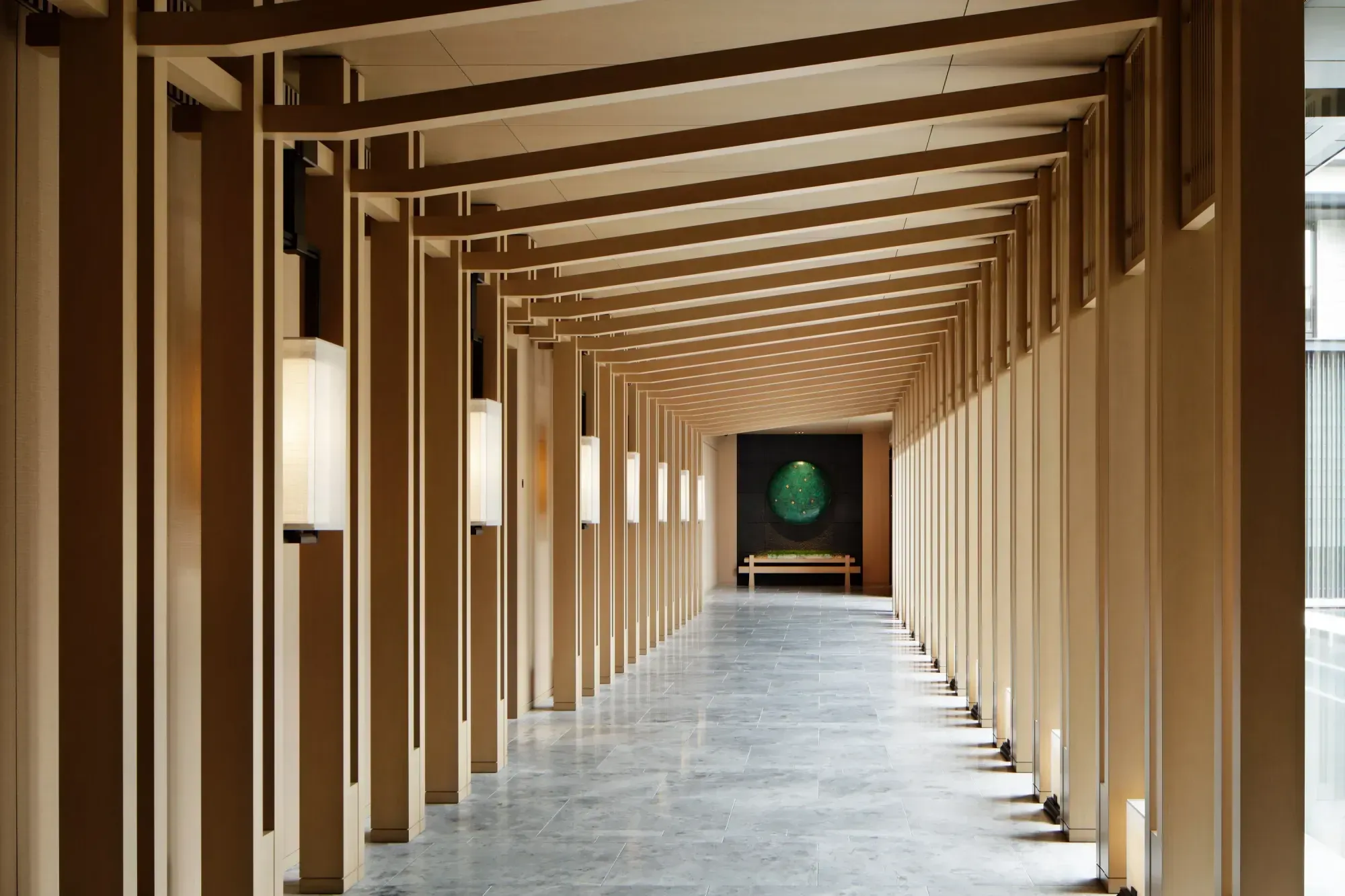
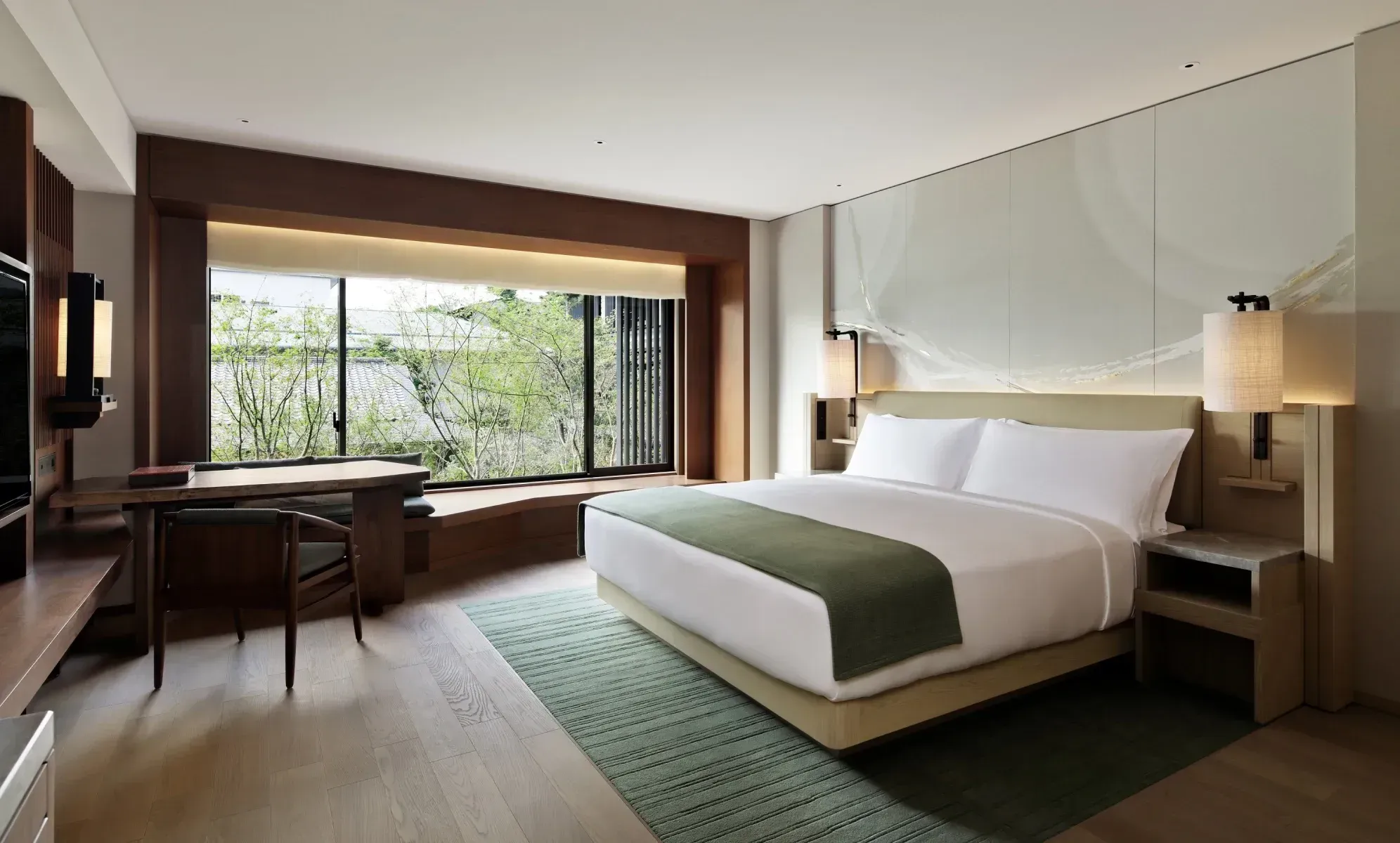
Little of it is labeled, and most of it passes unnoticed until someone points it out. On our tour, Megumi did. A long corridor of timber frames, lit along the floor, read to us like a run of torii gates. She showed us motifs drawn from the family's kimono history, and from okamochi, the lidded wooden boxes once used to carry food, echoed in the hotel's mirrors and cabinets. The guest rooms are conceived as a modern reimagining of the traditional Japanese tearoom, and their carpet read to us like rippled water.
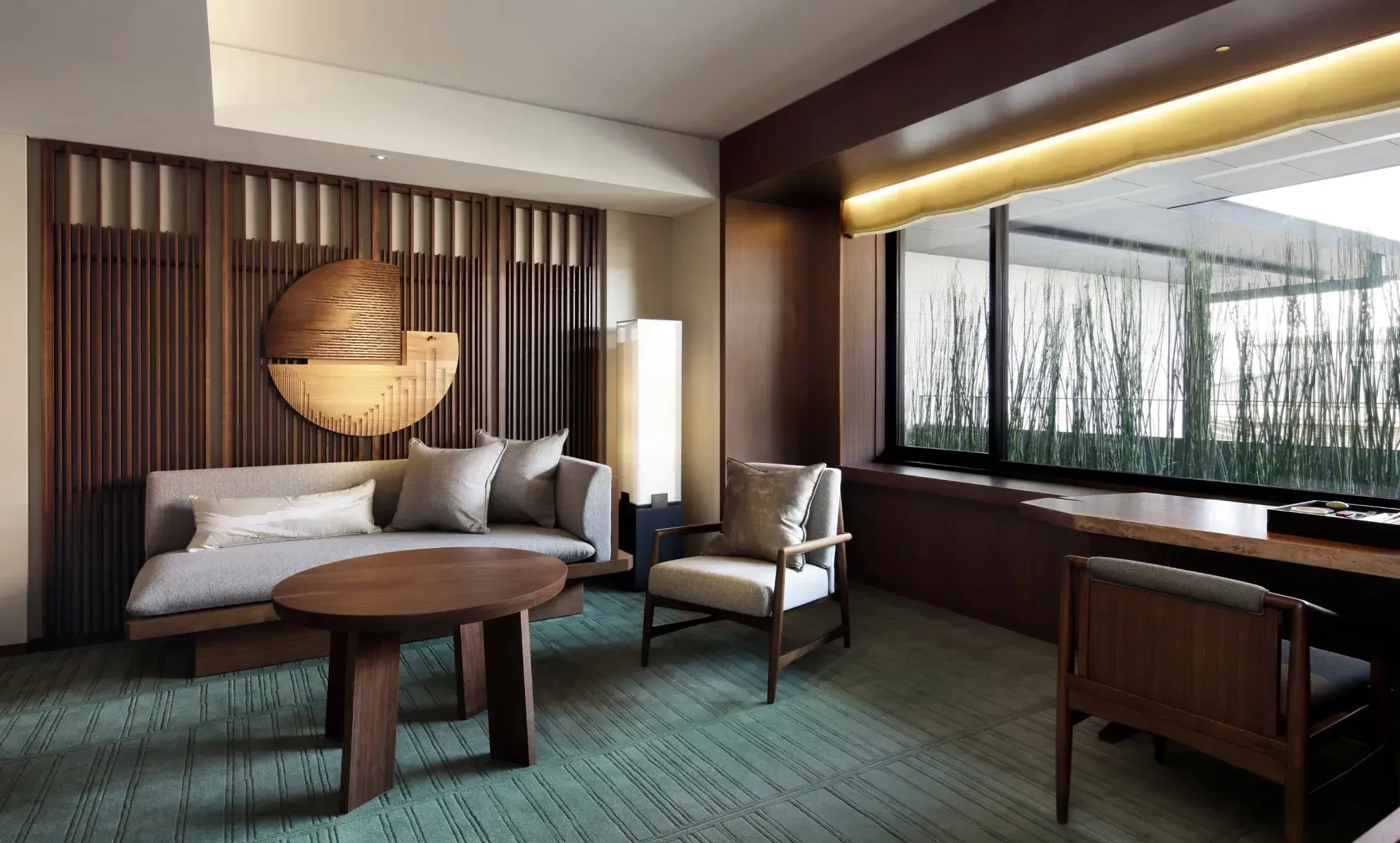
Most of the staff we dealt with spoke fluent English. The hotel runs a complimentary 45-minute art tour for guests each day, led by its ambassadors from the lobby. Take it on the first afternoon.
TOKI, and the water
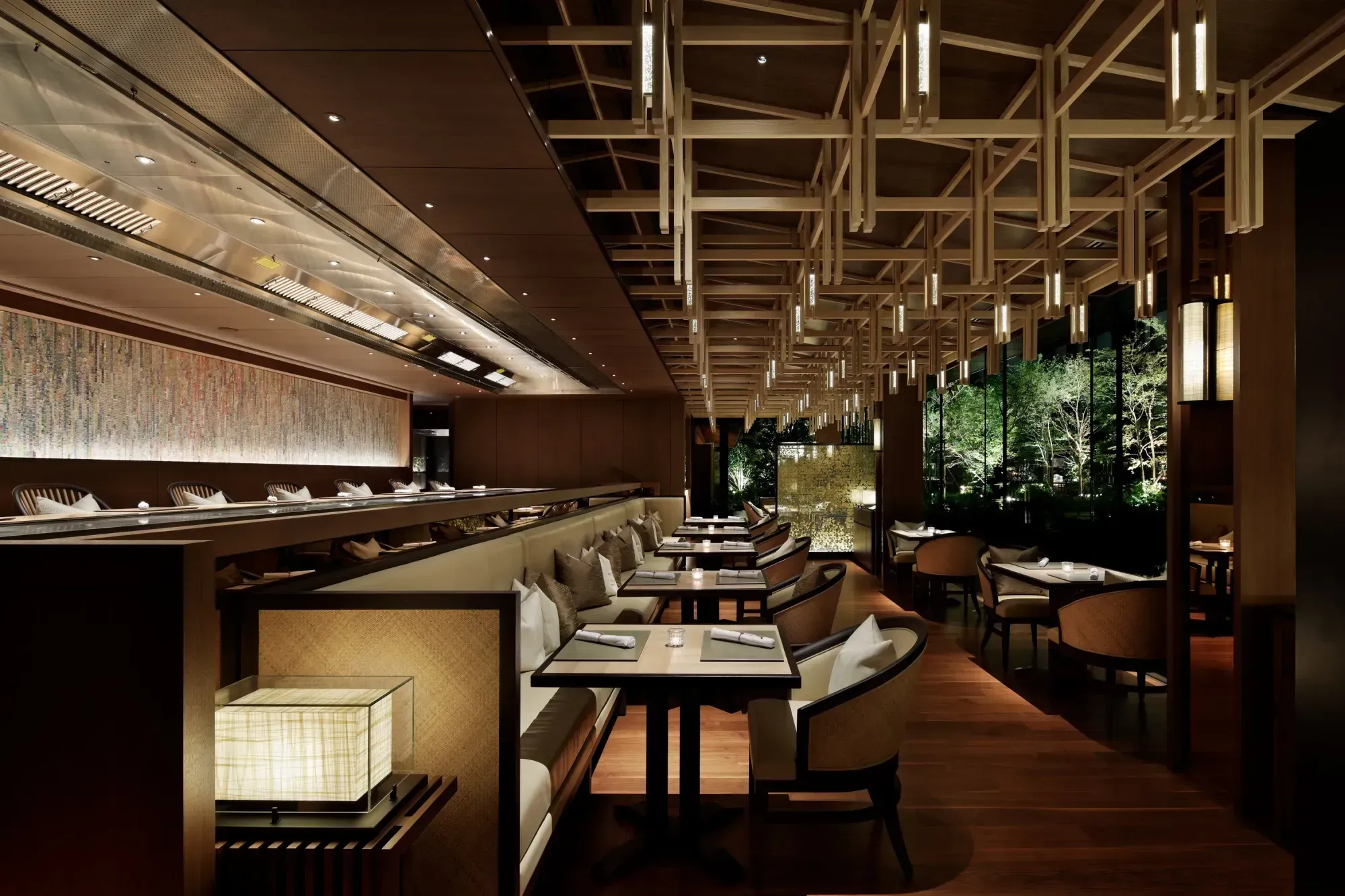
TOKI is the signature restaurant, and it calls its cooking Innovative Kyoto French. The chef de cuisine, Tetsuya Asano, trained in the Netherlands and France. At The Ritz Paris in 2017 he became the first Japanese executive sous-chef of its main dining room, and he oversaw the hotel's restaurants, including the two-MICHELIN-star Espadon. He was appointed at TOKI in December 2019, and he has been selected to represent Japan at the Bocuse d'Or 2027. TOKI is listed in the MICHELIN Guide.
The kitchen starts from the tap. Kyoto's water is soft, which suits dashi, and TOKI builds its French fond on that water. The ingredients are seasonal and mostly local: Kameoka beef and duck, Kyotamba mushrooms, Kyotango pear, Joyo fig.
A dinner of hamo
We ate the dinner course on our first night. It opened with Kyotamba Daikoku hon-shimeji mushroom and Iwate bonito, then Kameoka beef. At its center was a set the menu called Homage to Culinary Heritage: three courses of hamo, pike conger, from Awaji Island in Hyogo, one with water, one with white eggplant, one with Awaji Island onion. After that came Kameoka Nanatani duck with lotus root, Kameoka Kyoto wheat, Nagasaki tilefish with daikon, lamb with chickpea, and to finish, Kyotango Japanese pear and Joyo fig.
A letter from the chef at each place explained the hamo. The fish is hardy enough to survive the long journey from the sea to inland Kyoto, and honegiri, the technique of cutting through its fine bones while leaving the skin intact, made it a defining flavor of Kyoto cooking. The kitchen used every part of the fish across the three courses, and the cutting was exact.
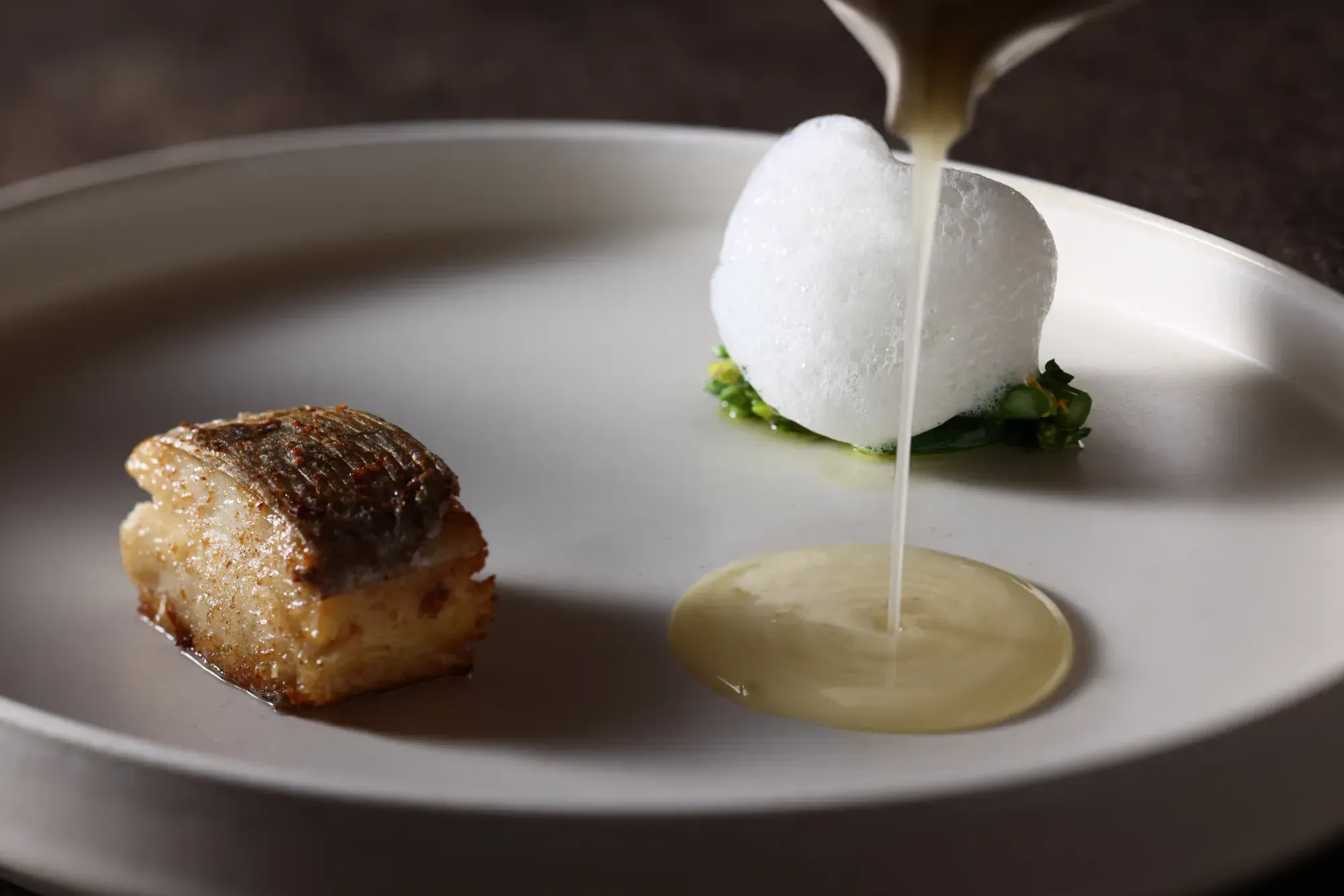
The dining room is set out toward the garden like a theater. The tables are cherry wood, and on the wall, art made from kimono fabric changes with the season. Before each sauce was poured, a heated plate brought it up to temperature at the table. The pairing ran through champagne, riesling, a Tamba wine from Kyoto, sake and plum. The Tamba wine is the one we would order again.
TOKI seats 44, 12 of them at the counter. The signature dinner course is 12 dishes for 24,500 yen, and lunch courses start at 8,500 yen.
FORNI, the terrace and the bar
FORNI is the all-day Italian restaurant. Its consultant chef, Fumio Yonezawa, was formerly sous chef at Jean-Georges in New York and has consulted here since July 2022. The kitchen bakes Roman-style pizza in an okudosan, a traditional kamado range reimagined as an oven.
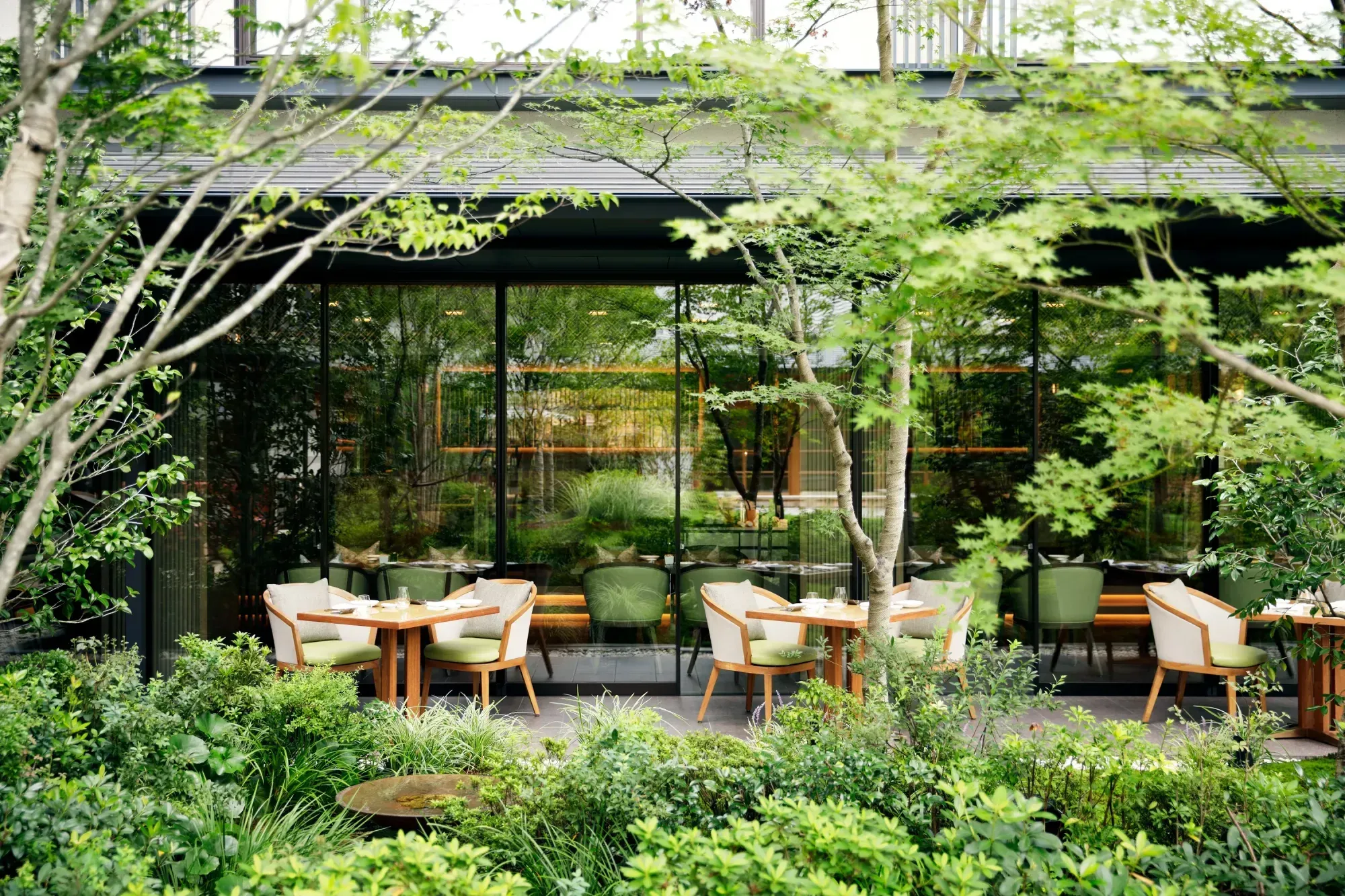
FORNI seats 105, 18 of them on the terrace. Ask for the terrace. It sits inside the garden rather than beside it, with the trees giving a good balance of shade and sun. The wagyu bolognese is very rich, which suits a long lunch better than a quick one.
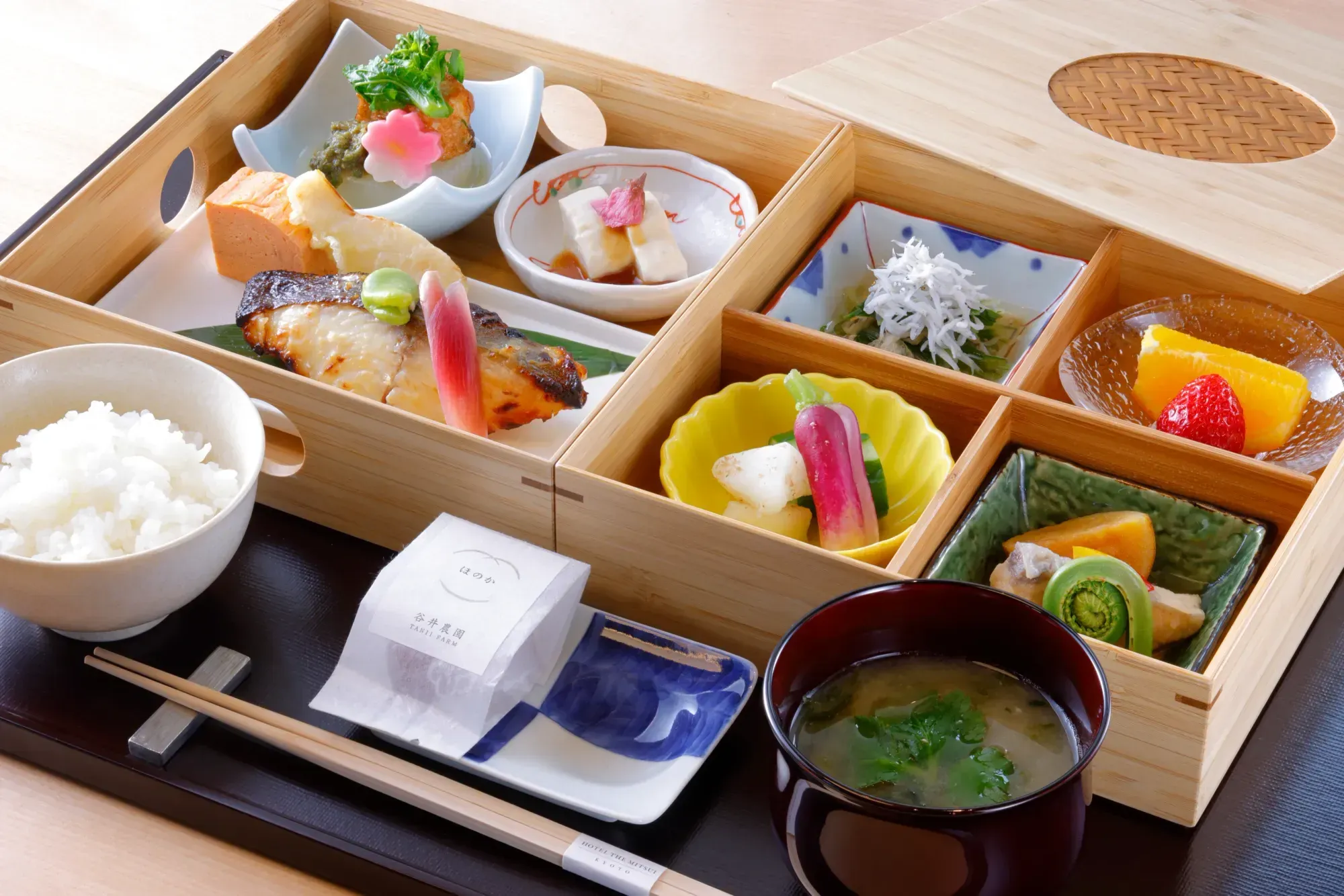
Breakfast is also at FORNI, from 7am (last order 10am), in two forms: a buffet with the chefs' specialties and hot dishes from the kitchen, or a Japanese breakfast of Kyoto dishes served in an oju, a lidded wooden box. Order the oju at least once, and look for the bread made with mentaiko, mochi and cheese. If you are lucky, an egret comes down to the garden while you eat.
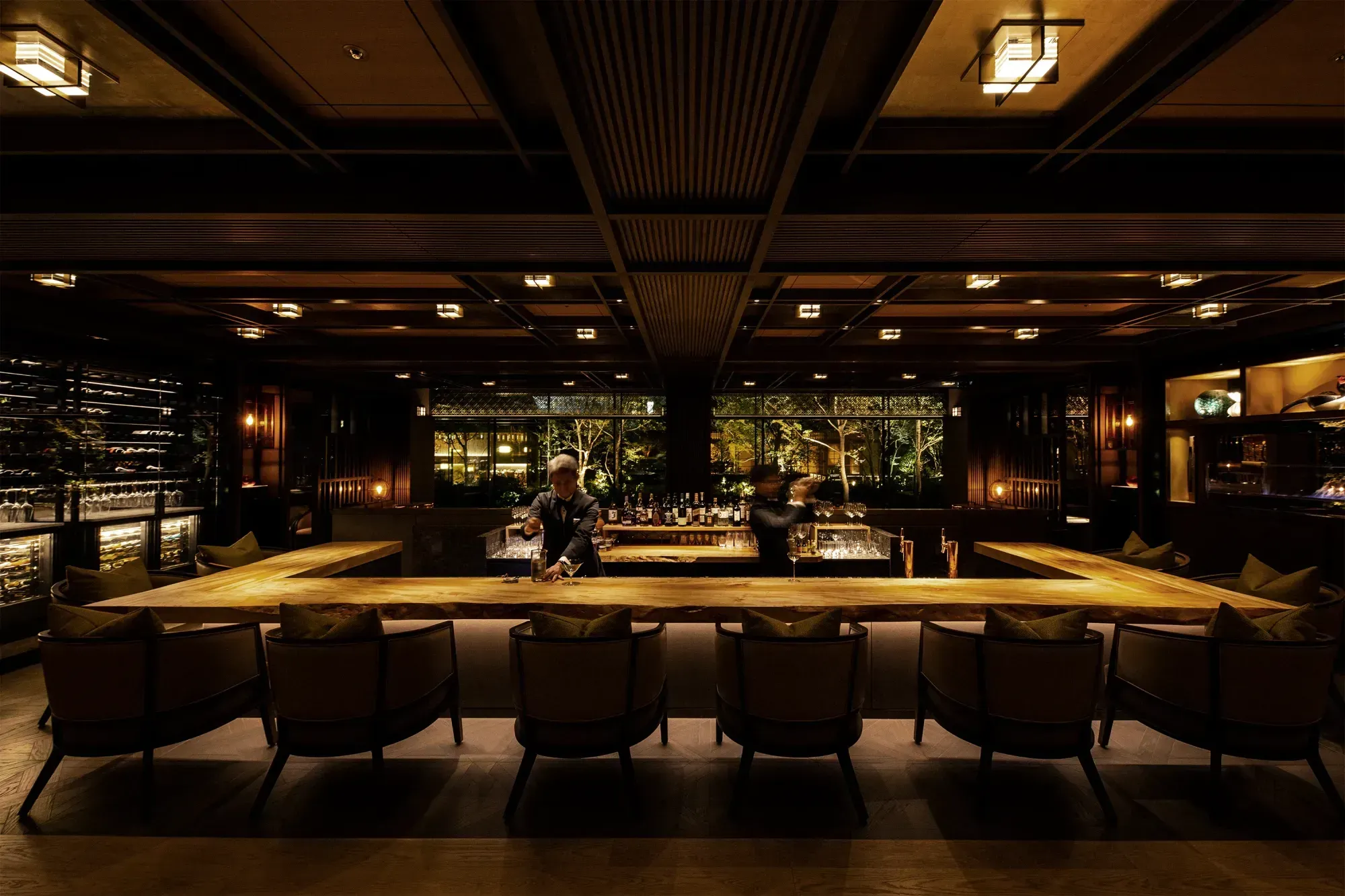
THE GARDEN BAR opens at 11am, takes last orders at 11:30pm and seats 44, six of them outside. At night the counter is lit and the shelves glow behind glass over the water.
Rooms, and which way they face
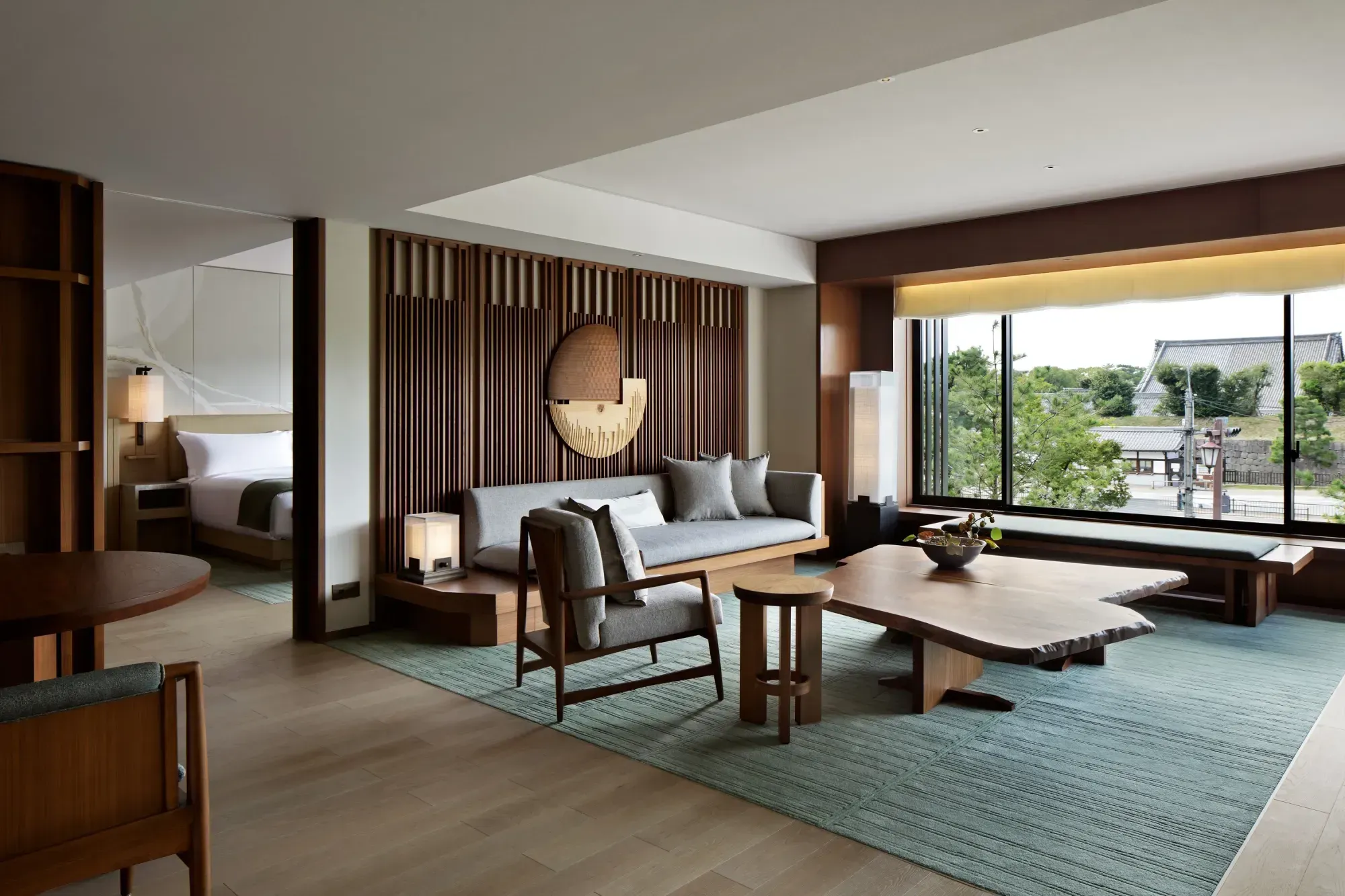
The hotel has 160 rooms, 22 of them suites, from 43 to 213 square meters and 50 on average. The rooms are very spacious, so the choice that matters is which way the window faces. Nijo Rooms, Nijo Suites and the Presidential Suite look onto the castle. Garden-view rooms look inward, onto the courtyard.
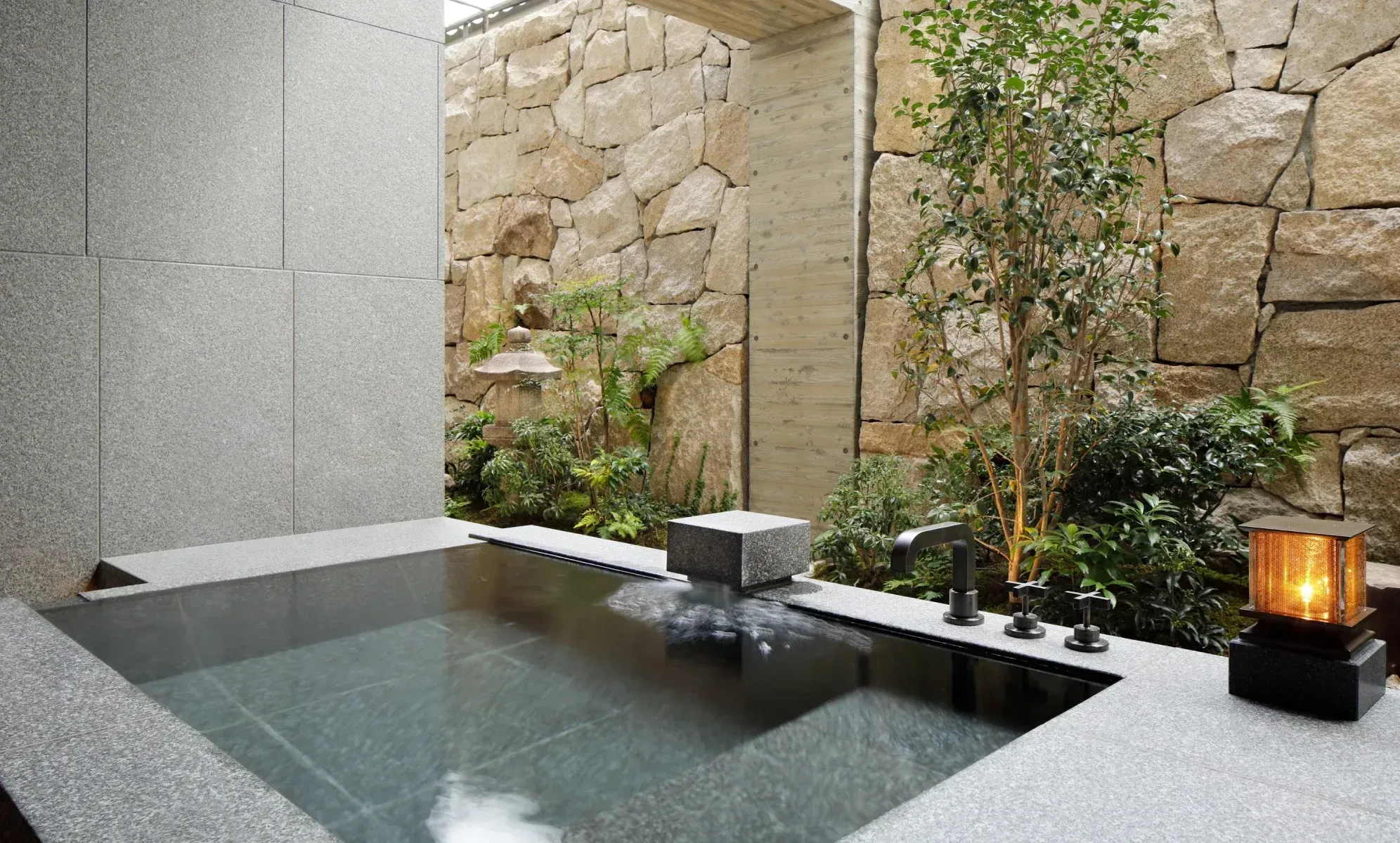
The one we would book faces inward. The Onsen Suites, of 101 to 111 square meters, are on B1, facing the garden. Each has a private open-air onsen fed by the hotel's own spring, on a terrace with a bench beside the bath, next to a tsubo-niwa, a small courtyard garden with stone lanterns. The finishes are sakura cherry wood, the living room and bedroom are separate, and the bath amenities are by a Japanese master perfumer. Of the rooms we saw, it is the one that feels most like Kyoto.
The castle can be seen from inside as well as from the window. The hotel arranges private early-morning and late-afternoon tours of Nijo-jo for guests. From October 1, 2026 to March 31, 2027 it also offers a private after-hours tour of the castle from 4pm, for the first four groups only, to guests staying in a Nijo Room, Nijo Suite or the Presidential Suite who make a 500,000 yen Cultural Property Preservation Donation to Nijo-jo Castle.
Getting there
HOTEL THE MITSUI KYOTO is at 284 Nijoaburanokoji-cho, Aburano-koji St. Nijo-sagaru, Nakagyo-ku, Kyoto. Nijojo-mae Station on the Tozai subway line is a three-minute walk from Exit 2, and Kyoto Station is about 15 minutes by car. Kansai International Airport is about 100 minutes by car, or about 75 minutes by train, taking the JR Haruka to Kyoto Station. For time away from the hotel, it arranges a 90-minute afternoon tea at the Former Shimogamo Villa of the Mitsui Family, a designated Important Cultural Property beside Shimogamo Shrine.
The side street
The hotel was the first in Japan to earn a Forbes Travel Guide Five-Star rating in its opening-year inspection, and it has held that rating for five consecutive years. In September 2026 it received Three MICHELIN Keys for the third year running, one of 155 hotels worldwide at that level, one of seven in Japan and the only one in Kyoto.
Ratings measure what a hotel of this class is expected to have. They do not record which street its front door faces, or what it chose to repair rather than replace.
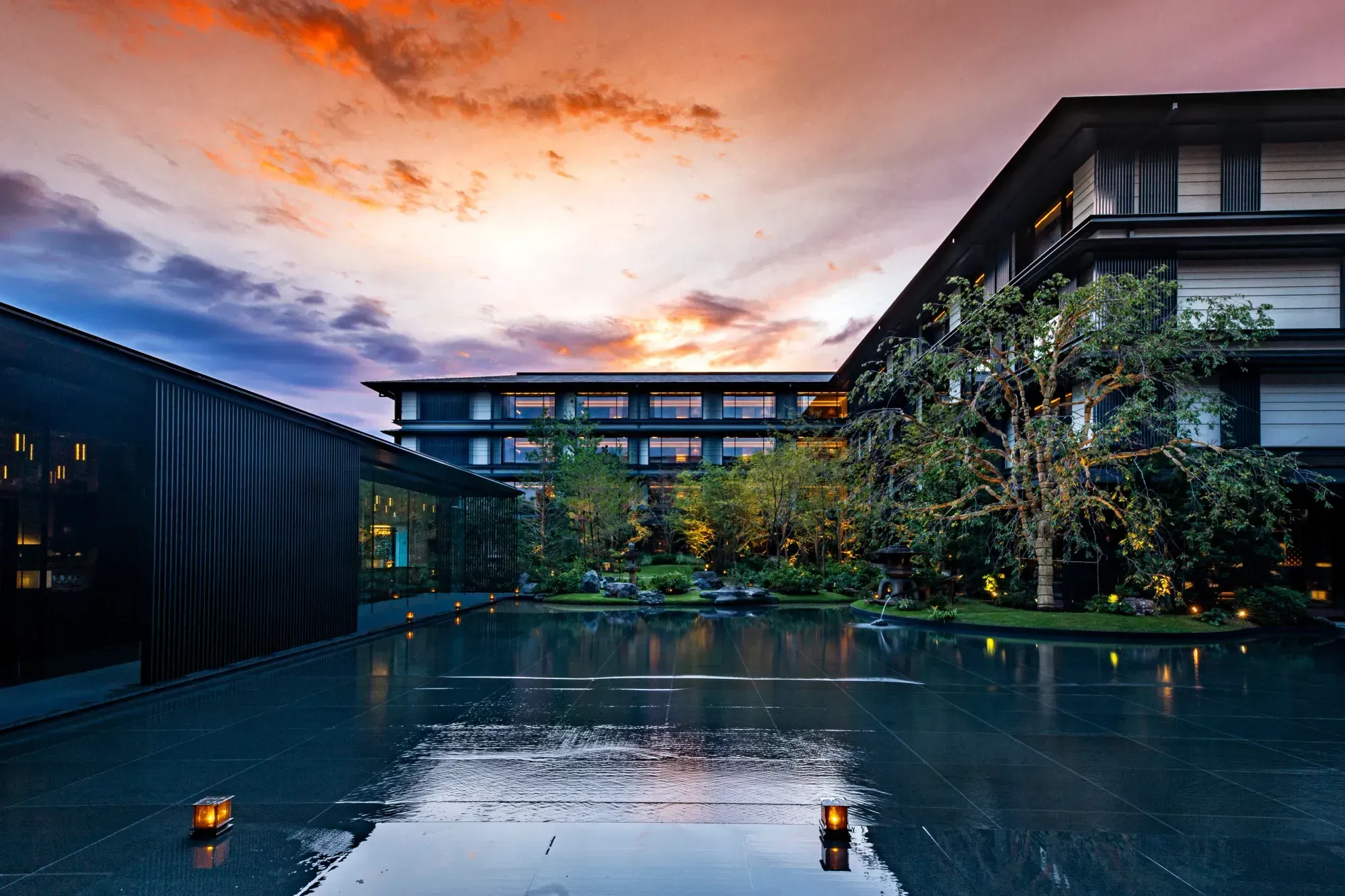
At dusk the lamps on the lounge terrace come on beside the water, outside the room where we checked in on the first afternoon, and in two nights we did not find a better seat. The castle is next door. The entrance still faces the side street.
Exqz was hosted by HOTEL THE MITSUI KYOTO.