A Parisian Hideaway Replaces a Parisian Hideaway: The Hôtel Lili Opens on South Lasky Drive
Palisociety's first Beverly Hills hotel sits in a 1939 building filed in the archives under Lillian Gish's name. The brand calls it a private residence reimagined, which skips the twenty-five years it spent as Maison 140, the Parisian-inn hotel Kelly Wearstler designed for Kor Group. Forty-four rooms, a velvet-curtained bar, no restaurant, no pool of its own, and rates about a quarter to a third of the neighbors'.
The Hôtel Lili opened in April at 140 South Lasky Drive, on a quiet low-rise block behind the Peninsula and a few minutes' walk from Rodeo Drive. Forty-four rooms over three floors, a lobby bar hung in red velvet, a fitness room with a Peloton in it, and no restaurant. It is Palisociety's first hotel in Beverly Hills and, by the company's own count, its ninth in Los Angeles. The company describes the building as a private residence from 1939, thoughtfully reimagined as an intimate boutique hotel.
Every part of that is accurate. It also skips the twenty-five years in between, when the same address was already a hotel, and already French.
The building keeps turning French
The structure dates to about 1939, and the archival catalogue record files it under Lillian Gish's name. Accounts differ on whether the silent-film actress owned the building outright or it went up as an apartment home for her, and they all trace back to a single origin, but her name is most of what survives of its residential life.
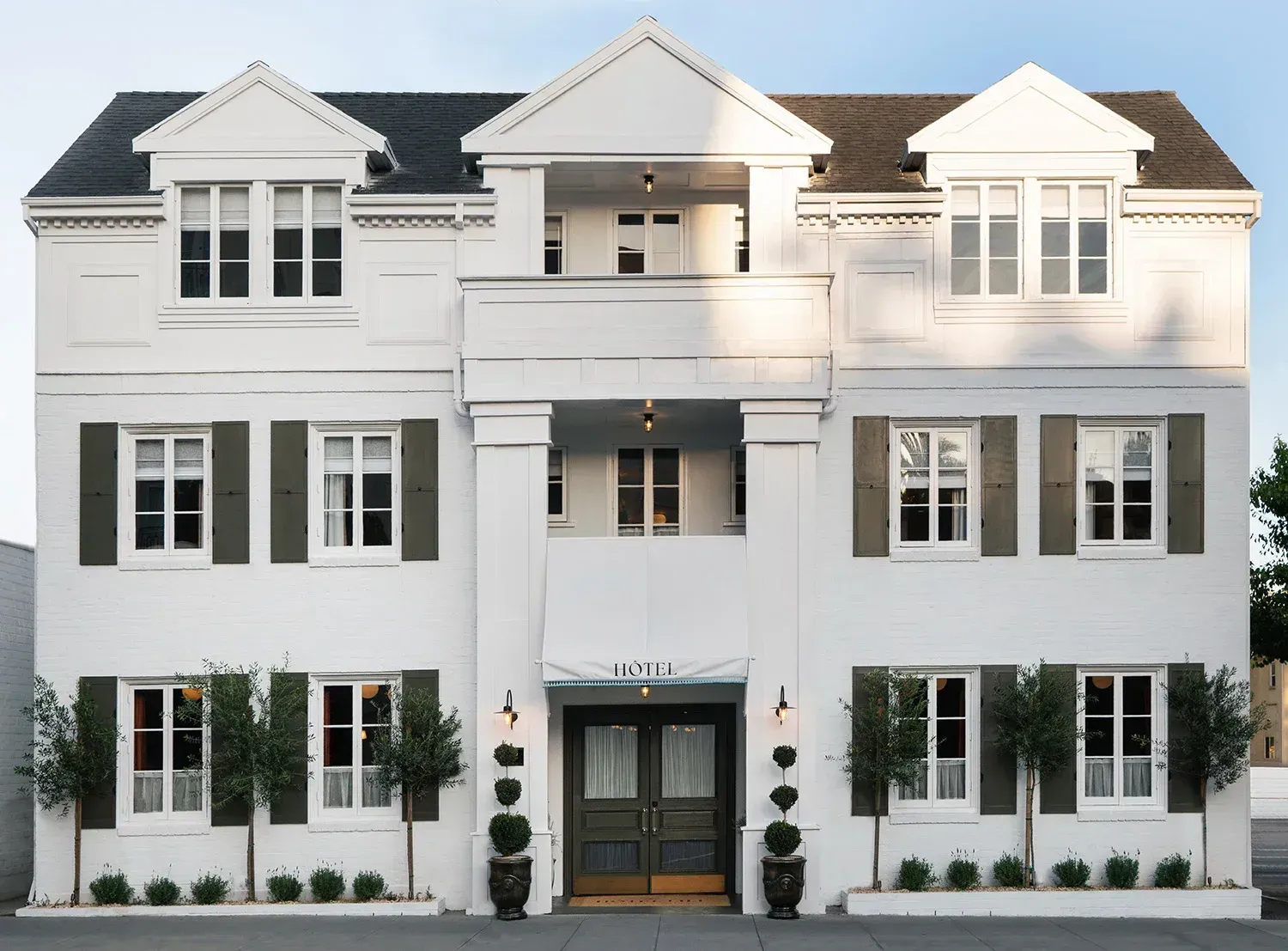
In 2001 the Kor Group, run by the hotelier Brad Korzen, bought the brick townhouse and opened it as Maison 140. The interiors were by Kelly Wearstler, then early in a career this project helped make, and the concept was a tribute to the small Parisian inns of the previous century: black and crimson, chinoiserie, a dim cocktail room called Bar Noir. The hotel ran under that name for a quarter of a century and, by Kor's account, picked up a Belle Époque refresh in 2011. It also came within a permit of vanishing. In 2019 the building's then-owner won unanimous approval from the Beverly Hills Planning Commission, and City Council sign-off that November, to demolish the place and raise a four-story, 66-room replacement called the Lasky Hotel. It never got built.
Which makes The Hôtel Lili a Parisian hideaway installed in a building that was already a Parisian hideaway, by a different designer, for a different owner, in a different decade. Nothing in the hotel's own telling acknowledges the predecessor. The 1939 residence gets a mention; the hotel that occupied the same rooms until last winter does not. Whether that is discretion or amnesia is a matter of taste, but the repetition is the most genuinely interesting fact about the property, and it is the one thing the launch material will not touch.
Red velvet, parquet and a plaster lion
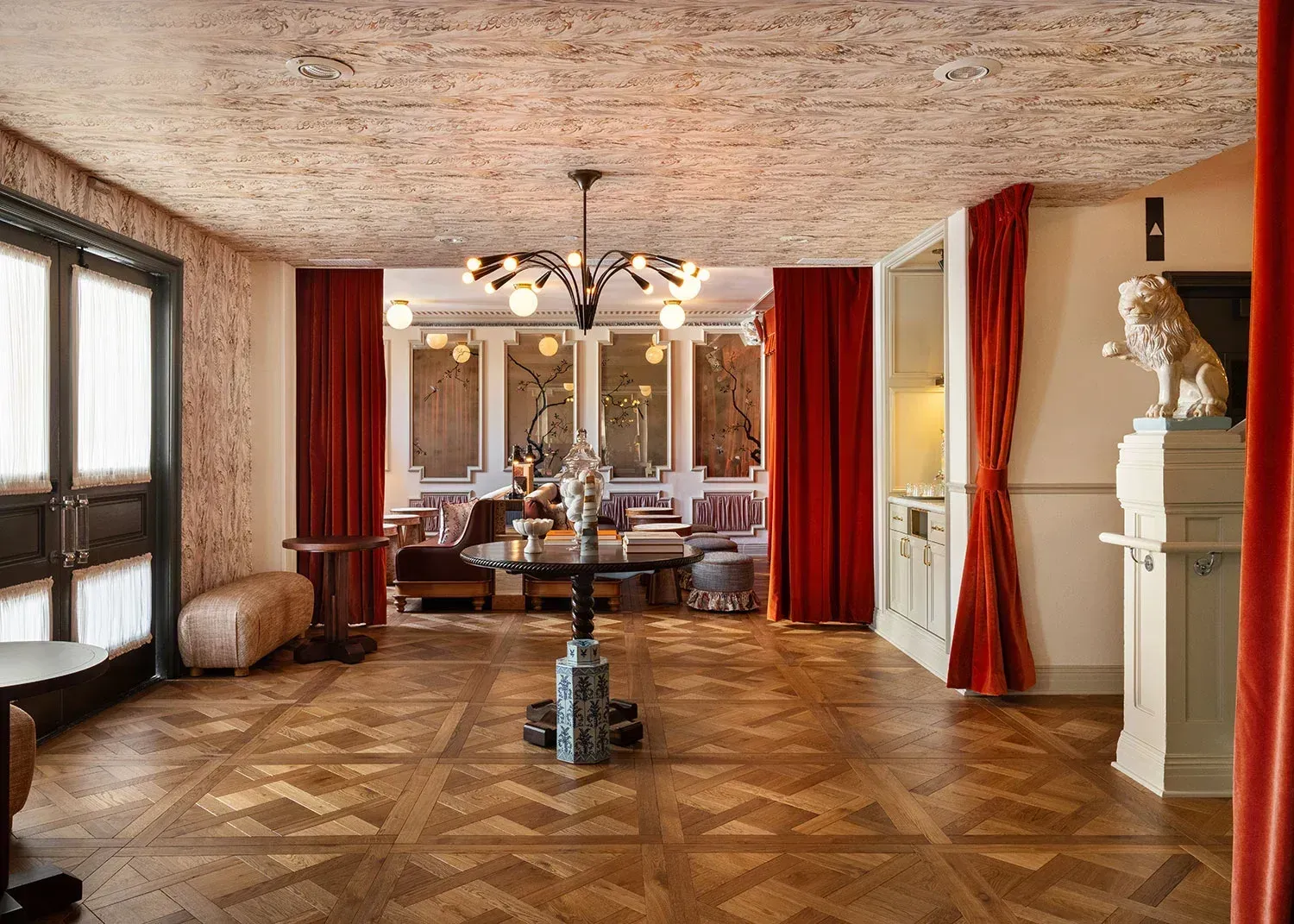
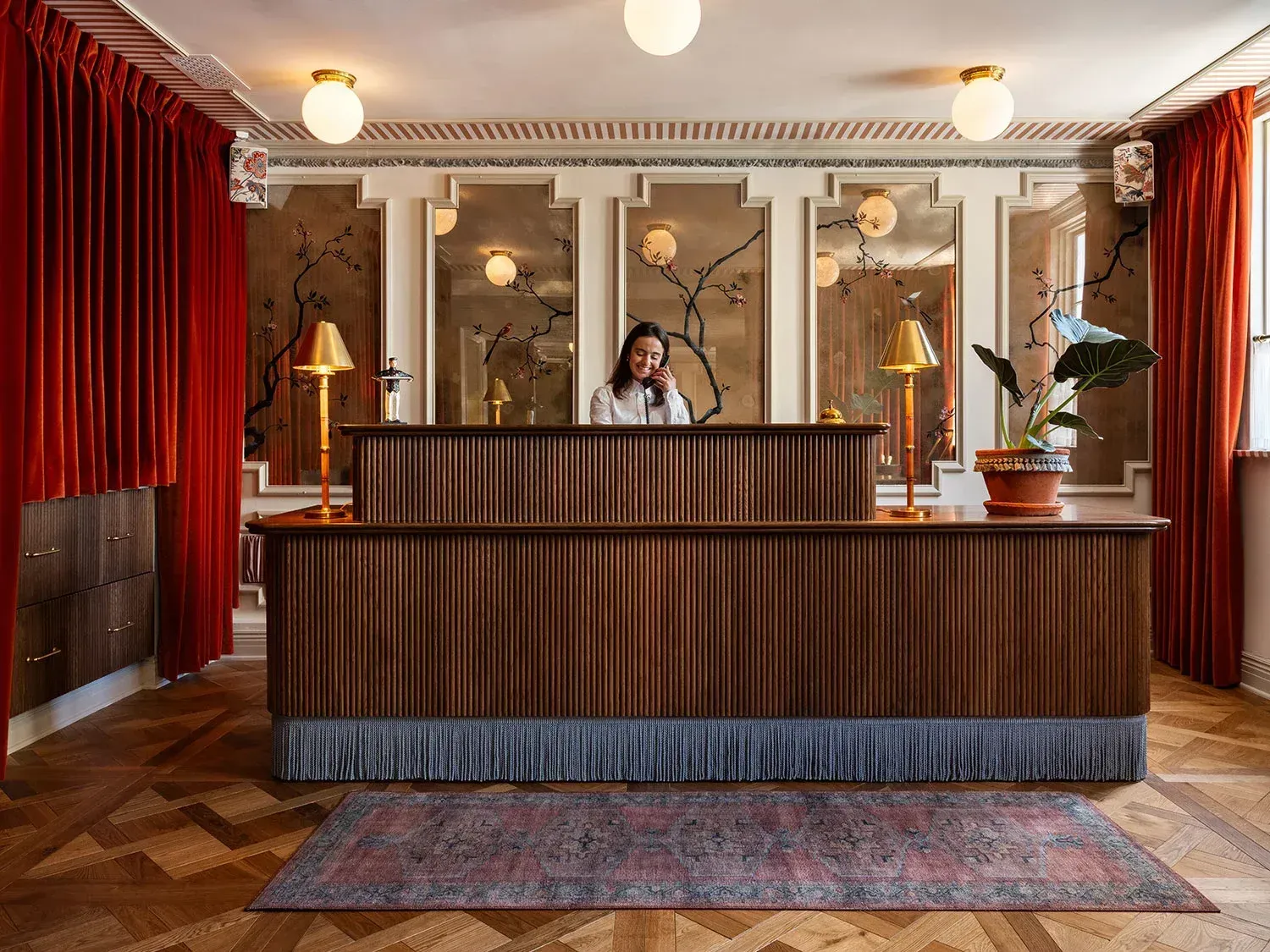
The new interiors were done in-house by Palisociety's own team under founder Avi Brosh, with no outside studio credited, which is unusual at this level of finish. The palette is soft white and pale grey set against camel, orange and mustard. The floors are marquetry parquet. The ceilings are papered in a mottled stone print that reads like travertine from across the room. The walls carry mirrored panels painted with blossom branches, lit by globe bulbs in brass collars.
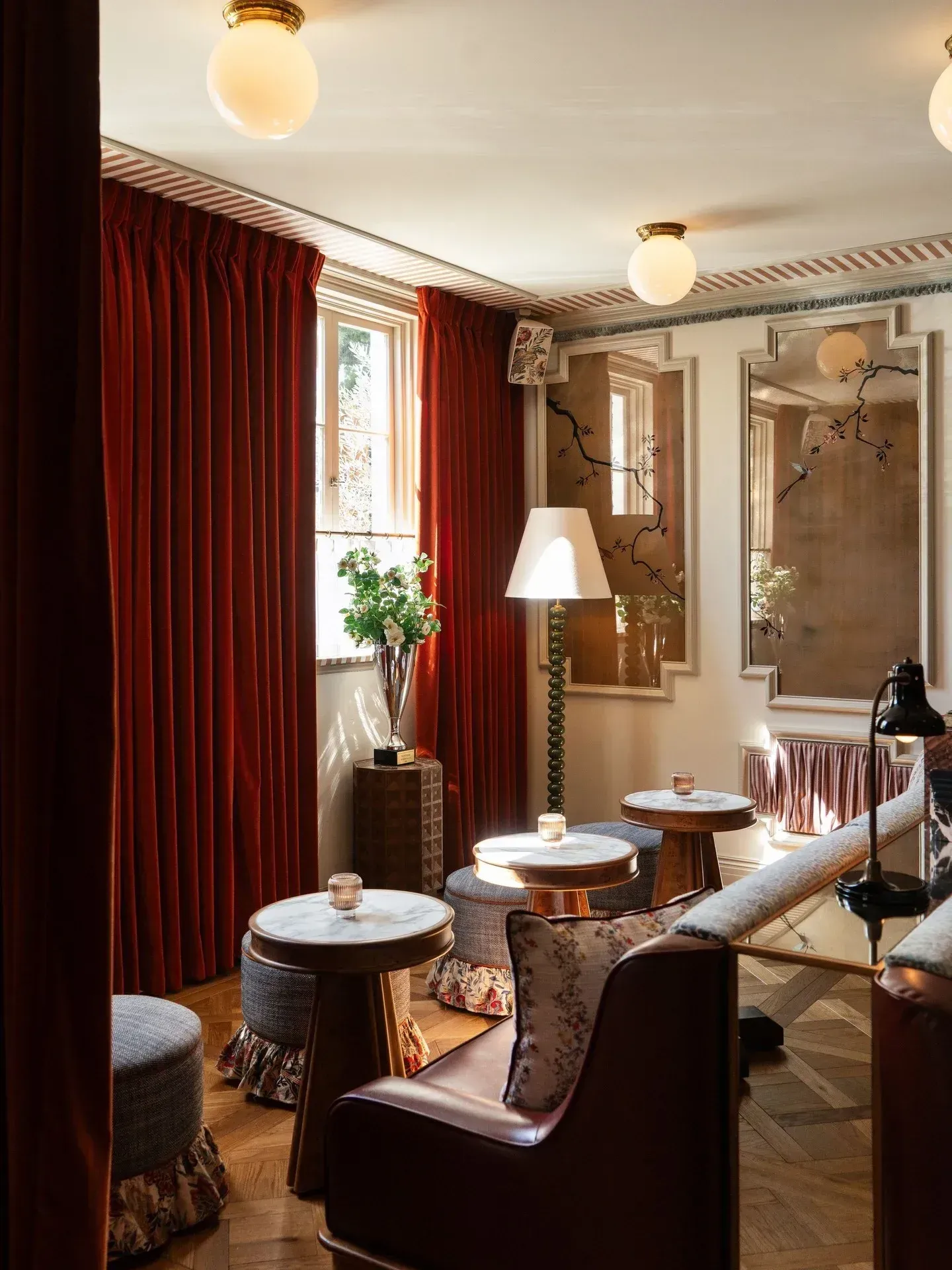
Brosh has talked about drapery as the thing that gave the hotel weight, a way of buying permanence in a building that could not be structurally rebuilt, and the curtains are everywhere: framing doorways, dividing the lounge, swagged over the bar. They do the work that walls would do in a larger property.
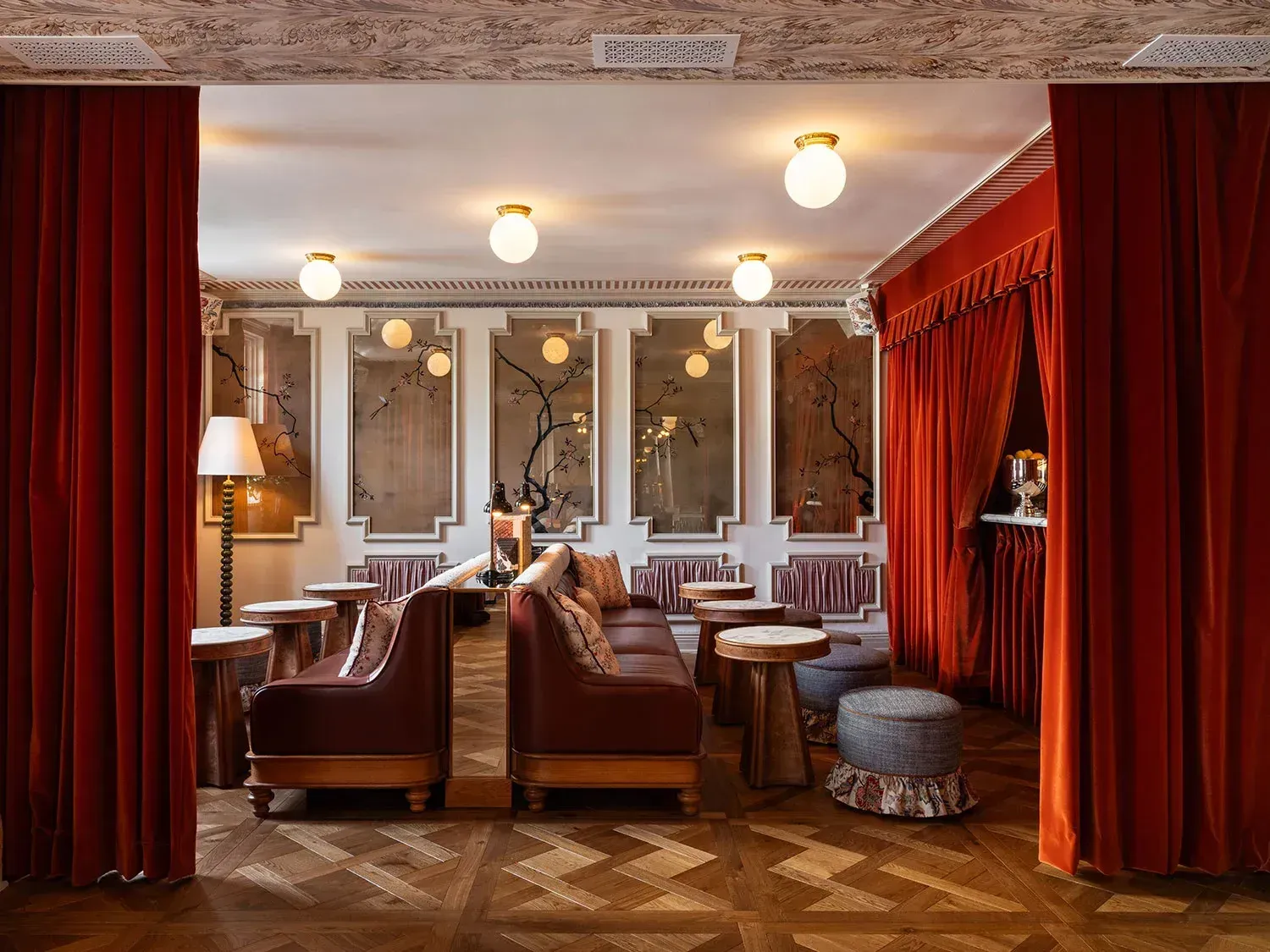
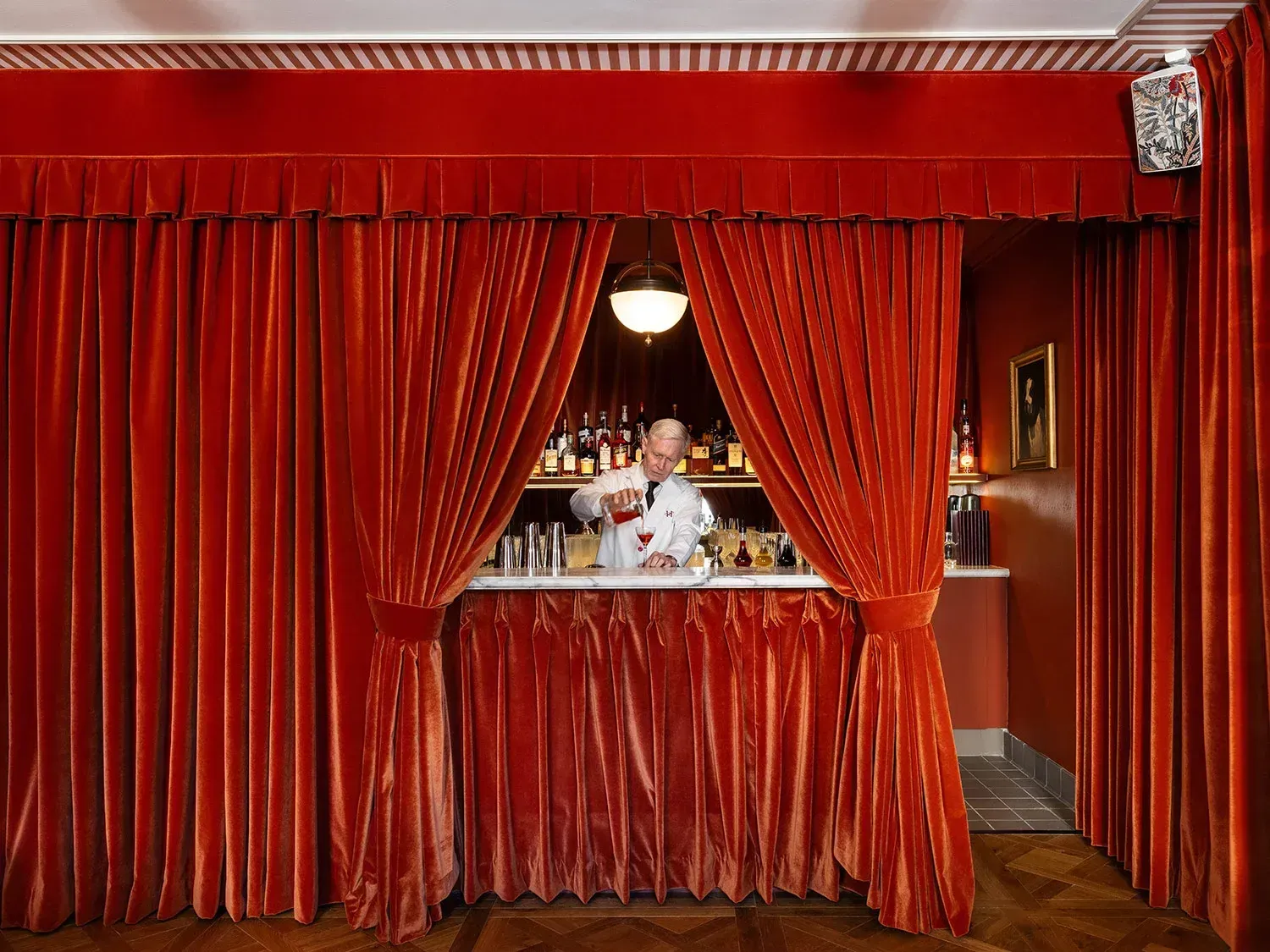
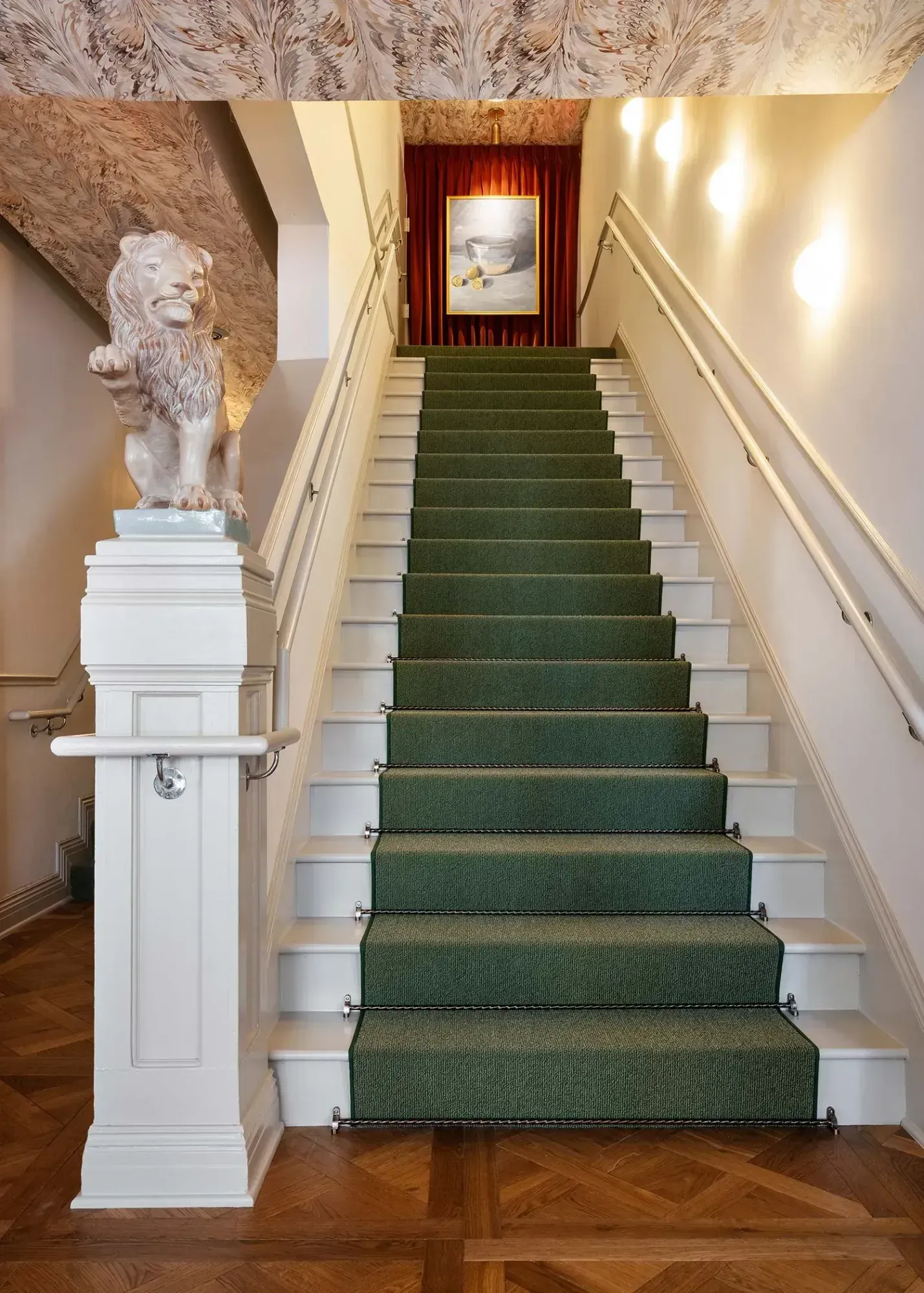
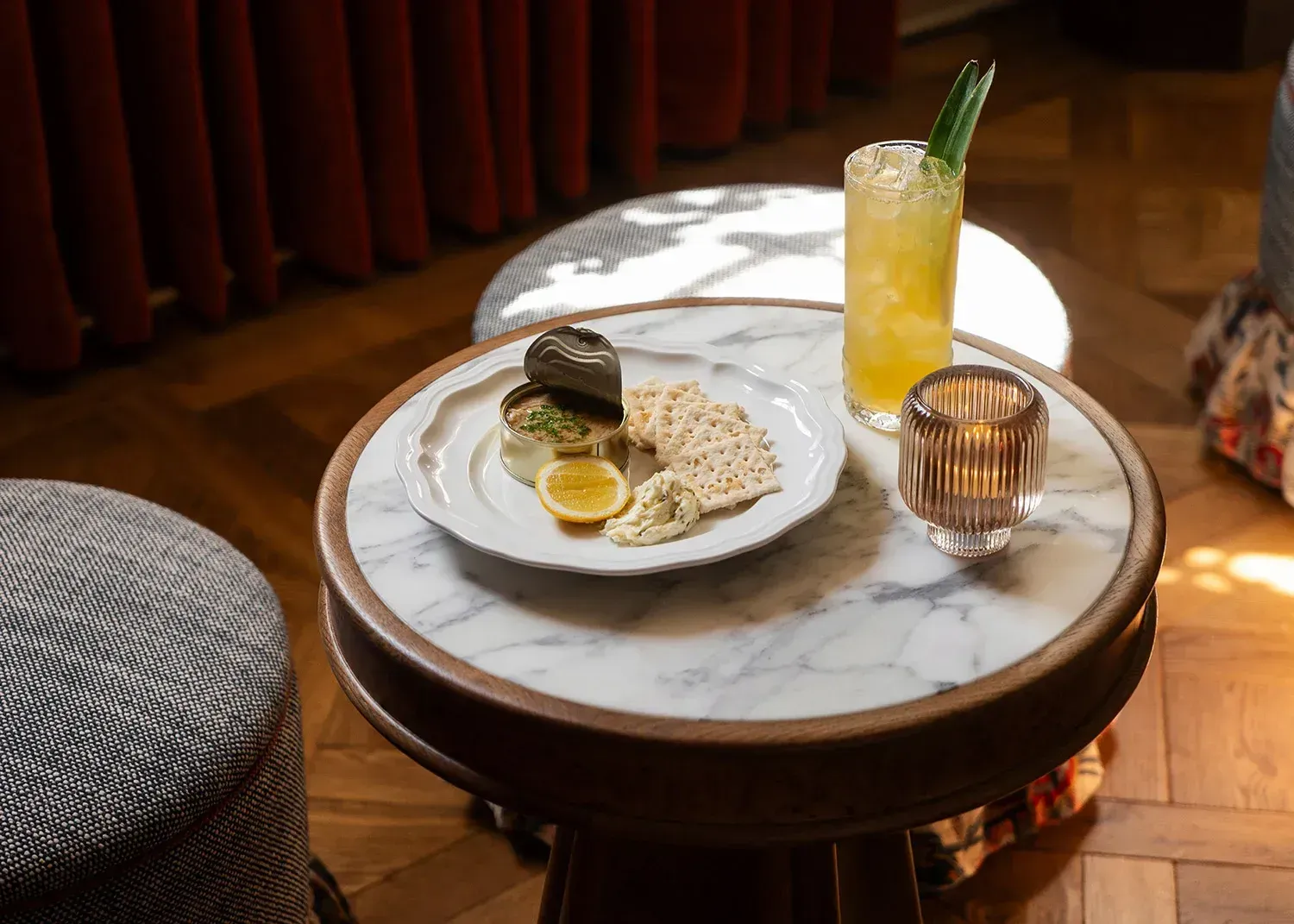
The bar is the best thing here. It is a short counter set into a proscenium of orange-red velvet, tied back like a stage, with a bartender in a white jacket standing in the opening. The list is deliberately small: classic cocktails, a house martini built on vodka and lychee, wine, beer, and light bites that run to tinned fish with cornichon whipped butter and French onion dip. A plaster lion sits on a plinth at the foot of a green stair runner held down with brass rods.
Forty-four rooms, and some of them are very small
There are six room types. The entry category, the Lil' King, runs 164 to 171 square feet and is a studio in which a curtain, not a wall, separates the bed from the bathroom. The Lower King and the King are both 195. The Deluxe King spans 212 to 286 square feet and is where a bathtub first appears. The single suite, an accessible layout called the Lili Suite, is 322 square feet. For scale, 164 square feet is smaller than a lot of Manhattan studio bedrooms, and about a third of what an entry-level room measures at the Peninsula or the Waldorf Astoria nearby, where standard rooms start around 480 square feet.
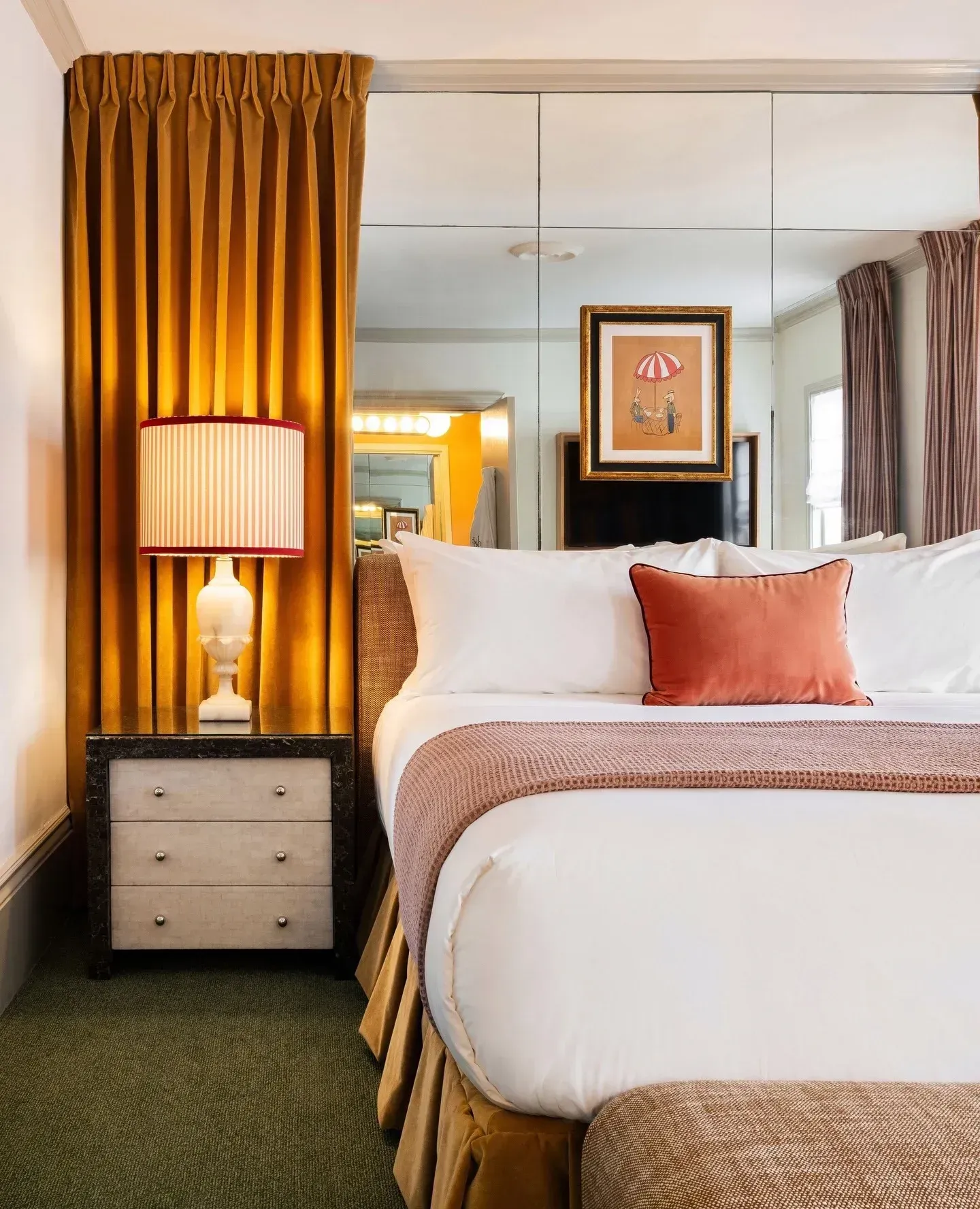
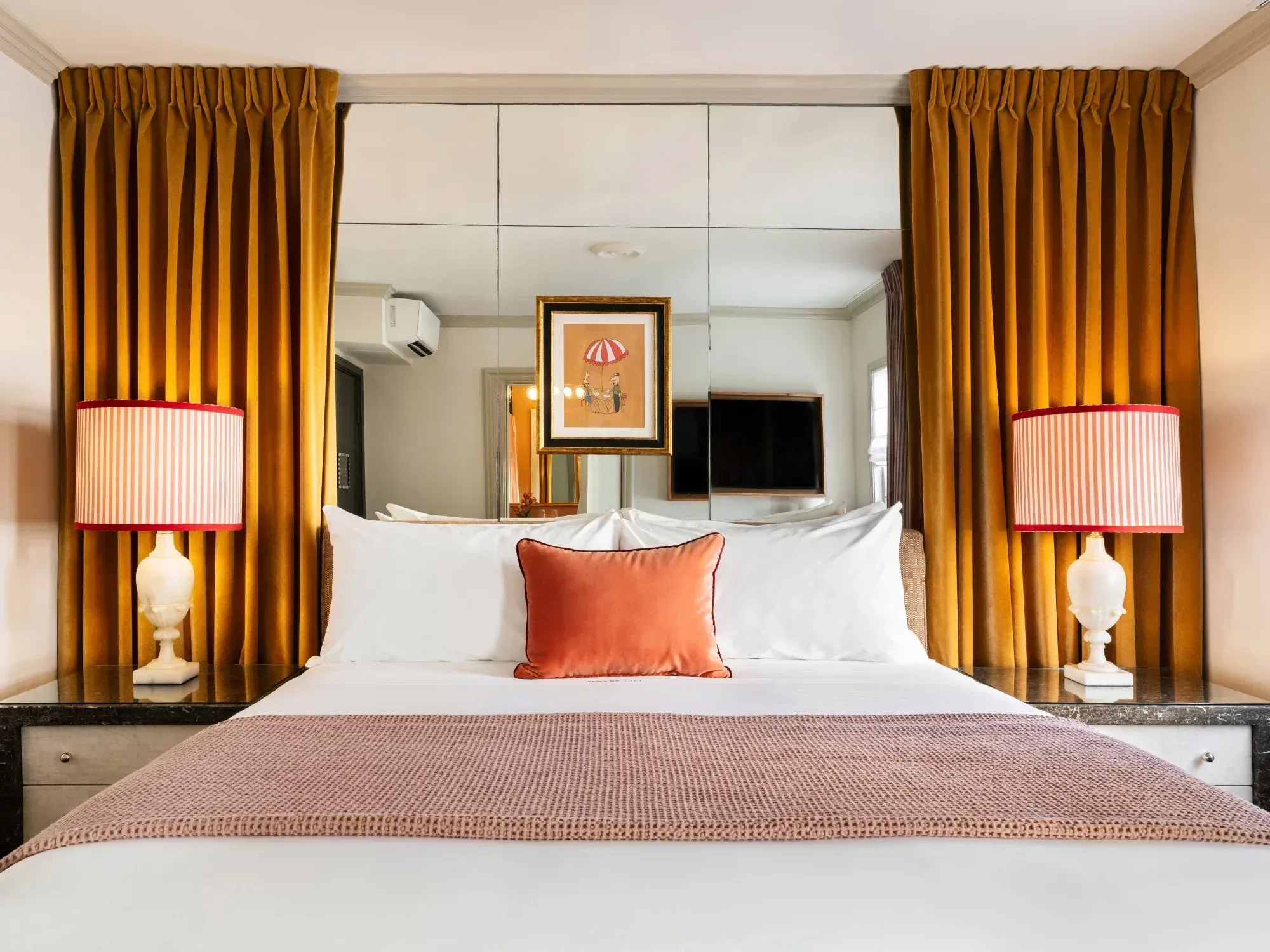
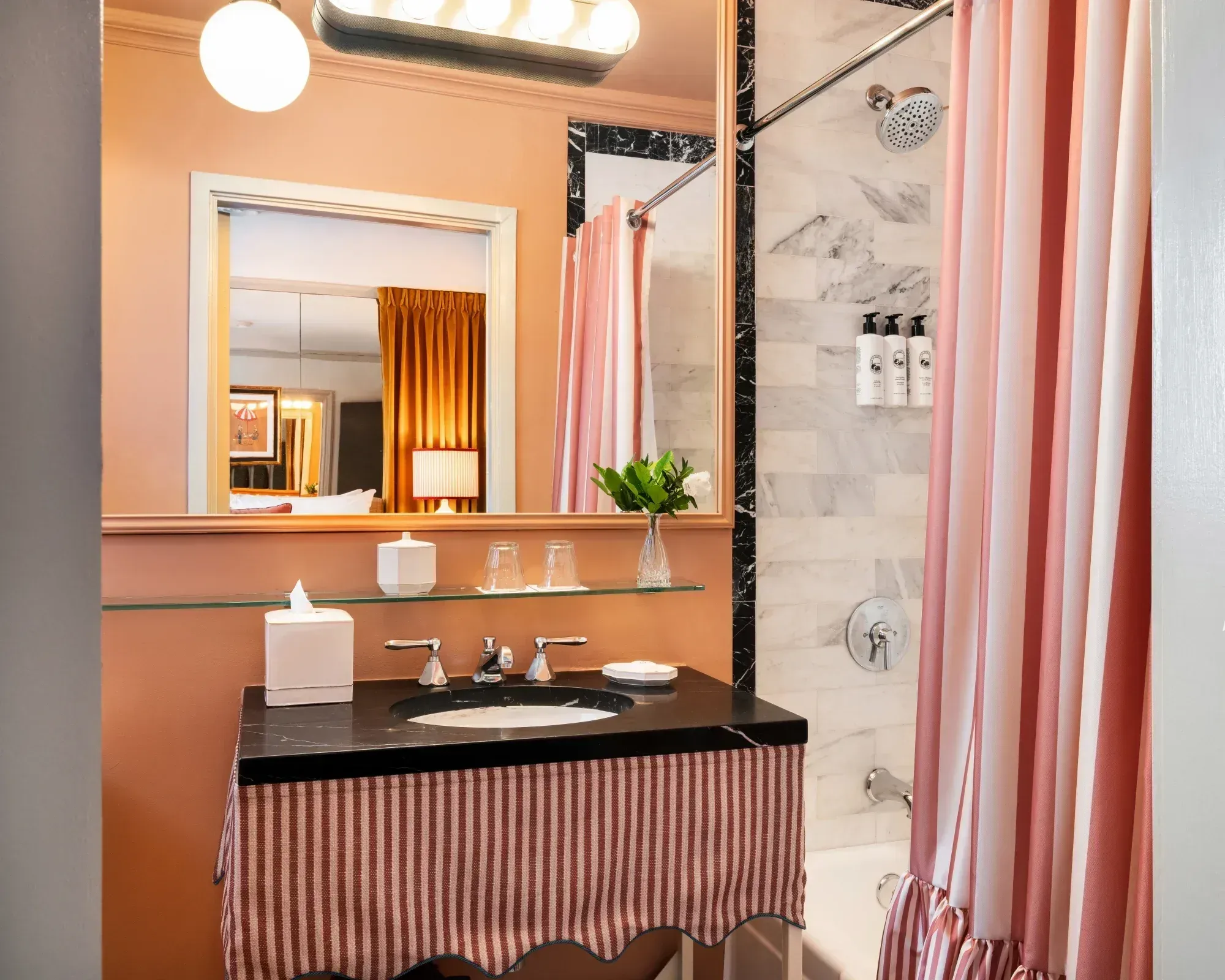
What the rooms lack in floor area they make up in finish. Mustard velvet panels hang behind mirrored headboard walls, alabaster lamps sit under pink pleated shades trimmed in red, nightstands are burl and marble, carpet is green. Beds are dressed in Bellino linens. Every room gets a Grind espresso machine, Diptyque amenities, a stocked minibar, a fifty-inch television, and, in a nice piece of restraint, rotary-style telephones and blinds you raise by hand. Bathrooms are apricot and black marble behind a pink and white striped shower curtain.
What is not here
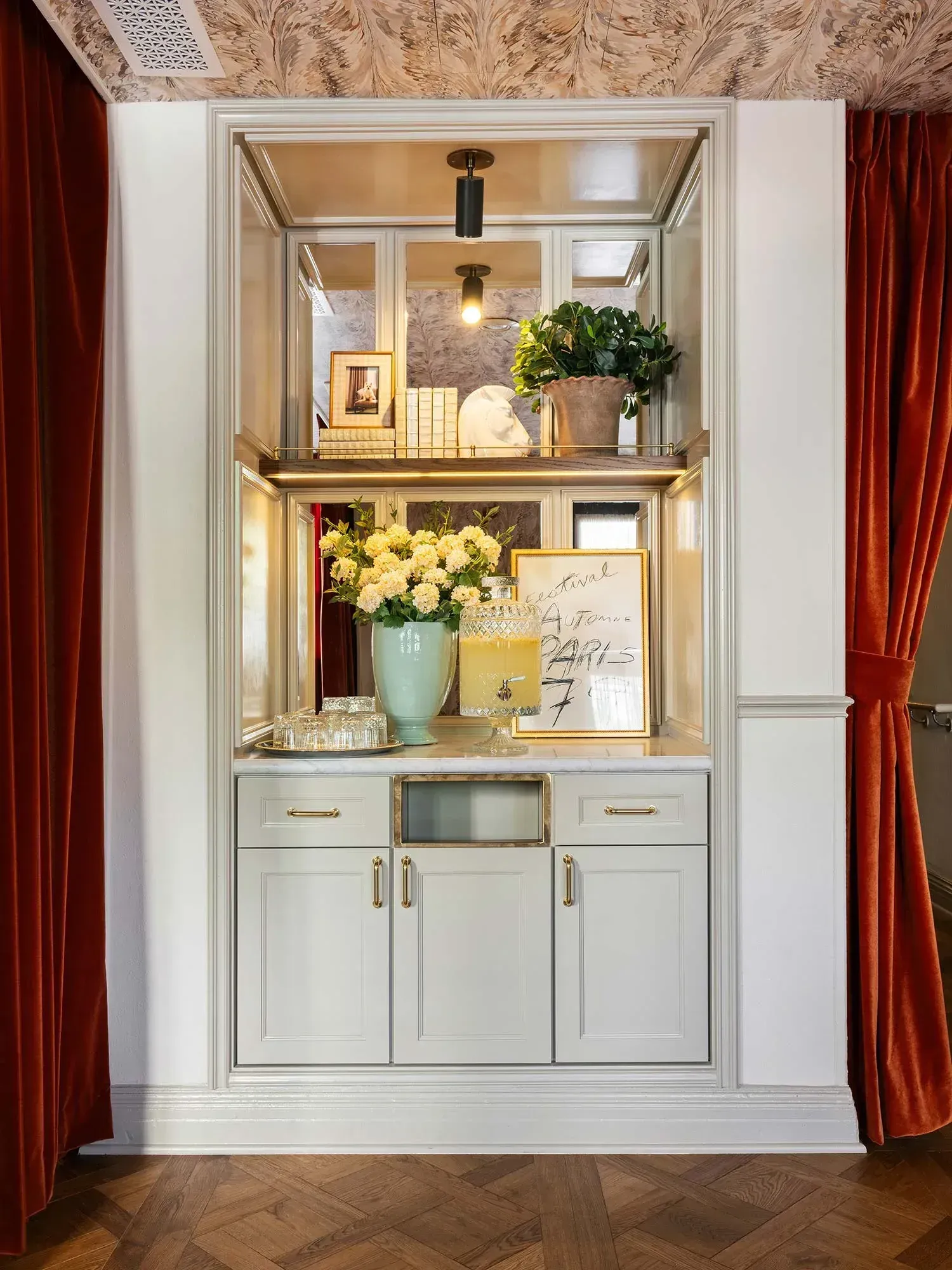
No restaurant. No spa. No pool of its own; guests are walked to the pool at the Mosaic on South Spalding, the sister property Palisociety was running when both hotels changed hands in 2025. No dedicated meeting space, though the bar can be taken over for a small reception. Fitness is one mirrored room holding a treadmill, a Peloton and a weight bench. Food service is a breakfast menu in the morning and light bites in the afternoon and evening, supplemented by complimentary bubbles on arrival, coffee and tea each morning, and a lemonade bar in the lobby every afternoon. Self-parking runs $50 a day in a lot with EV chargers, and dogs under thirty pounds are welcome for a one-time $100 fee.
The price is the argument
Rooms start around $325 a night, with softer dates landing below that. The Waldorf Astoria is a block away and the Peninsula is around the corner; both average well past $1,100 a night, and the Maybourne, a longer walk east, sits in the same territory. Lili runs at roughly a quarter to a third of that.
Read that way, the omissions stop looking like gaps and start looking like the business plan. You give up the restaurant, the spa, the pool and two thirds of the square footage. You keep the address, the parquet, the martini and a staff small enough to know your name. It is an honest trade, and it is a different proposition from the one Beverly Hills usually sells. Brosh has been developing property since the late 1990s and opened his first hotel in 2007, always under 150 rooms, and in June he put sixteen Palisociety properties into Design Hotels, which called it the largest single portfolio addition in its history. The company clearly believes the category has room in it.
Whether Lili reads as luxury or as a very well decorated bargain depends on what you thought you were buying. At 164 square feet with a curtain for a bathroom door, the entry room is not a luxury room at any price. At $325 in Beverly Hills, it is a genuinely useful one.
Who owns it, and who is Lili
Palisociety operates the hotel; it does not own the building. In spring 2025 the Corinthia Group, through its Maltese parent International Hospitality Investments, and Action Real Estate of Kuwait bought Maison 140 together with the Mosaic from the Chadha Family Trust for about $36 million combined, and Palisociety stayed on to manage. Brosh's framing for the property is intimate, design-led and hyper-local, and he has pointed out that his first apartment was right down the street on Spalding, a studio on the second floor. Both things are true at the same time: the sensibility is local, the capital is not. The street itself has form here. Lasky Drive marks the western edge of the old Beverly Hills Speedway, a 275-acre wooden board track that ran from 1920 to 1924, and it takes its name from Jesse L. Lasky, the producer whose company became Paramount and who was among the track's investors.
As for the name, nobody will say. Palisociety's materials do not explain it and Brosh has not been asked in print. The building's most famous resident was called Lillian. Make of that what you will.