The First Midjourney Spa Opens in San Francisco in 2027
The first Midjourney Spa is planned for a site at 300 Grant Avenue, a block off Union Square in San Francisco, opening at the end of 2027. Basalt Architects led the design of the roughly 2,400 square metre building, which puts hot tubs, saunas, cold plunges and rooms for rest in one continuous sequence with about ten body scanners of a kind that has not been built at this scale before.
A bathing house built around a machine
Midjourney, known until now for image generation, has started a medical division and is developing what it calls Ultrasonic CT, or the full body ultrasound. The company is aiming at whole-body imaging detailed enough to sit alongside MRI, in about sixty seconds, with no radiation and no magnetic field. Only sound and water.
The spa is how that machine is meant to reach people. Instead of installing the scanners in a clinic, Midjourney is building a bathhouse around them, on the argument that somewhere you actually want to spend an evening will pull you back often enough to build a running record of your own body. The scan is positioned as a side effect of the visit rather than its purpose.
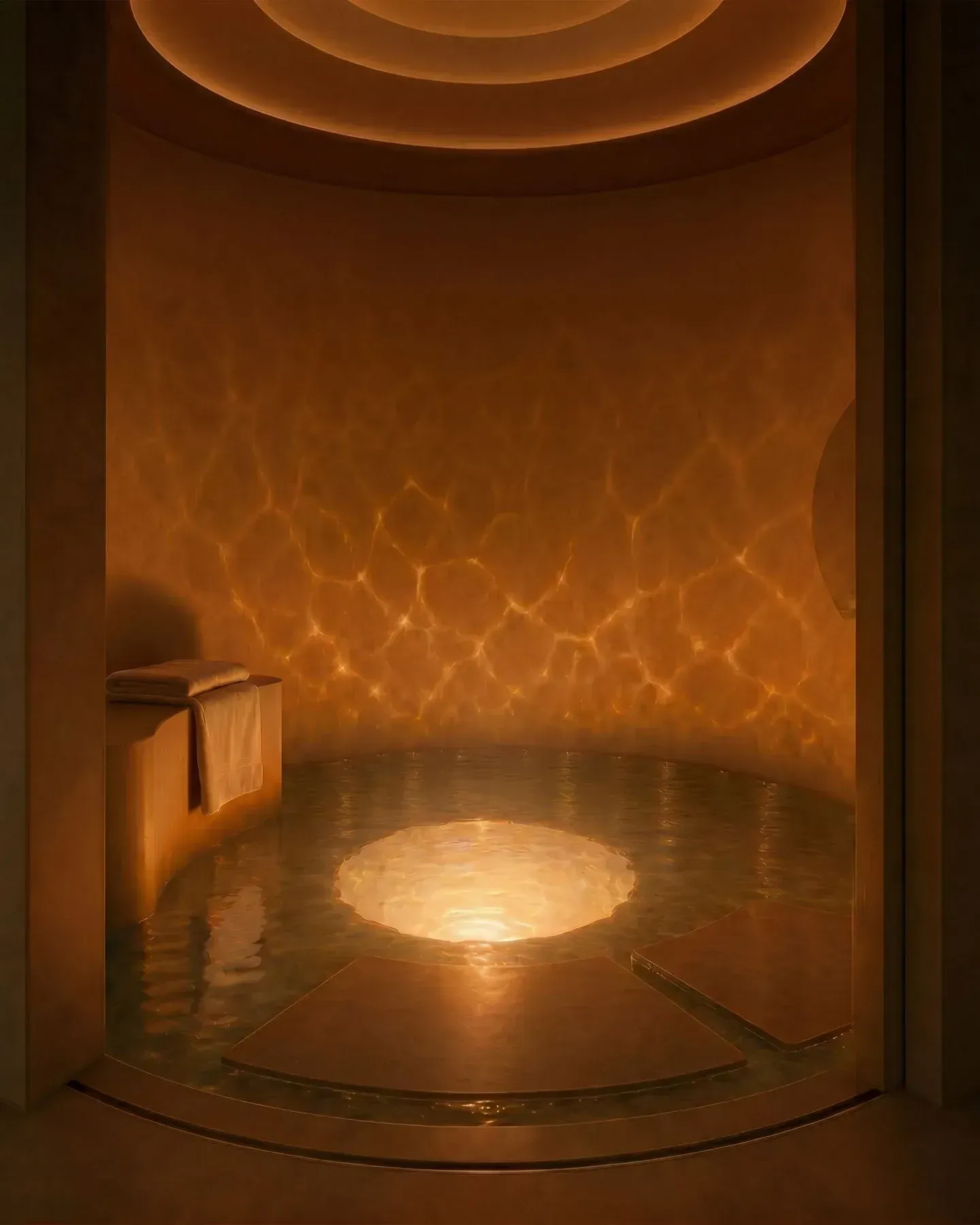
The scanner
A bather steps onto a platform set into a shallow pool. The platform runs on rails and lowers at about five centimetres per second, carrying the body down through a ring of sensors under the water.
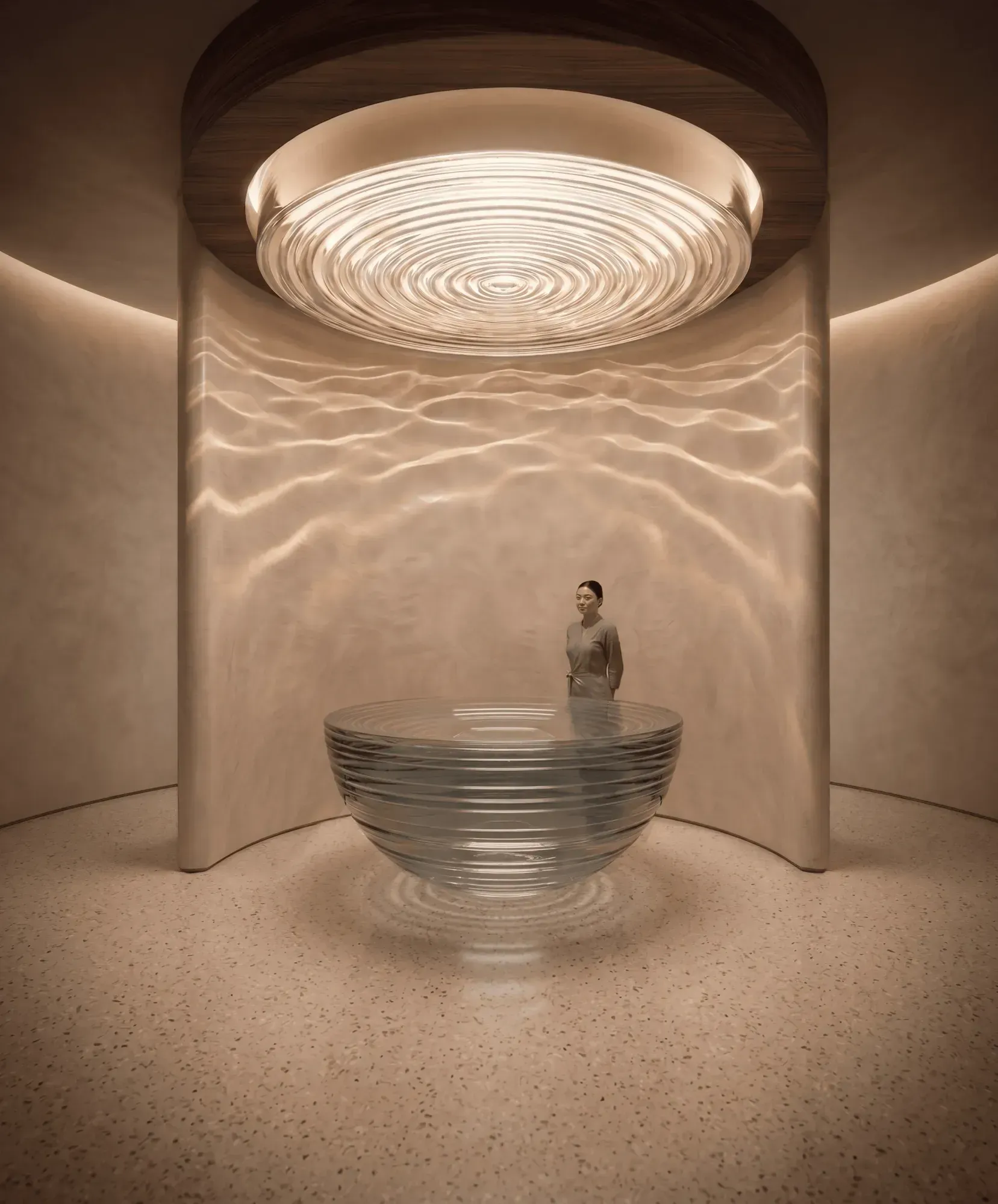
That ring holds roughly half a million elements, each around the size of a fine grain of sand, and each able to work as both a speaker and a microphone. They take turns firing ultrasonic pulses and listening for what comes back, from every angle at once.
Sound bends as it crosses between materials of different density and stiffness, so the way each pulse is distorted on its way through skin, fat, muscle and bone can be solved backwards into a map of what it passed through. Midjourney puts the raw output at terabytes per second and the finished reconstruction at a fraction of a millimetre, and says the company is targeting something close to a hundred times the speed of an MRI.
Letting the building answer the machine
The design problem Basalt set itself was that the scanner is unfamiliar, and that the obvious solution, a clinical room with a machine in it, would undo the reason for building a spa in the first place. So the practice worked the other way round, treating the scanner's own raw materials, water, light, sound and movement, as the material palette for the whole building.
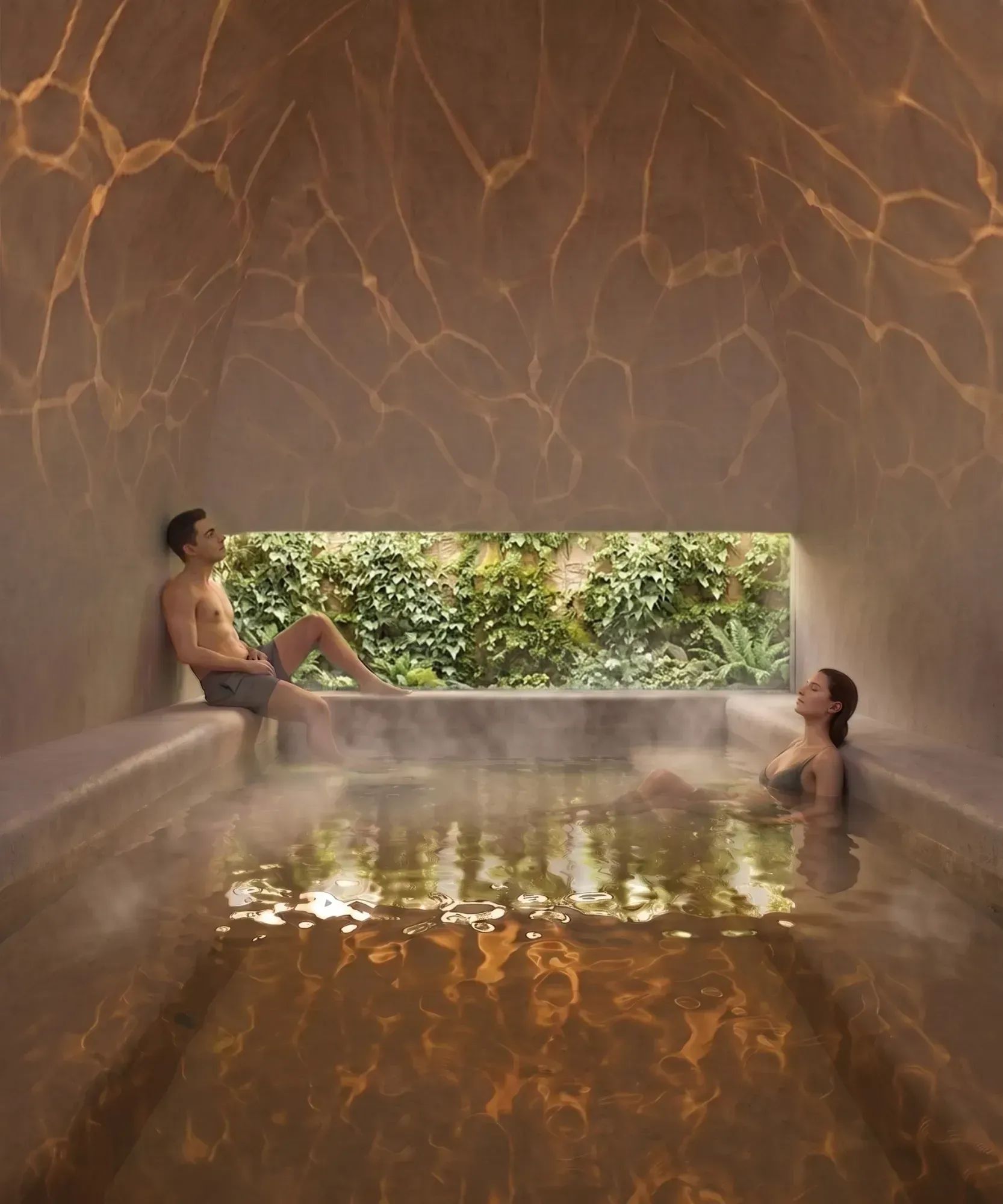
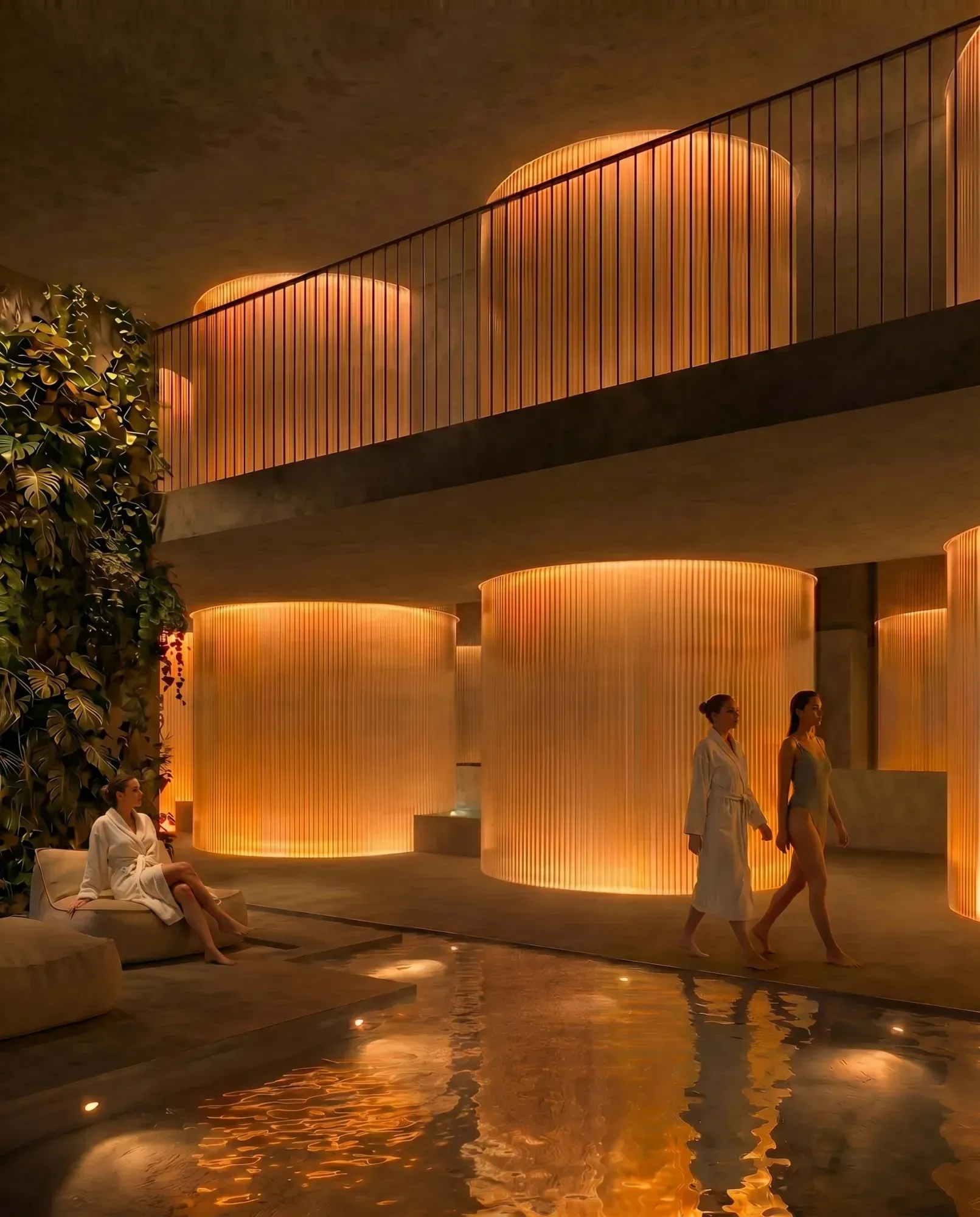
In the renders the scanners are cylindrical vessels standing in warm, curved rooms, lit from beneath the water and ringed overhead by concentric discs of light. They are the same plaster, stone and water as the pools around them. Nothing reads as equipment.
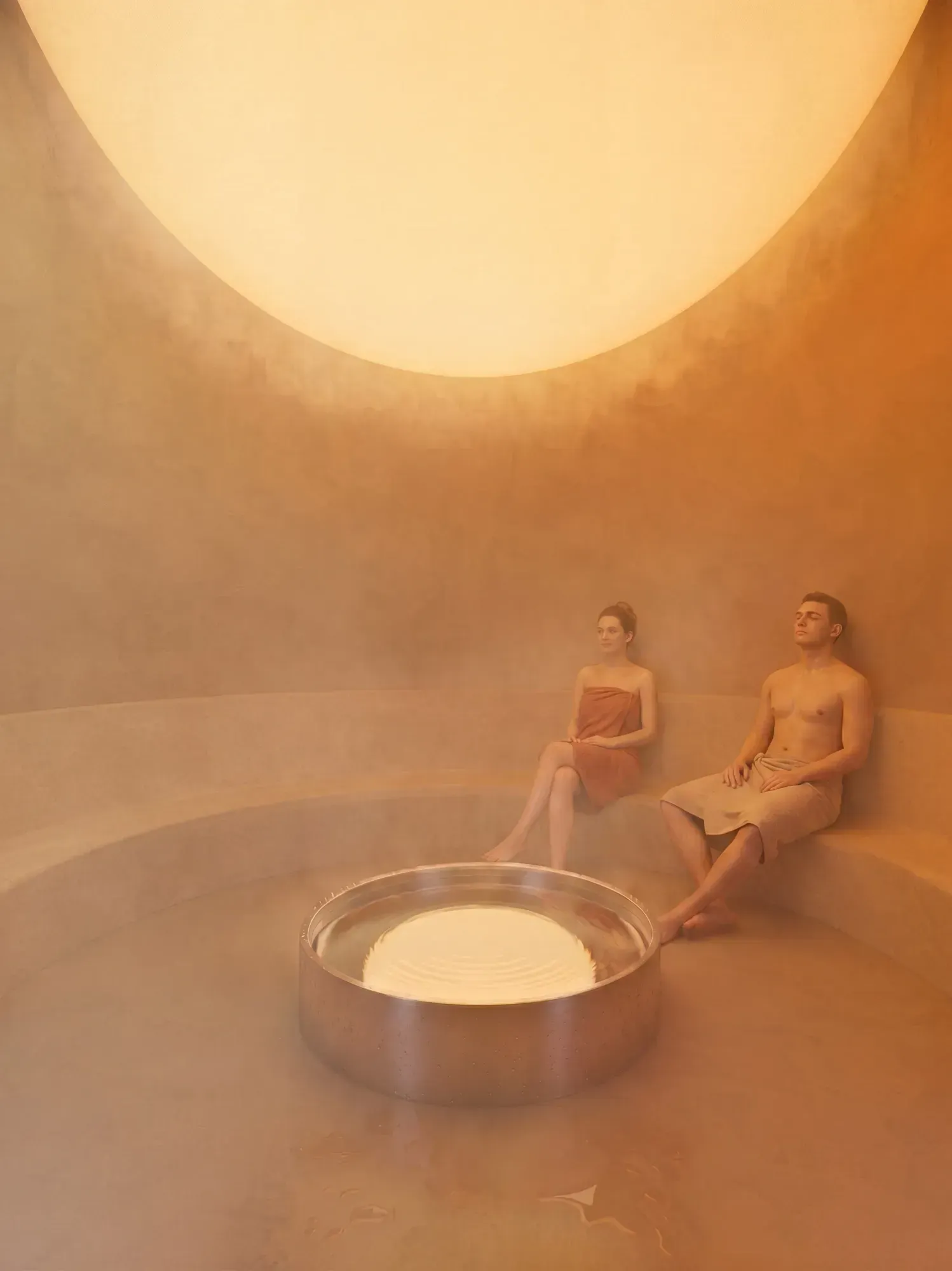
The rooms
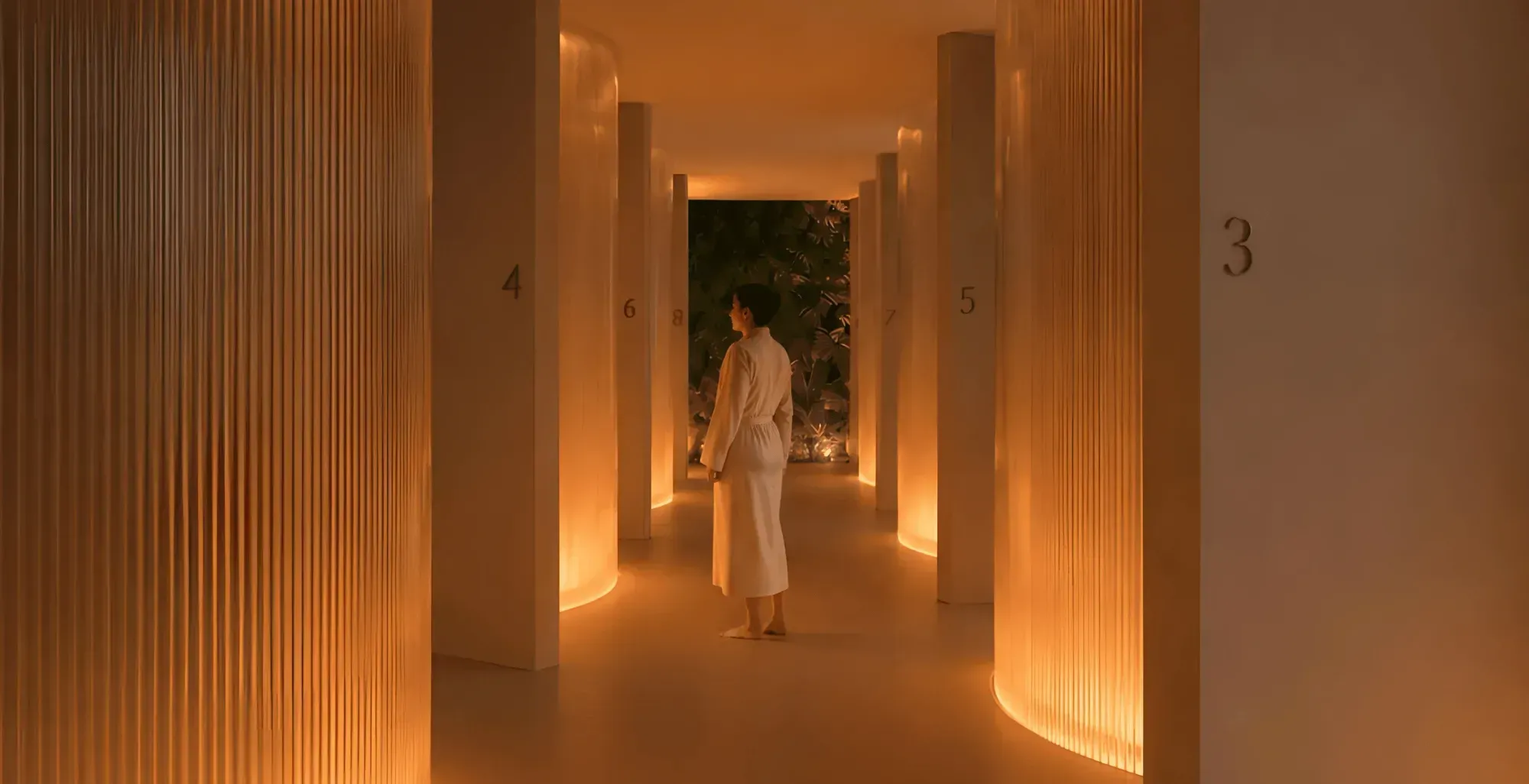
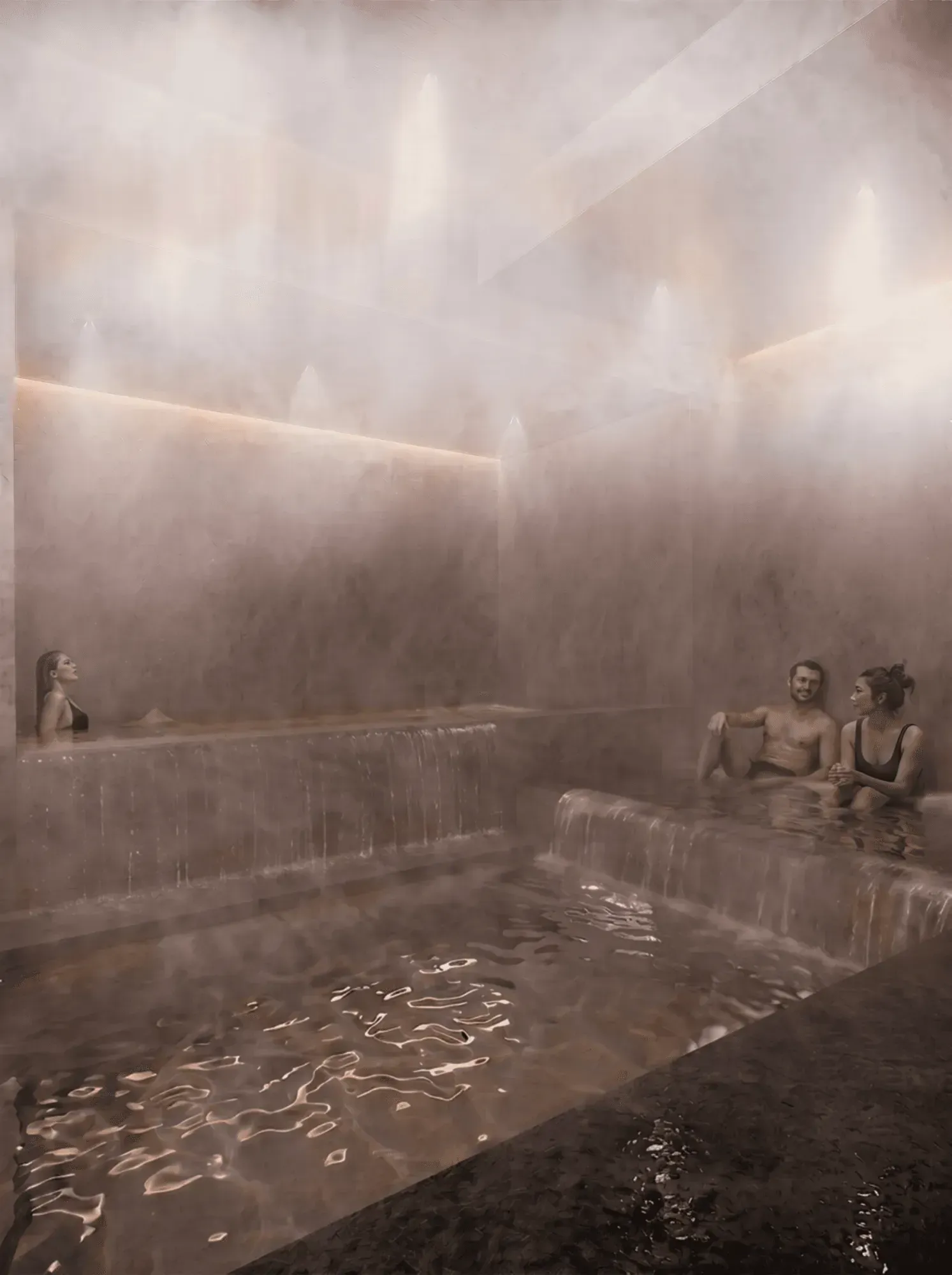
Circulation is narrow and dim, so the bathing halls open out of it rather than being entered head on. Heavy fluted columns break the pool floor into smaller rooms without sealing them off from one another, and a planted light well supplies daylight.
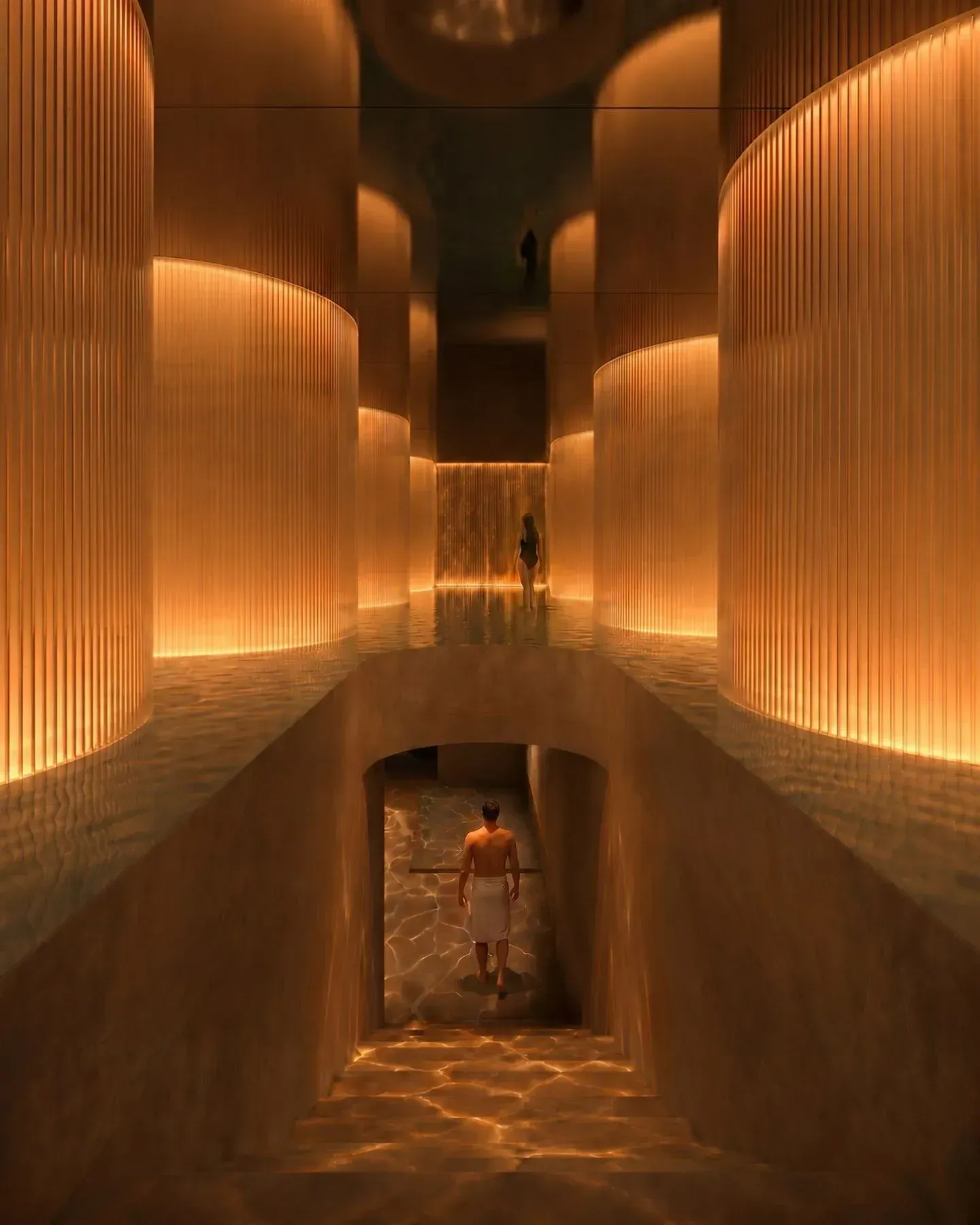
Beyond the pools there are saunas, cold plunges, a fire lounge, fitness space, and domed rooms for resting and for sitting with other people.
What is fixed and what is not
Midjourney has published a schedule. The next twelve months go to refining the hardware and the reconstruction algorithms, running research trials, moving to a second generation scanner design, and building out a first research spa. The San Francisco spa opens around the end of 2027. A third generation scanner on custom silicon follows in 2028, alongside expansion into further cities. The company has set itself a target of more than 50,000 scanners worldwide by 2031.
The regulatory position is narrower than the ambition. Midjourney says it will open by offering detailed body composition maps, which is not a diagnostic claim, and that it will submit results to the FDA to widen what the scanner is cleared to report. Anything past body composition depends on approvals the company does not have yet.
Midjourney also states that it has no investors and describes itself as a community-backed research lab. It has published its own estimate that widespread early imaging could let the world avoid 30 percent of all deaths and 50 percent of all healthcare costs. That figure is the company's projection for a technology that has not yet been deployed outside its own testing, and there is no independent clinical result to weigh it against.
Basalt calls San Francisco the flagship. Midjourney says it will start scaling to more cities in 2028. No second city has been named.