KAI, Kengo Kuma's Public Bath on Copenhagen's Harbor, Opens December 5
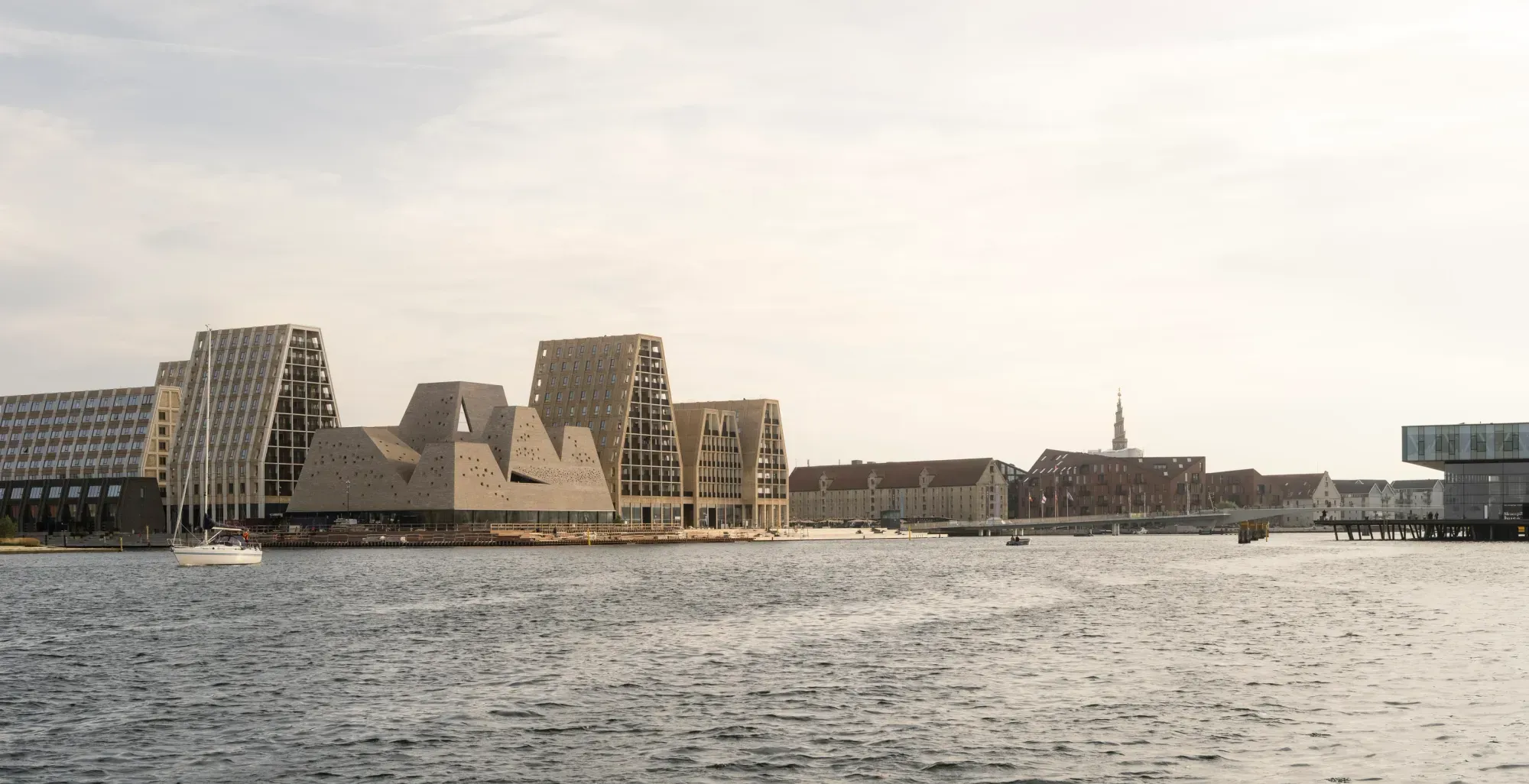
On Saturday, December 5, 2026, KAI opens on Papirøen (Paper Island) in Copenhagen: a 5,800-square-meter public bath designed by Kengo Kuma & Associates. It has ten pools over several levels, including an open-air pool set between five brick towers. Admission will be priced in line with the city's other swimming pools and water culture houses.
Opening day is an open house from noon to 6 p.m., with free access to swimming, wellness and the cultural program. There are no tickets and no registration. Entry is first come, first served, and spots are limited. Regular hours begin Sunday, December 6, from 6 a.m. to 9 p.m., seven days a week. Swimming tickets follow the City of Copenhagen's published pool prices, and children under 7 swim free with a paying adult. The address is Papirøen 47, 1436 København.
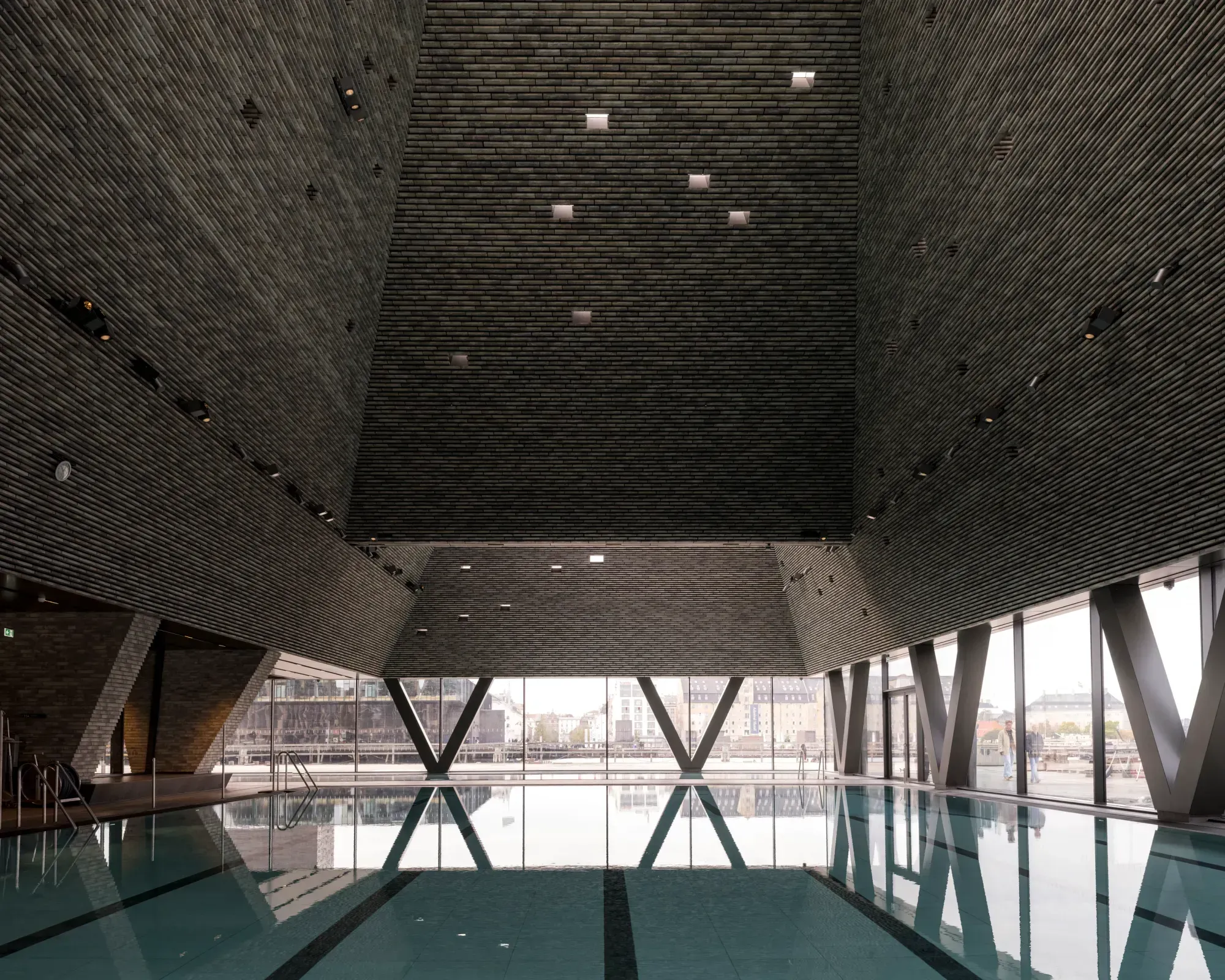
Swimming on the ground floor
The ten pools hold one million liters of water in total, and the building has capacity for 380 bathers. The ground floor holds a 25-meter Exercise Pool at 27°C, a Teaching Pool at 29°C and three Play Pools at 32°C.
Wellness on the first floor
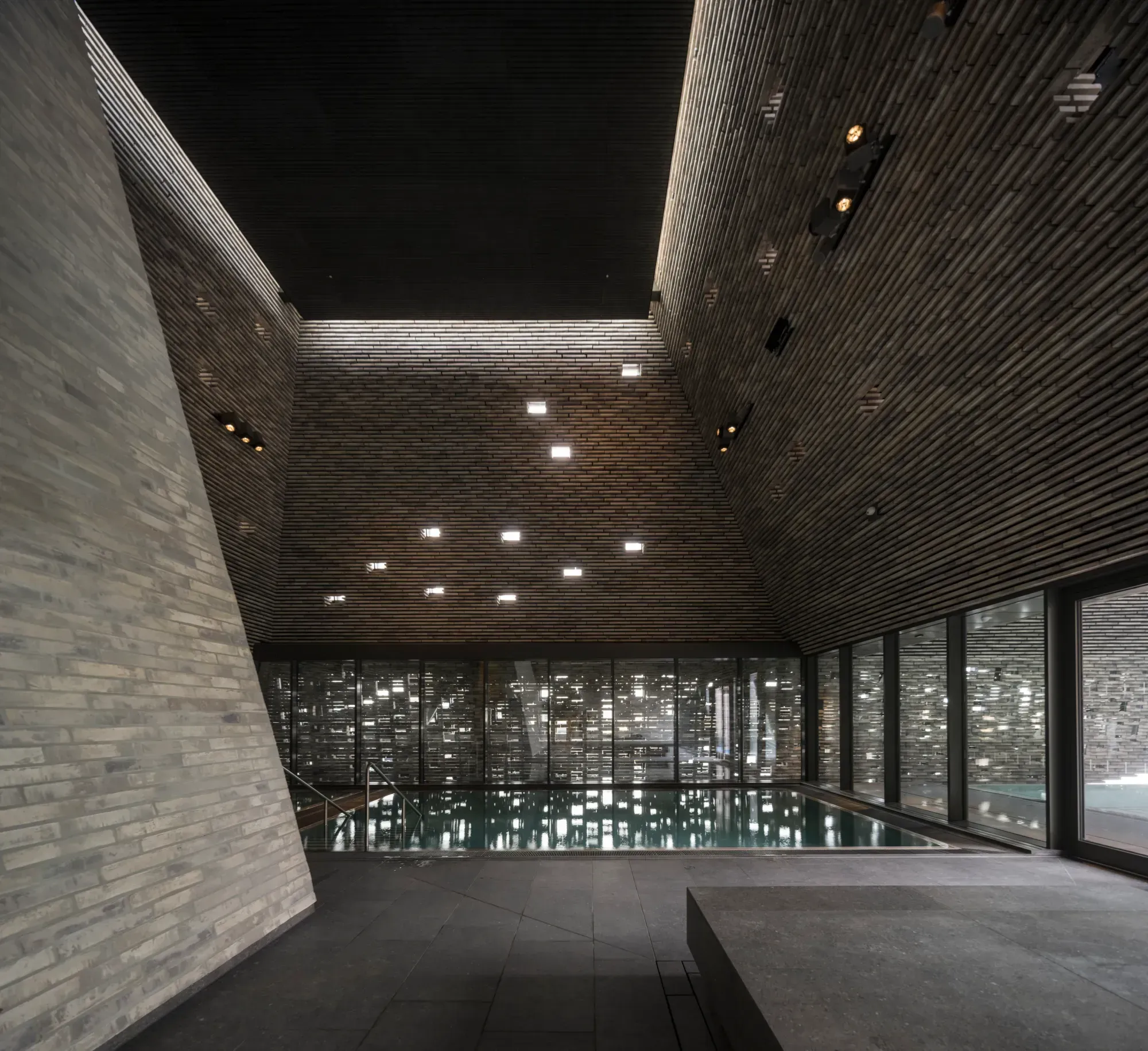
The first-floor wellness area has a Therapy Pool at 36°C, a Fire Pool at 42°C and an Ice Pool at 15°C, alongside sauna, a steam bath and warm stones.
Open to the sky
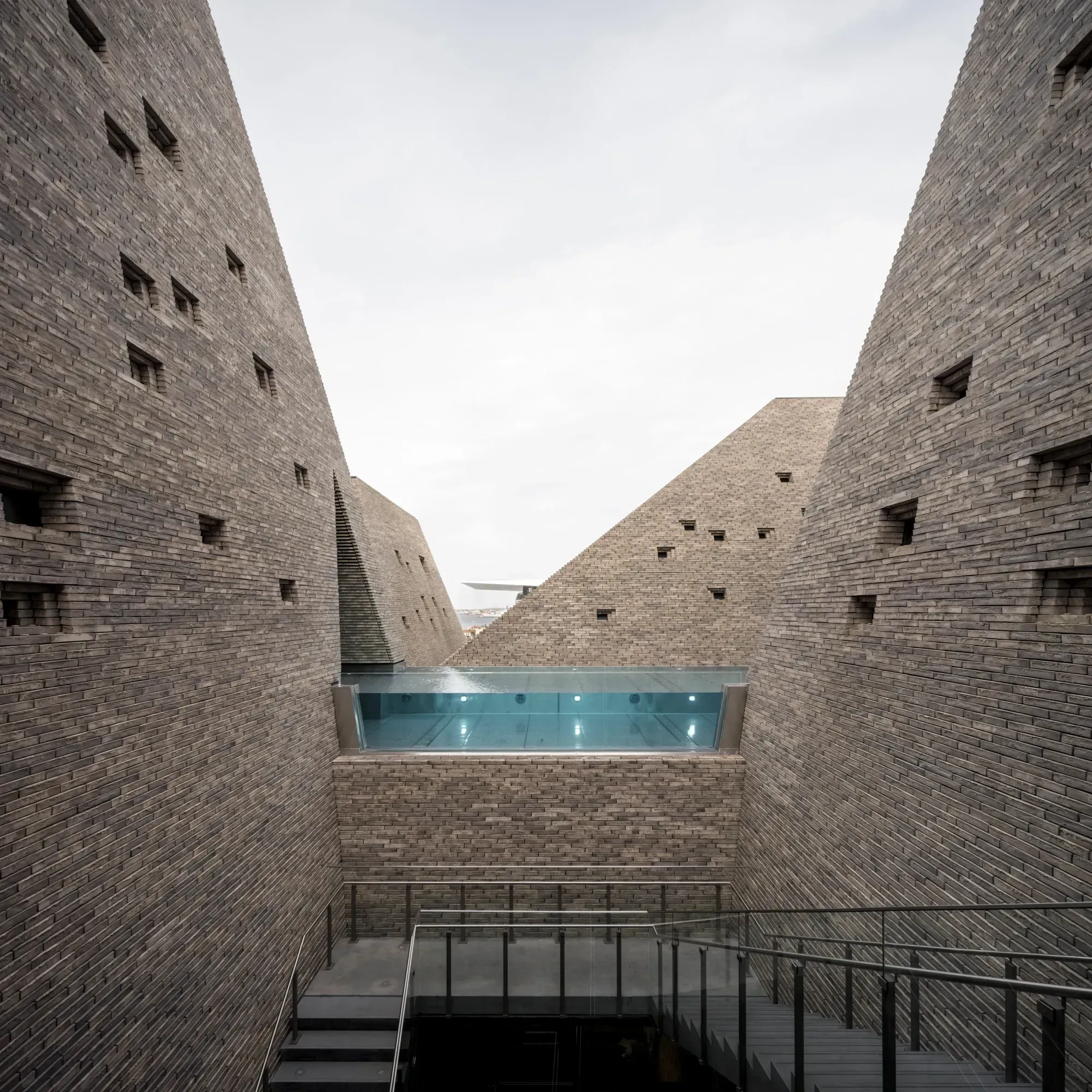
Two first-floor pools are outdoors. The Valley Pool, at 26°C, sits open to the sky between the five towers at the building's highest point. The Onsen, at 36°C, looks over Copenhagen's harbor. Both are heated year-round by a vertical ground-source heat pump system drawing on ten boreholes drilled 250 meters deep, made possible by support from Nordea-fonden.
Five towers
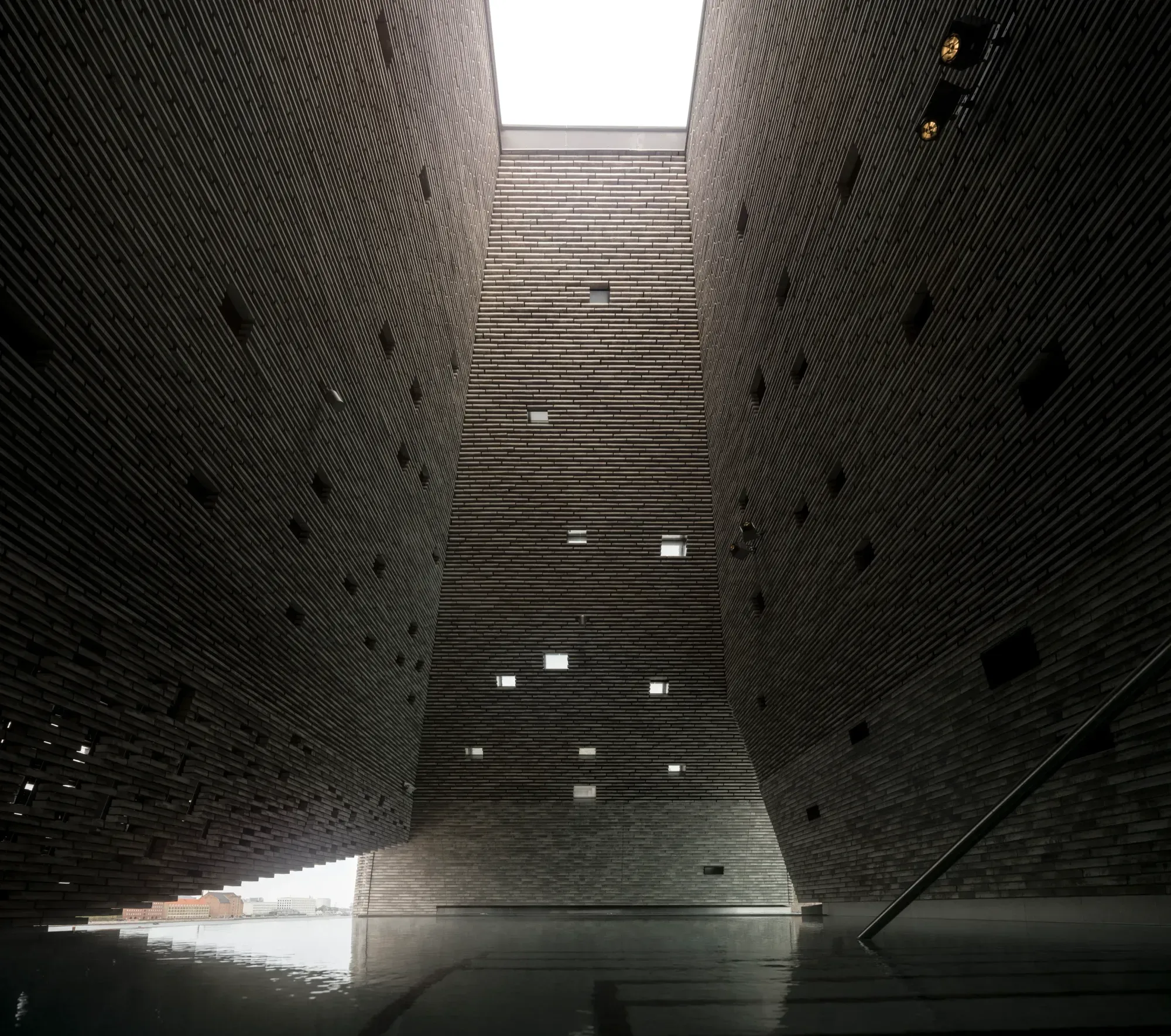
The building is five brick towers raised above a light glass structure, each shaped by the outline of the pool beneath it. The building uses 300,000 handmade bricks and 403 windows, which frame views and bring in daylight. The tallest tower holds the Culture Tower, with space for culture, movement, community groups and associations.
In Japanese, kai refers to the sea. In Danish, it recalls kaj, the quay of Paper Island.
How it was built
In 2015 the City of Copenhagen ran an ideas competition for a culture and leisure facility on Paper Island. Residents sent 160 proposals, and most asked for a place to swim. In spring 2017 the city launched an international architecture competition, which Kengo Kuma & Associates won. Yuki Ikeguchi, the project's lead architect and a partner at the firm, describes KAI as a gathering place centered on water and community, and as part of the harbor's change from industrial port to cultural waterfront.
Cornelius Vöge Atelier for Architecture worked through concept design, and Vilhelm Lauritzen Architects were executive architects from detailed design to completion. MT Højgaard was main contractor, COWI was client adviser, and Jesper Kongshaug designed the lighting. The developer is Ejendomsfonden Vandkulturhuset Papirøen (Paper Island Water Culture House Foundation). The project cost DKK 989 million: DKK 546 million from Nordea-fonden and DKK 443 million from the City of Copenhagen.
Harbor bathing in 2027
Around a timber boardwalk, KAI will add a 12-by-50-meter Swimming Zone facing the Opera Park and a 6-by-22-meter Dipping Zone in front of the building, facing the Royal Danish Playhouse. The deck and harbor bath will be open year-round, 24 hours a day. They will not be complete by December 5 and are expected to open in early 2027.
The cultural program will hold events around, in, beside and on the water. From December 5, residents and cultural practitioners can submit ideas for water-themed activities through the Create Culture application form. The building remains under construction and closed to the public until opening day.