Twenty Courses, Never Repeated, 37 Floors Above Central Park
The address is 767 Fifth Avenue, the General Motors Building. The room is something else: twelve seats along two counters of Japanese hinoki cut from a single tree, run by a chef from Moldova who spent ten years at Masa. YŪGIN sits on the 37th floor, inside a private members' club, and since July 2026 it has been in the MICHELIN Guide under the chef's own name.
Up From 59th Street
The way in is not on Fifth Avenue. Guests enter on 59th Street, between Madison and Fifth, through a private lobby, and are taken up to the 37th floor. The counter sits within Coco's at Colette, a private members' club, so the route to dinner passes through a club before it reaches a restaurant.
We have come in that way twice.
The restaurant bills itself as New York's highest omakase. In July 2026 it was added to the MICHELIN Guide as a new selection in New York, and at the end of September it marked its first year of service.
The Screen at the Door
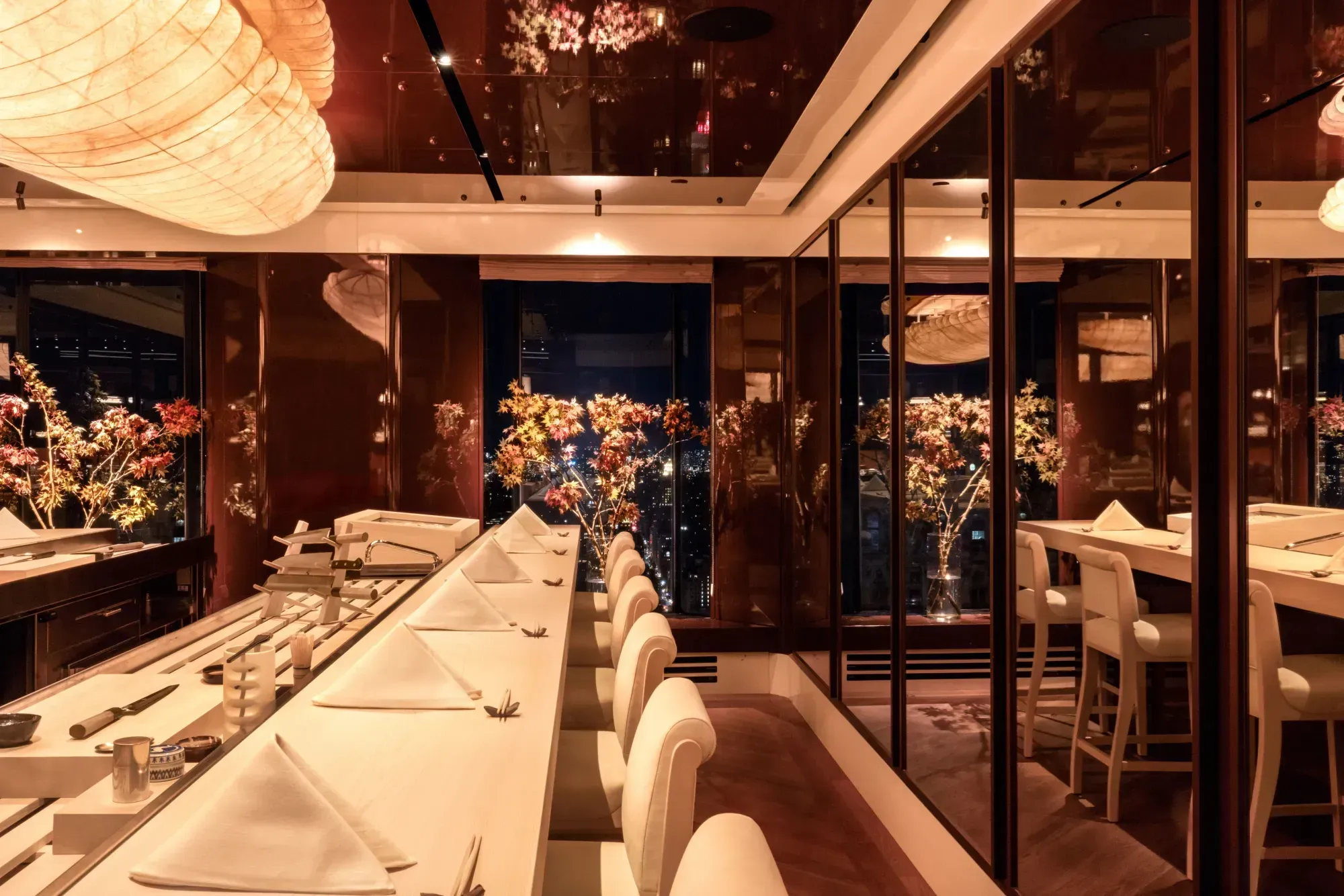
The room was designed by Creative Director Juan Santa Cruz. It echoes the colored lacquer of Coco's, the club around it, and adds Japanese references on top. The first of them is the first thing a guest faces.
At the entrance stands an antique Japanese two-panel screen from the Meiji period, which ran from 1868 to 1912. It shows a group of cranes at the water's edge beneath clouds of gold dust, painted in mineral pigments on mulberry paper. It was sourced from Naga Antiques.
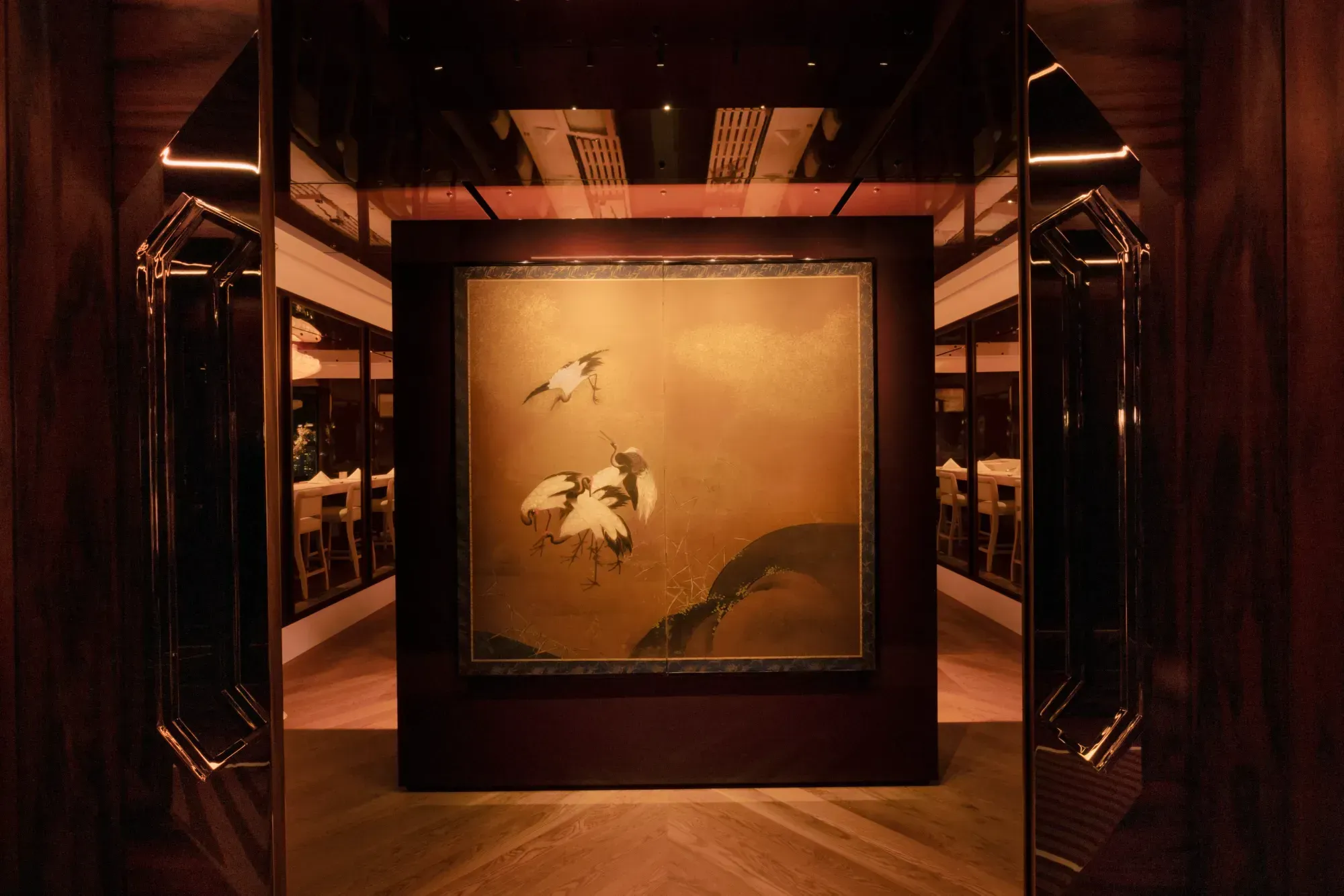
A painting made in Japan more than a century ago, placed at the threshold of a room in a Fifth Avenue tower. That is the argument of the design, stated before anyone sits down.
One Tree, Two Counters
There are two countertops, both hinoki, both cut from the same tree, sourced and imported from Japan. The restaurant puts the wood at two hundred years old. Twelve guests sit along them on ivory ultrasuede stools, under a sculptural paper lantern that hangs from the ceiling.
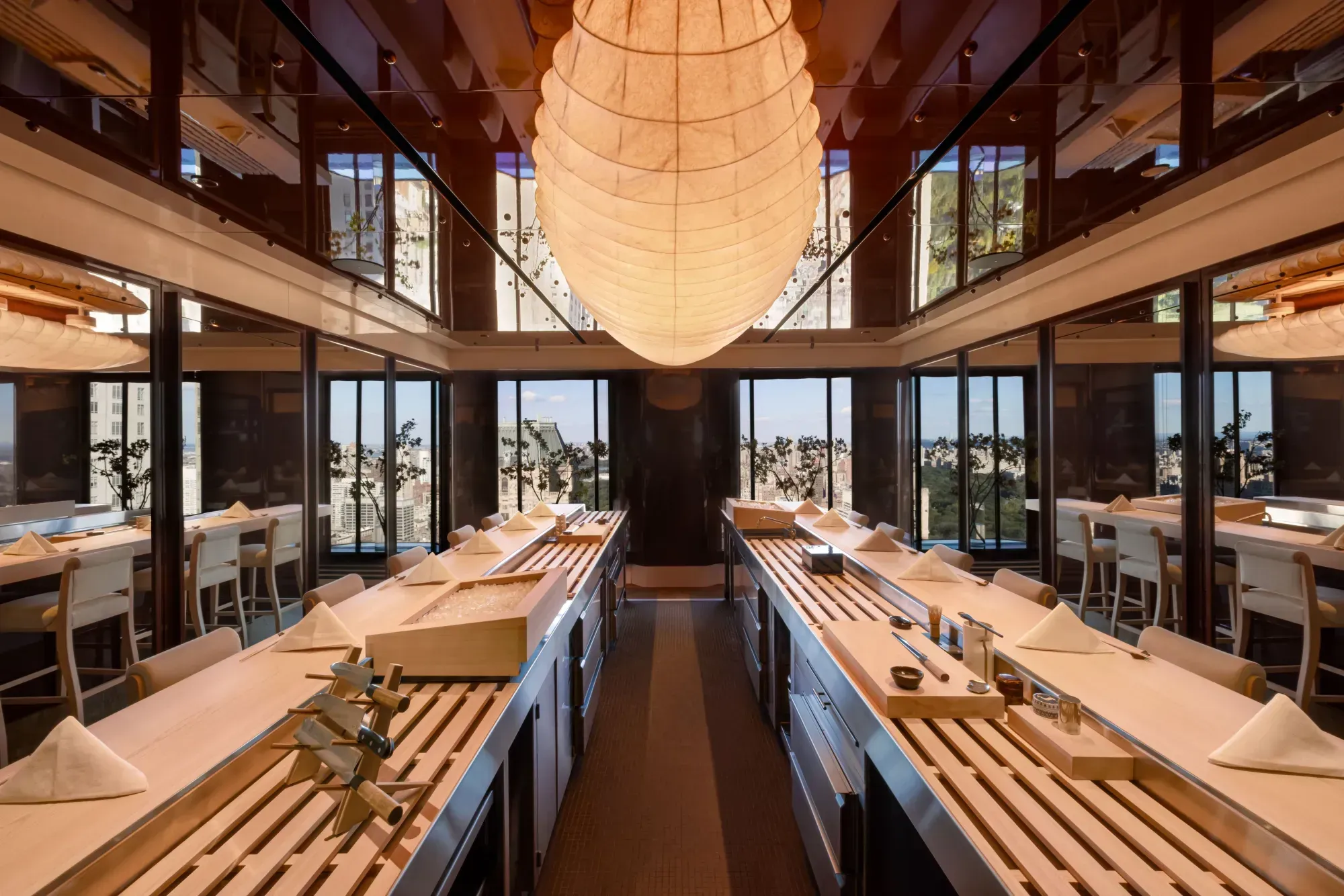
The counters hold the service as well as the guests. Custom ceramics are part of the meal, plates and bowls made for the omakase, along with a handmade glass dish.
The Windows
Tall branches in large vases frame both windows. Through them sit Central Park and the Manhattan skyline, seen from 37 floors up.
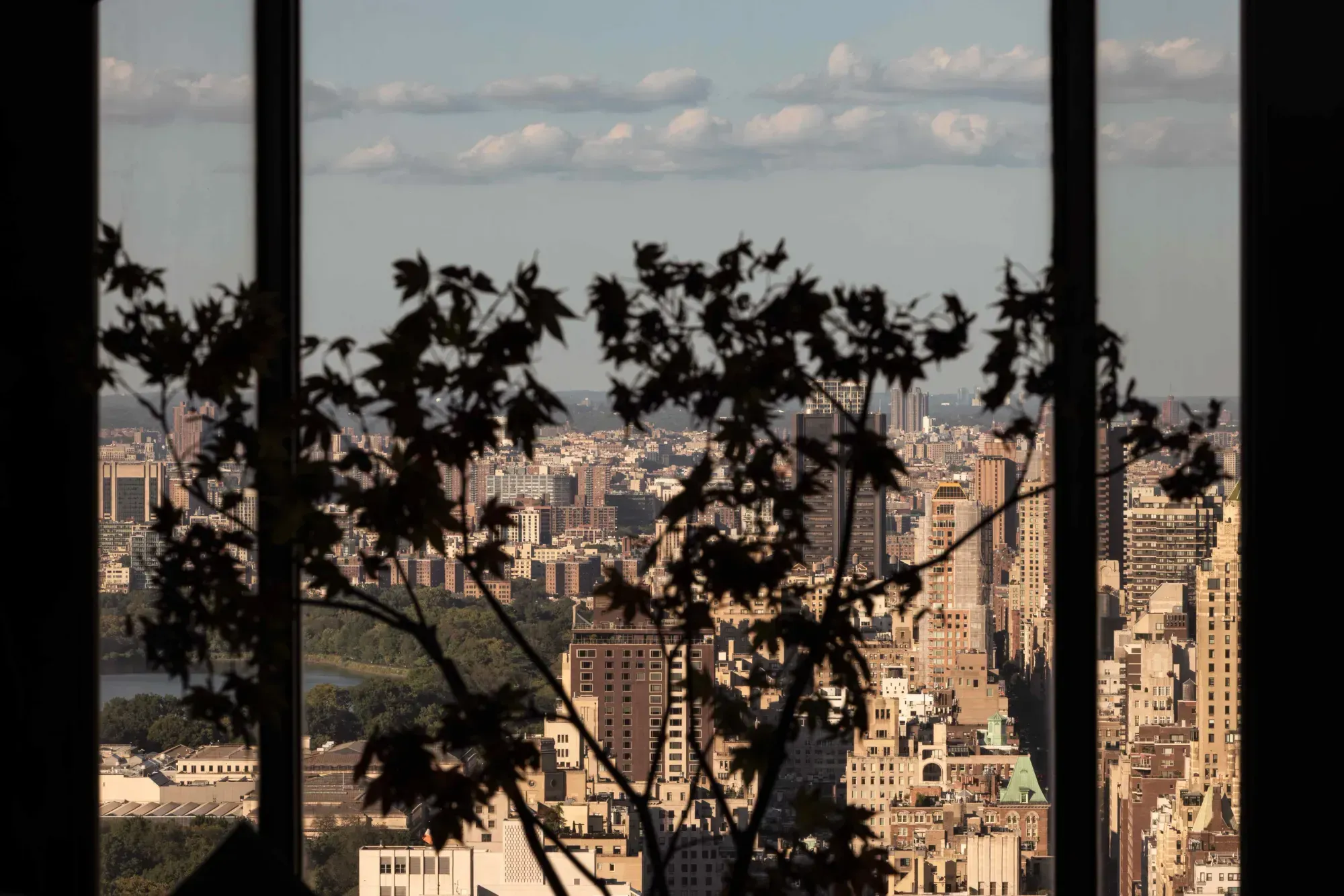
The design keeps its Japanese references inside the room: the screen, the hinoki, the lantern, the branches. Manhattan stays on the other side of the glass, and the room does not try to compete with it.
The Chef
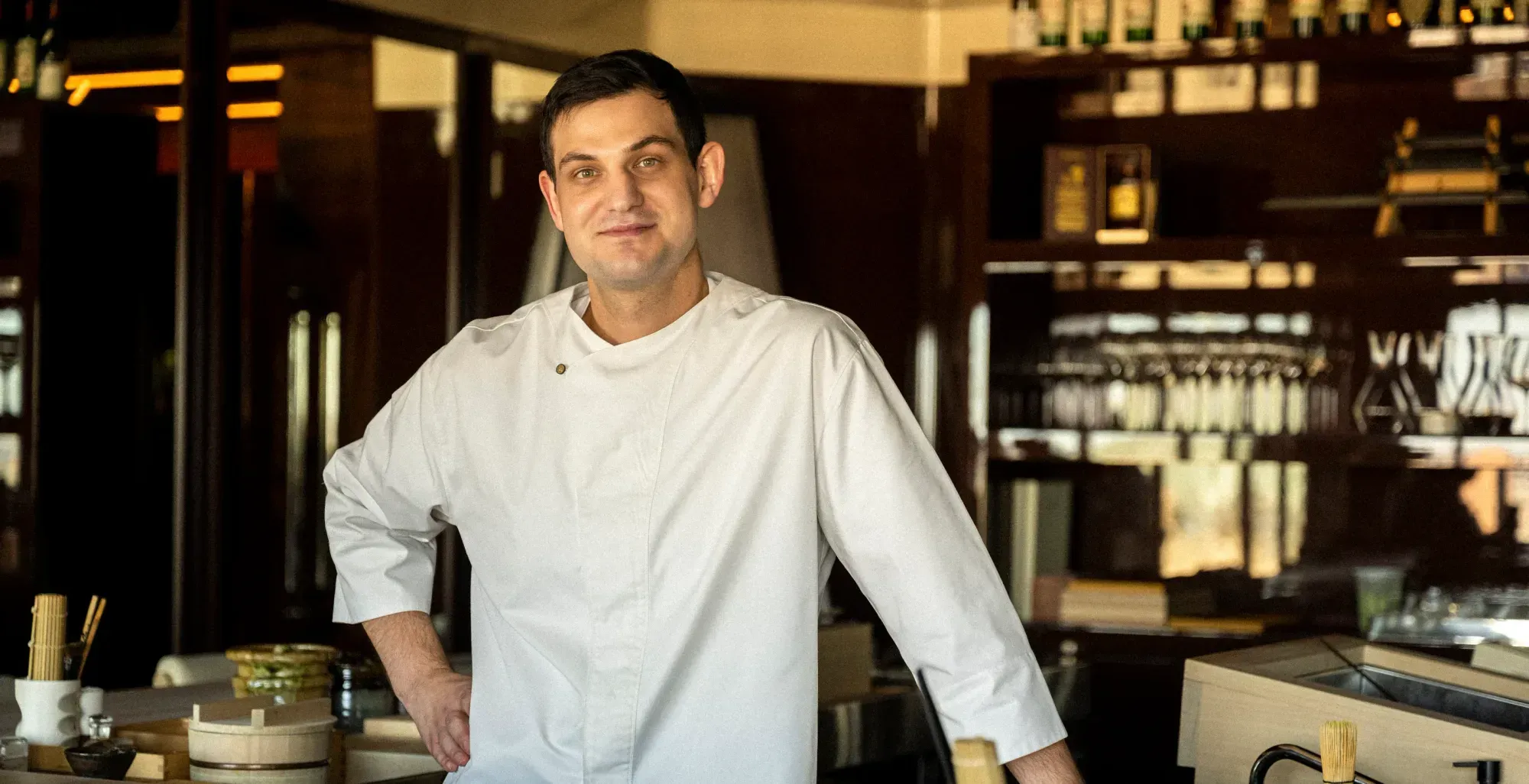
Eugeniu Zubco goes by Yugin, and the restaurant carries his name. It is his first. He comes from the Republic of Moldova and was drawn to Japanese cuisine from far outside Japan.
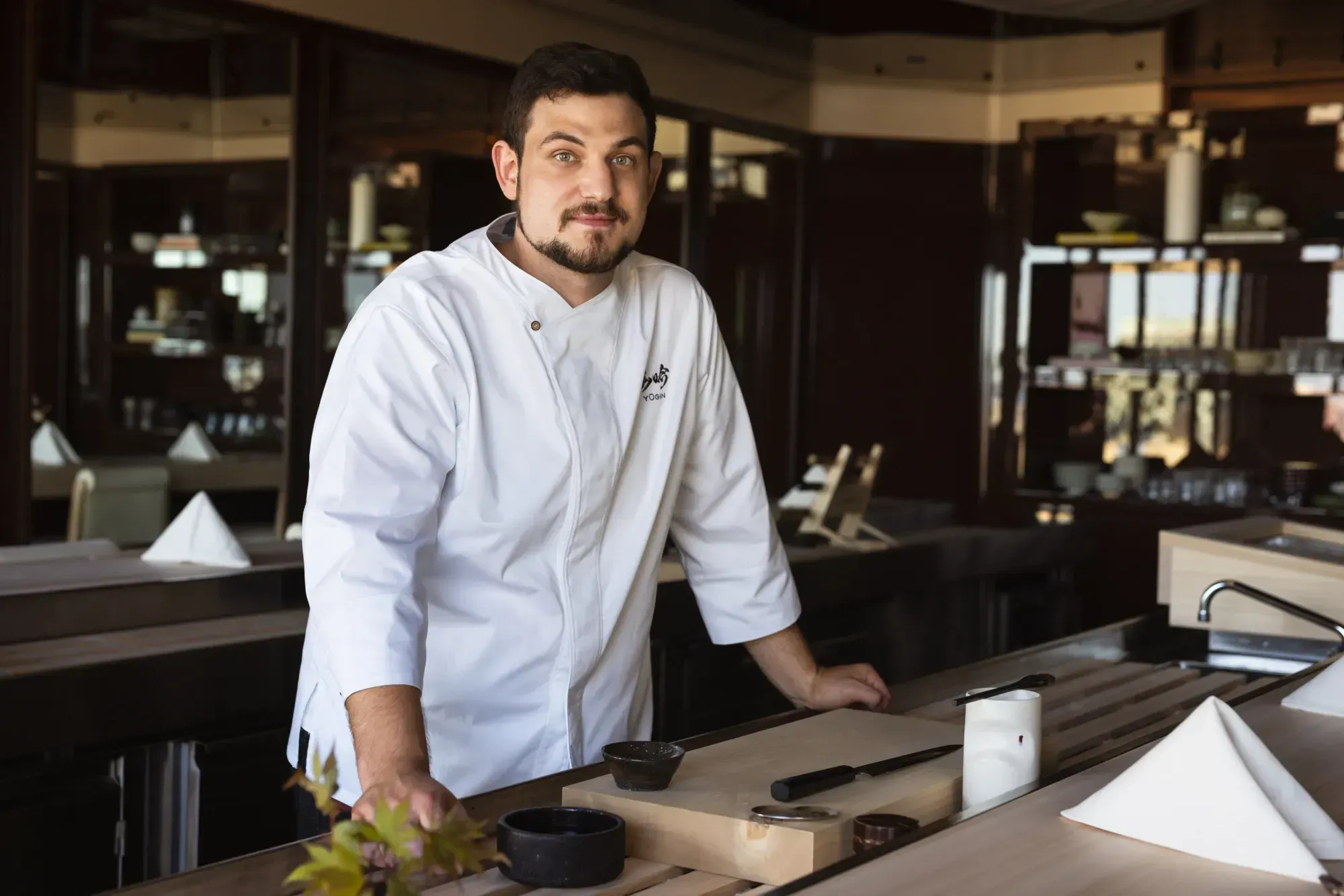
He spent ten years at Masa, training under Chef Masa. Years of travel followed, and they shaped his own style before he opened the counter on Fifth Avenue. A restaurant can import a two-hundred-year-old tree and buy an antique screen. It cannot import a decade at someone else's counter.
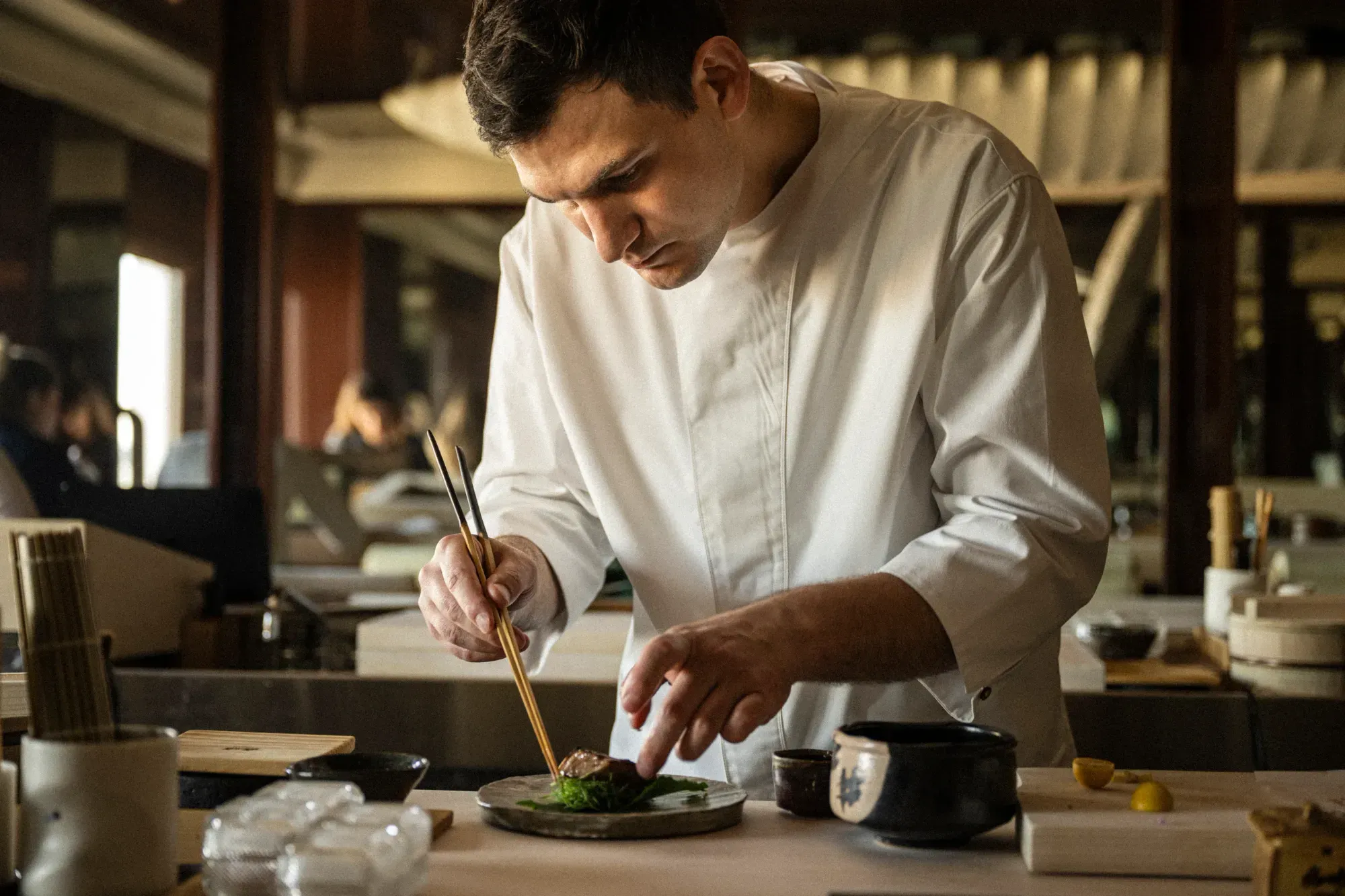
On our first visit, what stayed with us was the chef himself: his love for the craft, and an attention to detail that held through the whole evening. On our second, it was still the first thing we noticed. Before we left, we were handed a card with our first courses sketched in his own pen.
The Omakase
The omakase runs to twenty courses over about two hours and forty-five minutes. The menu changes every day and is never repeated, shaped by the season and by the guests at the counter. The house calls the idea ichigo ichie, a once-in-a-lifetime moment.
Seven Dishes Before the Rice
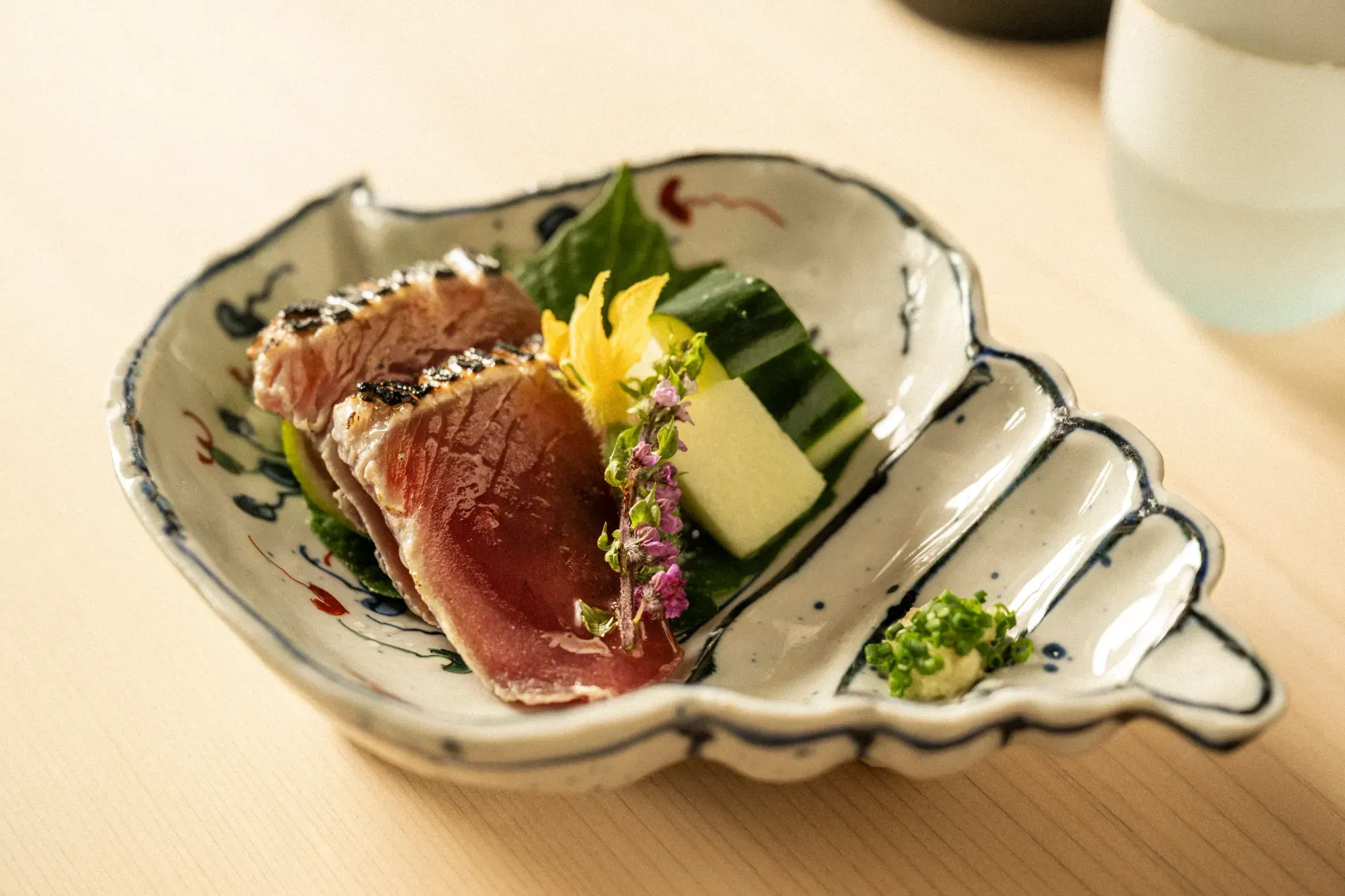
On our night, the meal opened with Hokkaido uni, served as sashimi with cucumber in a light vinegar. Katsuo came next, skipjack tuna seared at the edges and left raw through the middle, with scallions and black sesame oil.
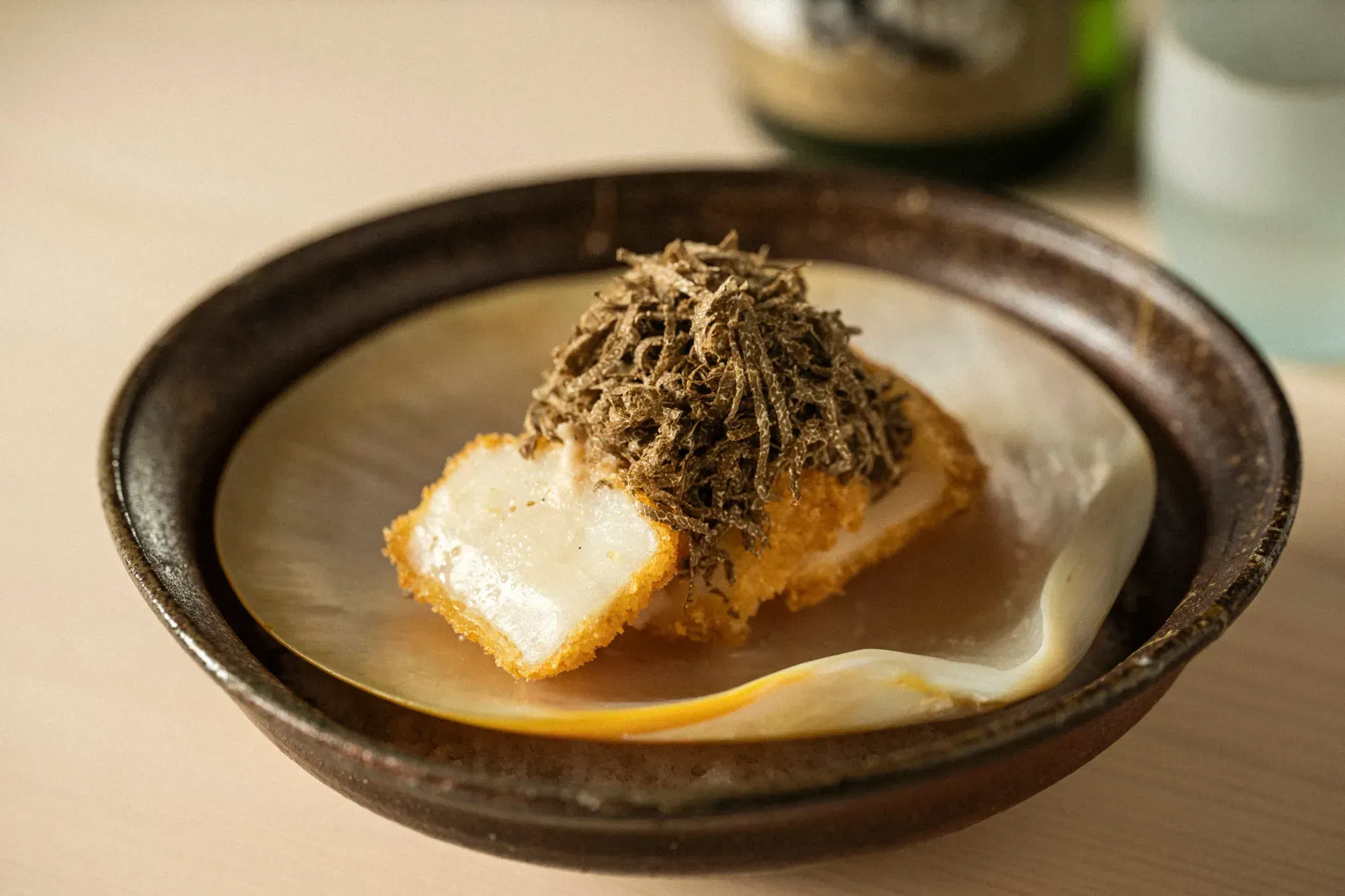
Then an oyster, breaded and fried as katsu, set on a cauliflower sauce with truffle.
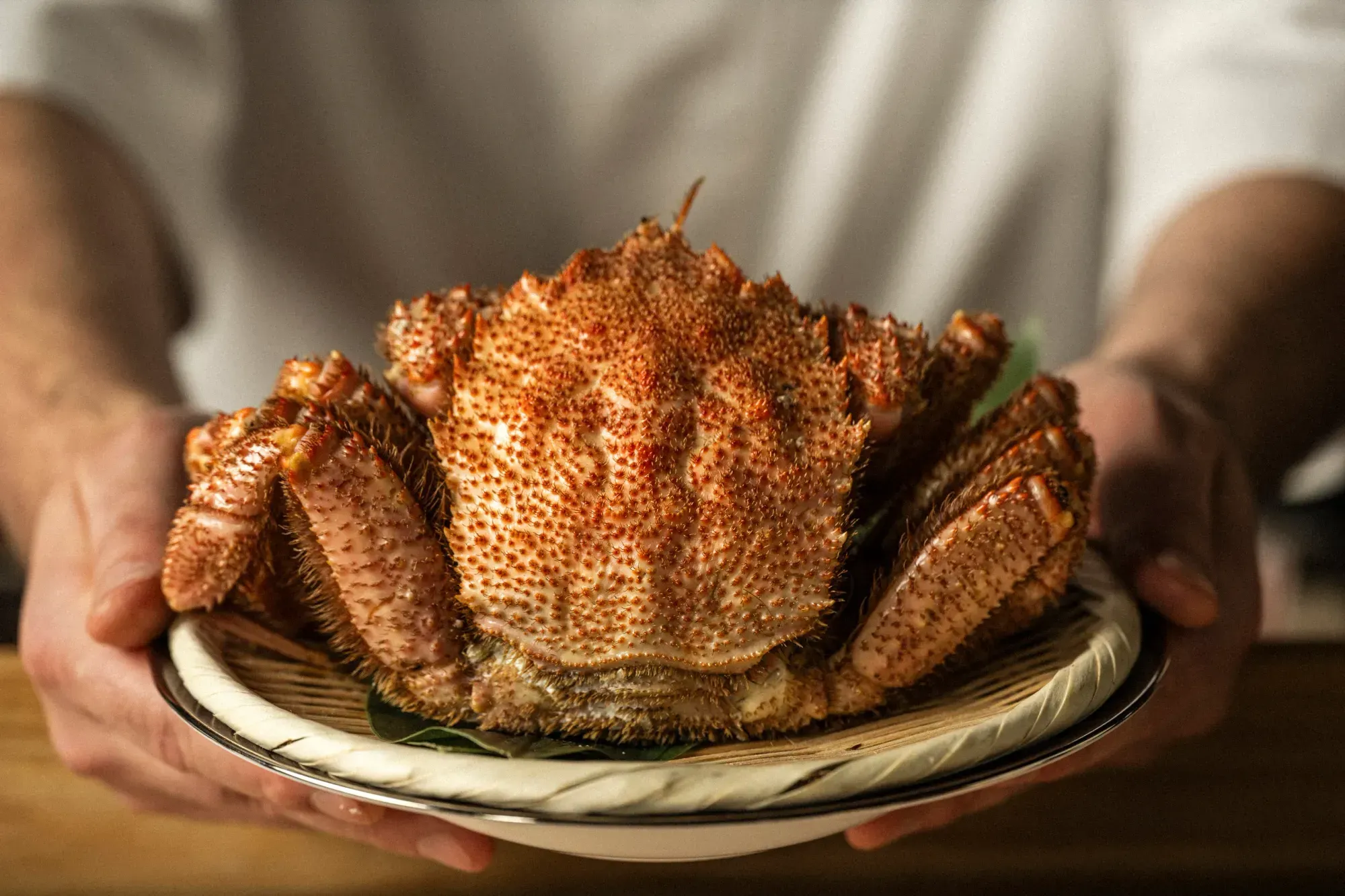
A chawanmushi followed, the soft egg custard topped with Japanese hairy crab, uni and ikura.
Seasoning is restrained, with occasional European influences alongside Japanese technique, and the next course showed both at once: samegarei, a Japanese flatfish, under caviar in a beurre blanc. A5 Ohmi wagyu, braised the day before, and a clear tai consommé made from sea bream closed the first half of the meal.
Flown In Daily
Seafood is sourced directly from auctions in Japan and flown in daily from Tokyo. Each piece is scored with small, precise cuts before it is formed.
The nigiri ran from shimaaji, striped jack, through madai and a young sea bream, then hirame, filefish with its liver, and yukimasu, a snow trout. Squid came next, then shrimp topped with its own roe, there for the texture as much as the flavor.
The saba showed the kitchen's timing best. The bloodline of the mackerel was still bright red, which is how freshness shows on that fish.
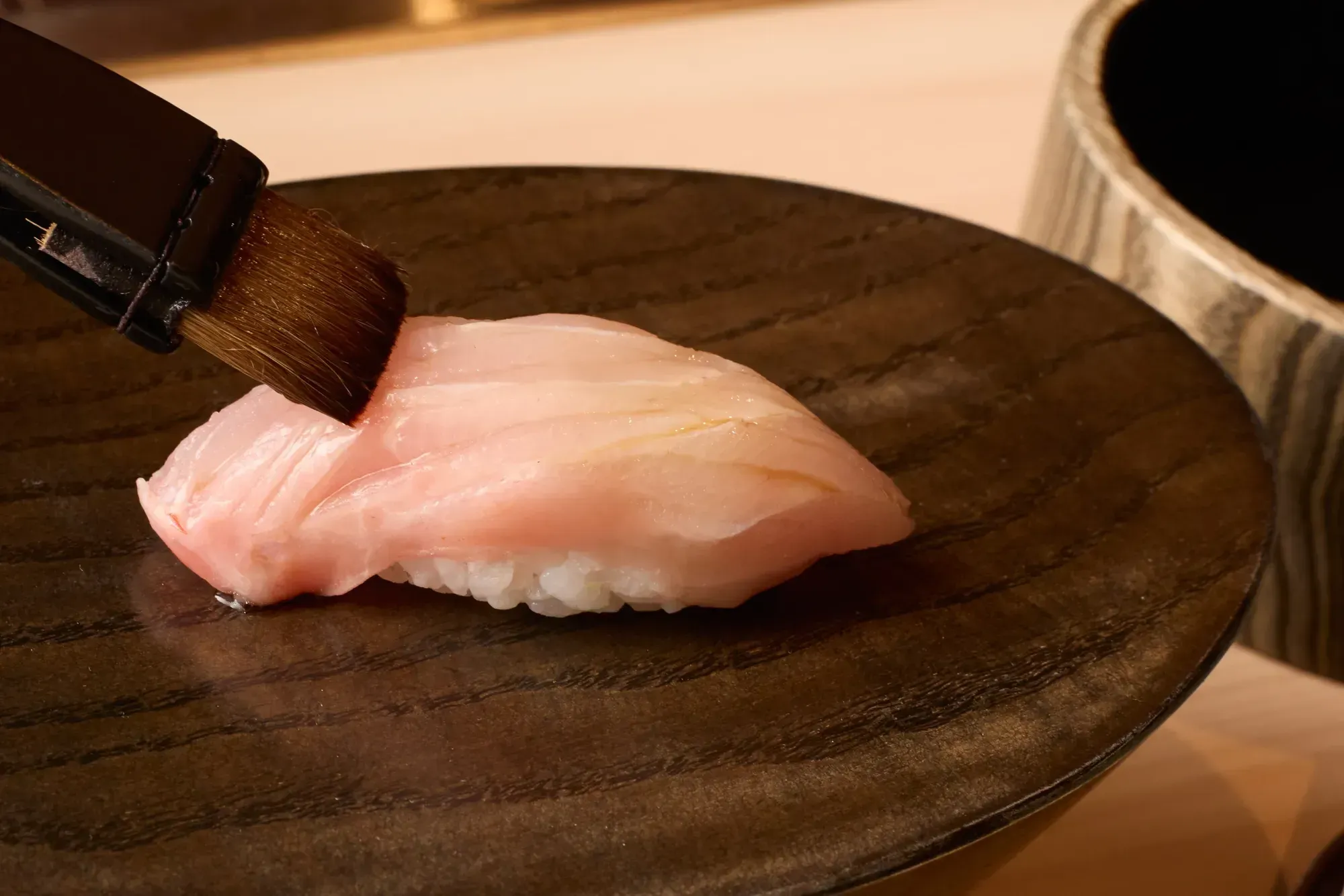
Akami and otoro followed, the otoro trimmed of its sinew so that it melted on the tongue. Braised anago, a second piece of Hokkaido uni and a kanpyo roll finished the sushi, and melon with yuzu zest grated over the top finished the meal.
Made in House
The house's stated aim is omotenashi, hospitality that anticipates what a guest needs before it is asked for. It reaches back into the pantry. The kitchen makes its own soy sauce and vinegars, grates Mazuma wasabi, and serves a custom caviar from Petrossian.
A Year In
Masa, where Yugin trained for a decade, became the first Japanese restaurant in the US to earn three MICHELIN stars in 2009. YŪGIN joined the same Guide in July 2026, within ten months of opening, as the first restaurant of a chef who came up behind Masa's counter.
Chef Yugin told us about one regular who has eaten at the counter 48 times since it opened in September 2025. With a menu that changes every day, no two of those dinners were the same.
What brought us back was the detail, most of it quiet: fish scored with small, precise cuts, otoro trimmed of its sinew, a mackerel bloodline still bright red. No other sushi counter in New York sits higher, and few rooms anywhere are built around a single tree.
The MICHELIN Guide returns to New York on December 14 with its next selection.