A Yacht the Size of a Liner, Built to Sail
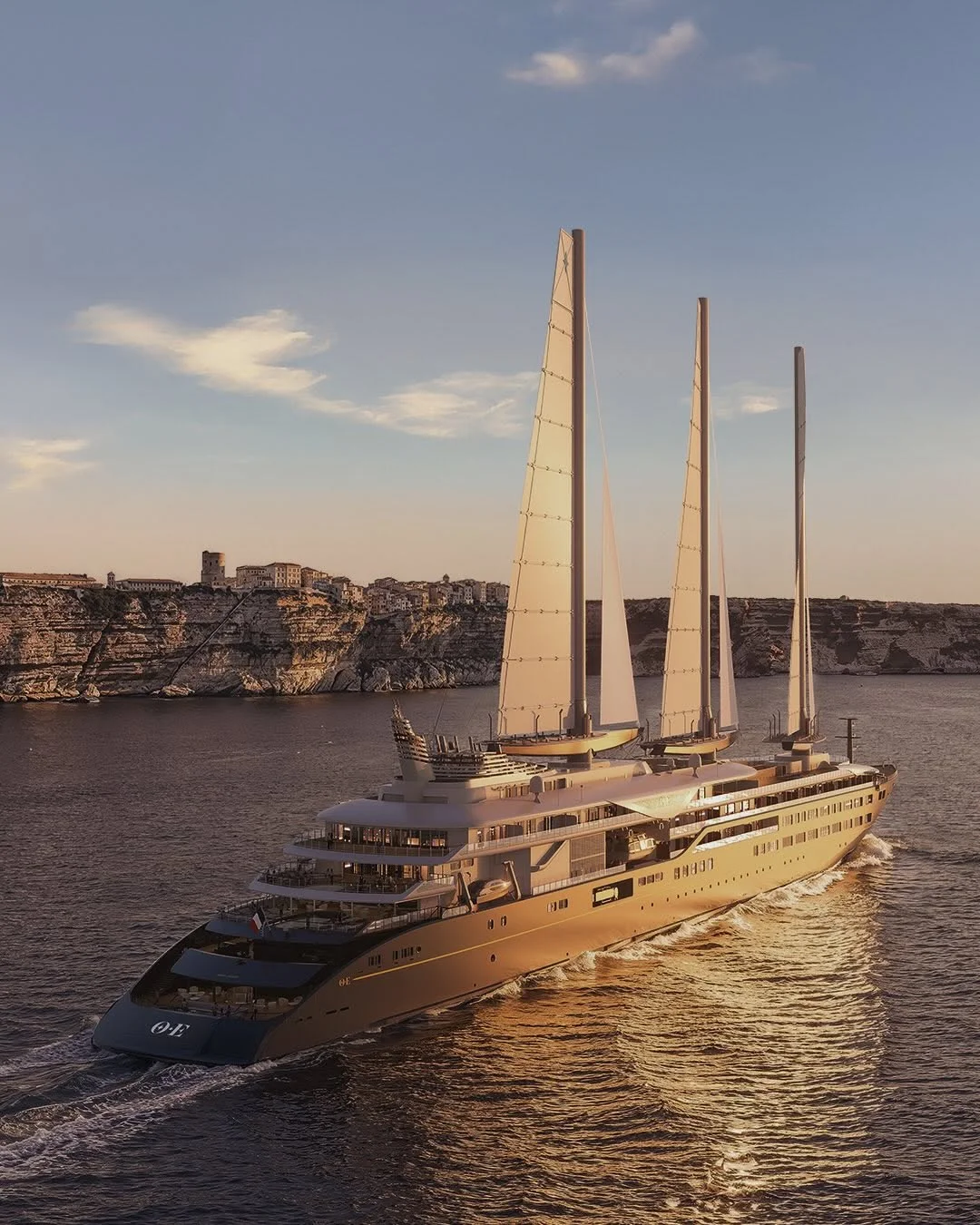
The Orient Express Corinthian, the world's largest sailing yacht at 220 metres and 15,000 tonnes, was christened on 29 April 2026 at the Joubert graving dock in Saint-Nazaire and left port for the French Riviera on 2 May. Designed by Maxime d'Angeac on his first maritime project and built at Chantiers de l'Atlantique, she carries 110 guests across 54 suites and is the first ship fitted with the decade-in-development SolidSail propulsion system, achieving 12 knots in 20-knot winds during February sea trials.
When Sébastien Bazin commissioned Maxime d'Angeac to design the world's largest sailing yacht in September 2022, the architect had never set foot in a shipyard in any professional capacity. His portfolio was distinguished but landlocked: the Hermès and Guerlain flagships, bespoke interiors for Daum, and the full redesign of the Orient Express train carriages, the first such overhaul in nearly a century. The naval brief was, by his own account, met with widespread skepticism. Forty-four months later, on 29 April 2026, the Orient Express Corinthian was christened at the Joubert graving dock in Saint-Nazaire and handed over to her owners. She left port for the French Riviera on 2 May.
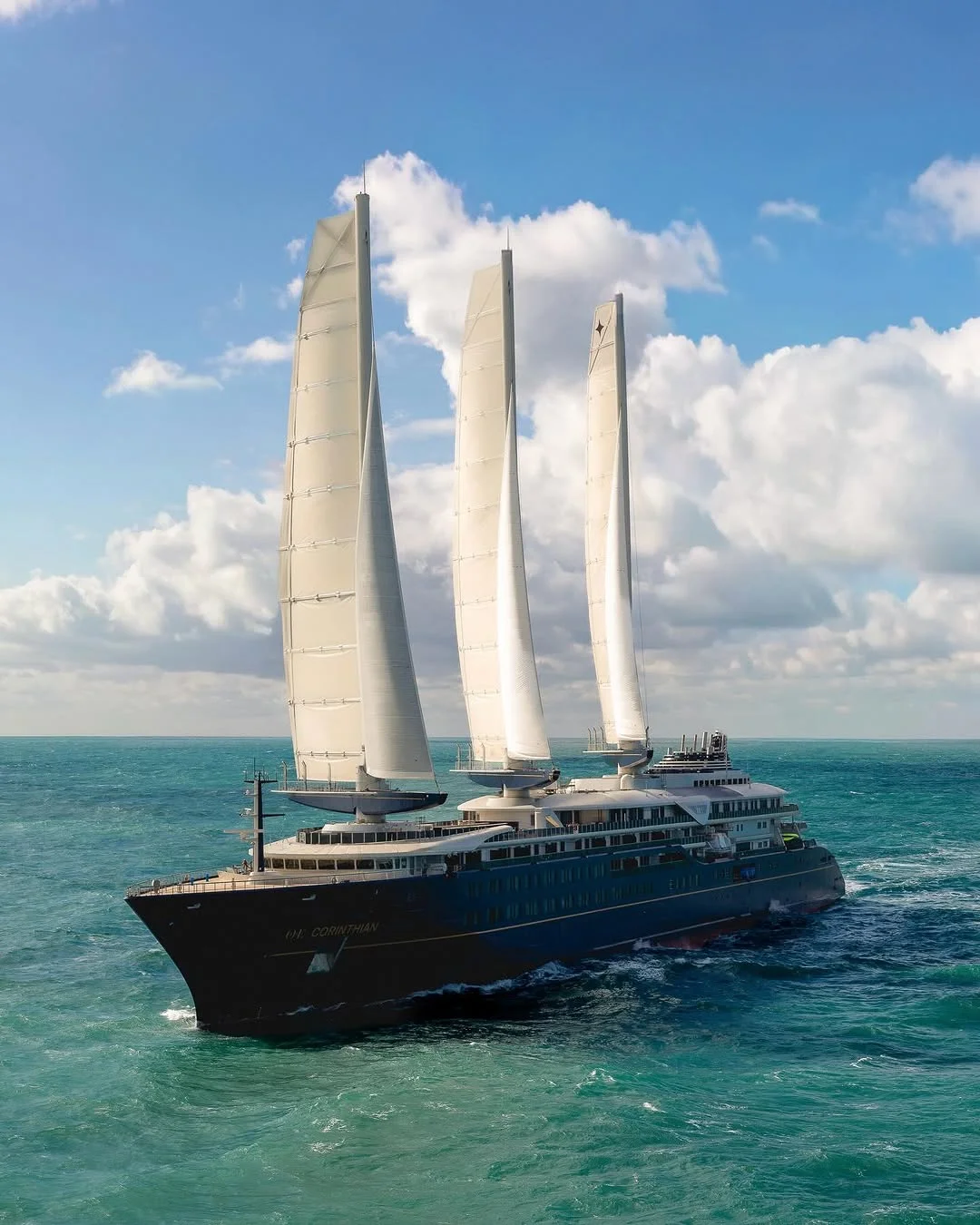
At 220 metres and roughly 15,000 tonnes, she is the largest sailing yacht ever built, accommodating 110 guests across 54 suites with a crew of 170. The vessel was constructed at Chantiers de l'Atlantique, the same yard that delivered the Île-de-France in the 1920s and the Normandie in the 1930s, a lineage d'Angeac has cited repeatedly as his reference point. The Corinthian is the first ship to be fitted with the SolidSail propulsion system, a decade-long research project by Chantiers de l'Atlantique. Three carbon masts rise nearly 100 metres above the waterline, each carrying 1,500 square metres of rigid sail constructed from fiberglass, carbon fiber, and epoxy-resin panels. The masts rotate a full 360 degrees and tilt up to 70 degrees, allowing the vessel to pass under low bridges. Maximum design speed under sail alone is 17 knots. During February sea trials, she achieved 12 knots in 20-knot winds, a benchmark Orient Express describes as a first for a vessel of this scale. An LNG-capable hybrid engine takes over when conditions are unfavourable.
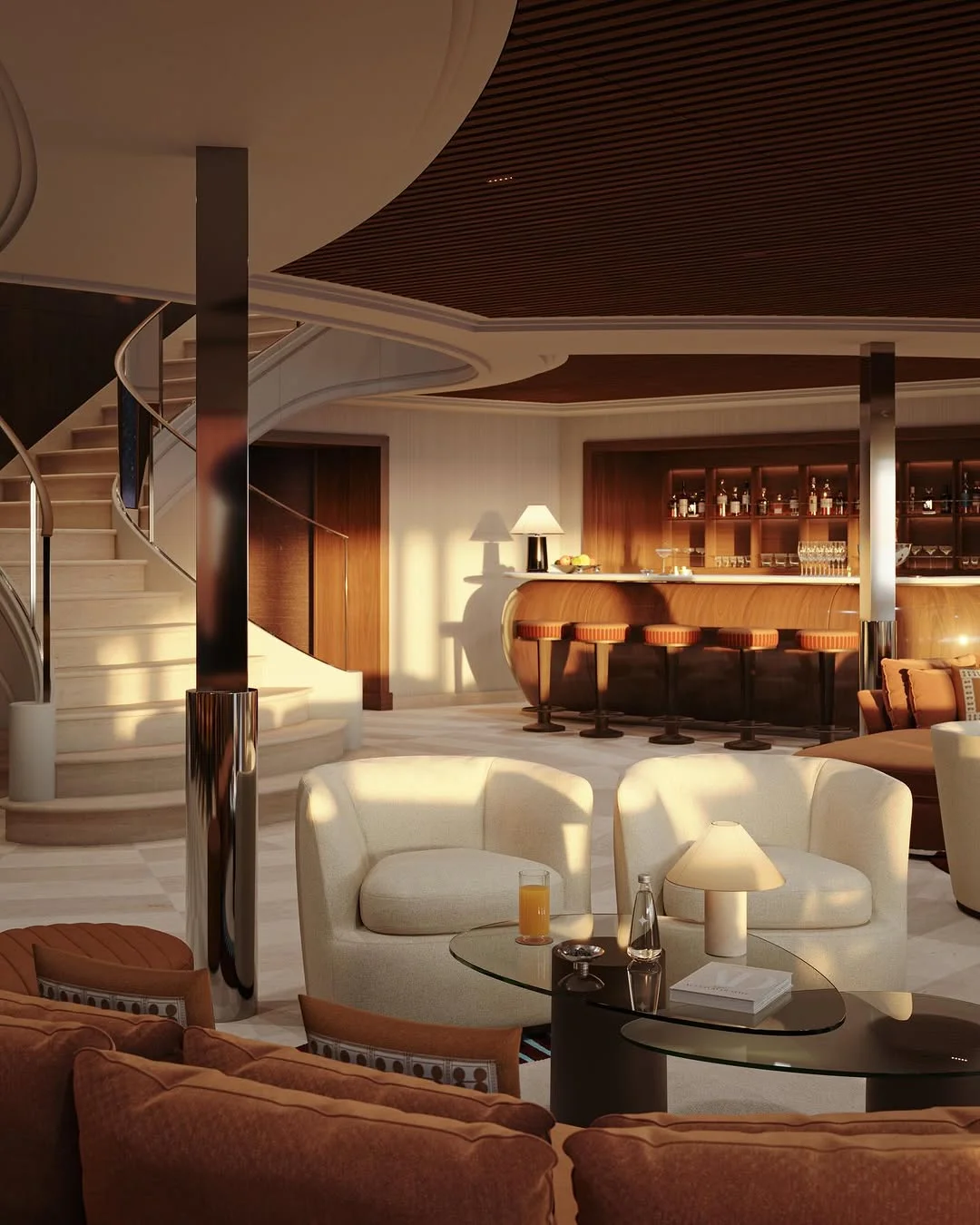
The interiors operate on two distinct registers. Decks four through six channel the restraint of early 20th-century ocean liner glamour, finished in oak and afromosia panelling with Eramosa and Calacatta Viola marble. The lobby pays direct tribute to Jean Dunand, the great art deco lacquerer, through three monumental bas-relief panels handmade by French maître d'art Etienne Rayssac, each panel a year in the making. The same craft sensibility extends through the public rooms: hand-carved panelling in the double-height fine dining room La Table de l'Orient Express, sculptural glasswork by Emmanuel Barrois recalling moonlight on water, custom carpets woven to drawings that had to be redrawn every time a corridor shifted during construction. Close to 2,000 French artisans and ateliers contributed to the project.
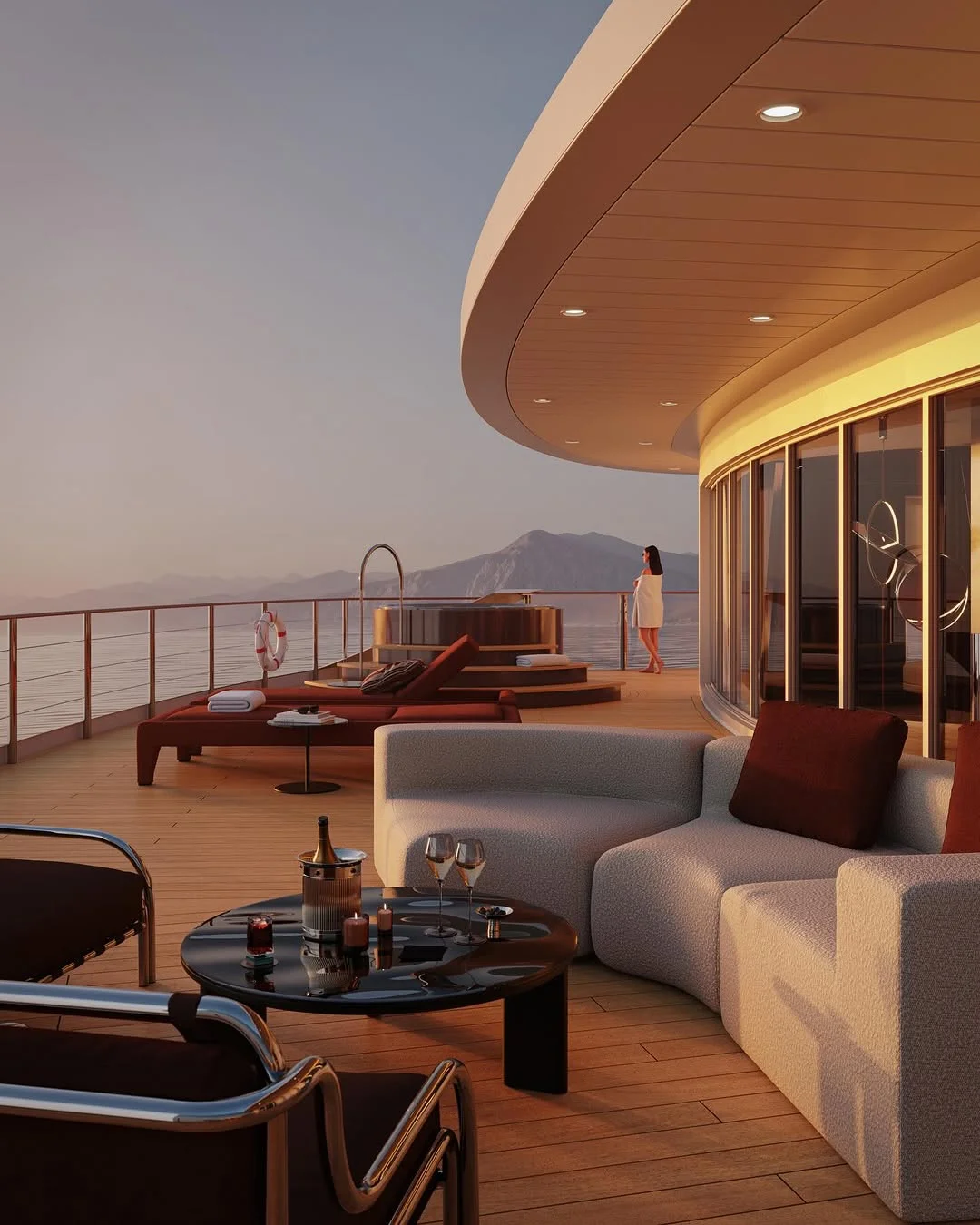
Deck seven is a different proposition entirely. D'Angeac dispensed with straight lines; the six premium suites are rendered in smoked eucalyptus, doors folded seamlessly into the walls. "It is my idea of what Orient Express could be in 2050," he has said. "A new chapter for the brand that is not only about the past." The Agatha Christie suite, the largest aboard, occupies the full beam of the ship across 230 square metres. The entire deck can be privatised for around twenty guests, with a dedicated chef, butler, exclusive dining room, and private lift.
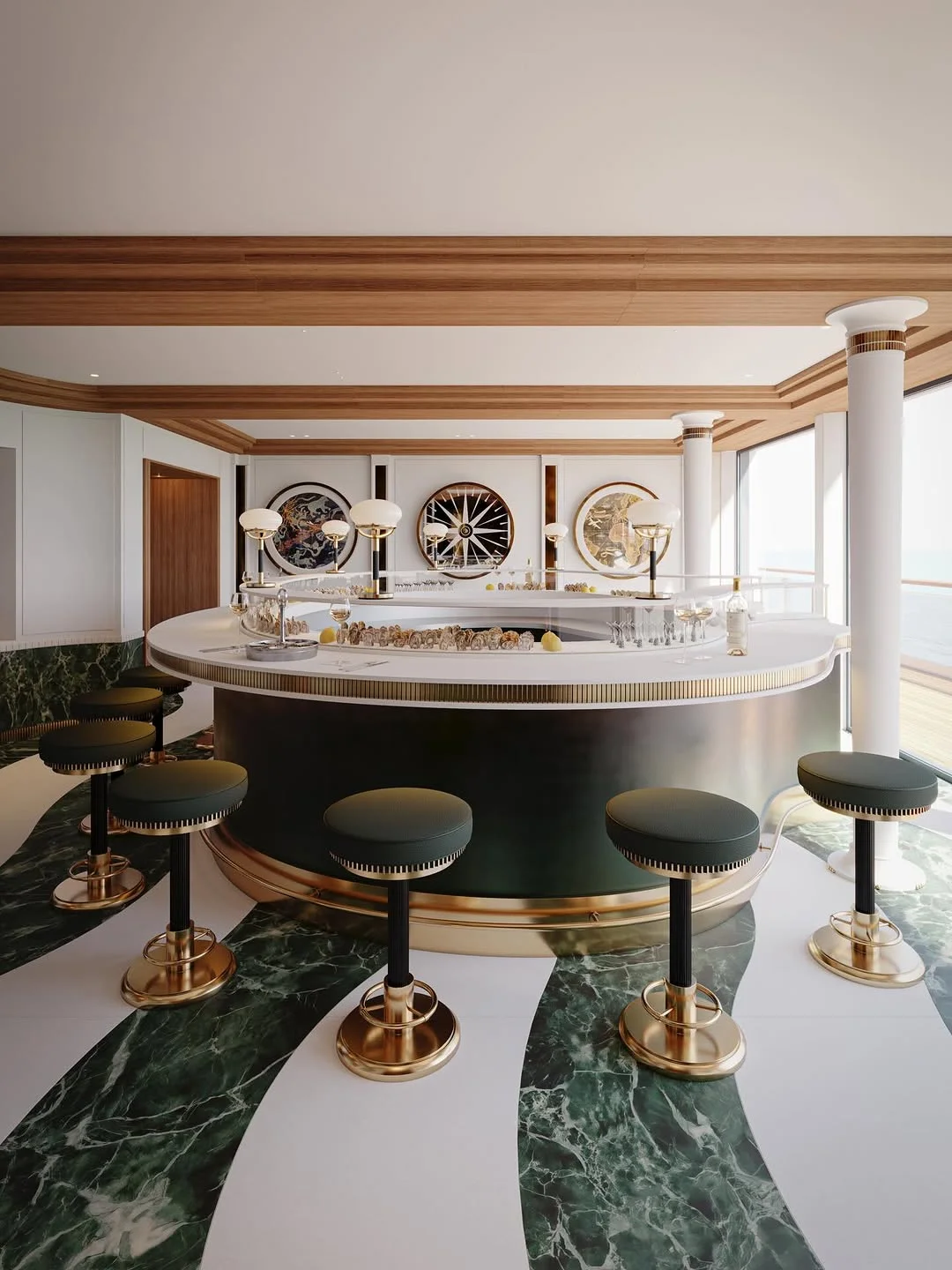
Multi-Michelin-starred chef Yannick Alléno oversees five restaurants and private dining rooms. Eight bars include Le Wagon, modelled on the circular bar of the renovated Orient Express train and finished with real gold panels, and an art deco speakeasy. Other amenities include a 115-seat cabaret, a 20-seat cinema with seats reproduced by the original 1910 supplier of the Orient Express train, a Guerlain spa (the first at sea), a library curated by the Parisian bookseller Galignani, a recording studio, a 14-metre pool on deck five lit through a roof oculus, and a 16.5-metre lap pool on deck six. The teak-look pool decking was developed with French specialist Boldt to perform without harvesting Burmese hardwood.
The inaugural Mediterranean season runs through October, tracing the Italian coastline before a transatlantic crossing to winter in the Caribbean. A new collection of itineraries extends to the eastern Mediterranean and Northern Europe in 2027. Voyages range from one to four nights and can be combined into bespoke multi-week journeys, a structure intended to position the Corinthian against established ultra-luxury cruise operators such as Seabourn and Regent Seven Seas. The sister vessel, Orient Express Olympian, is currently being fitted out at the Penhoët quay and is scheduled for delivery in April 2027.
For Accor, which formed a strategic partnership with LVMH in June 2024, the Corinthian extends the Orient Express brand from rail to sea, 140 years after the first train ran. For d'Angeac, it is something simpler: proof that a designer who had never built a boat could deliver the largest one of its kind, on schedule, and without surrendering the craft tradition that defines the brand on land.