JR's 70-Meter Wave Is the Vatican Library's First Exterior Commission
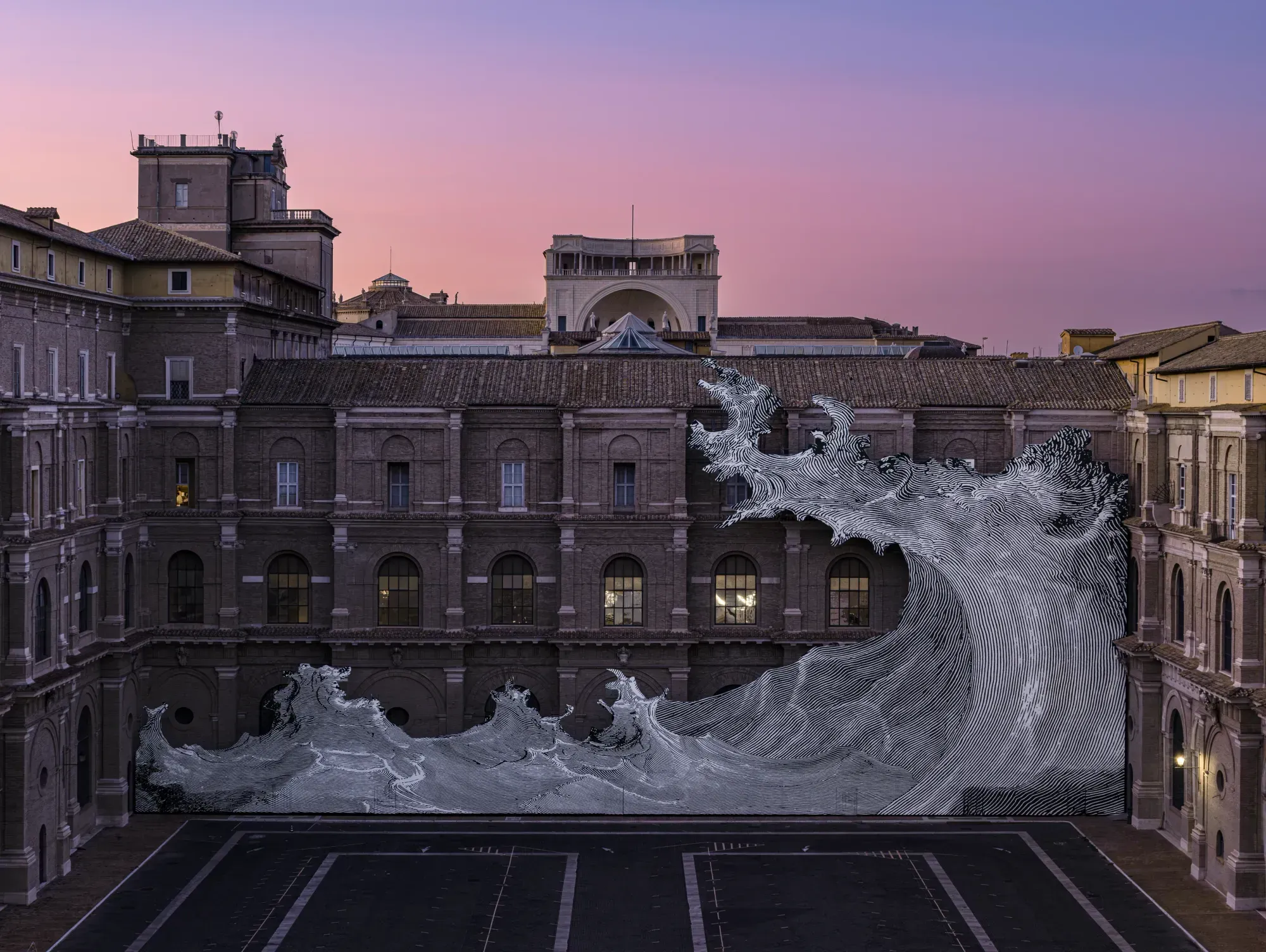
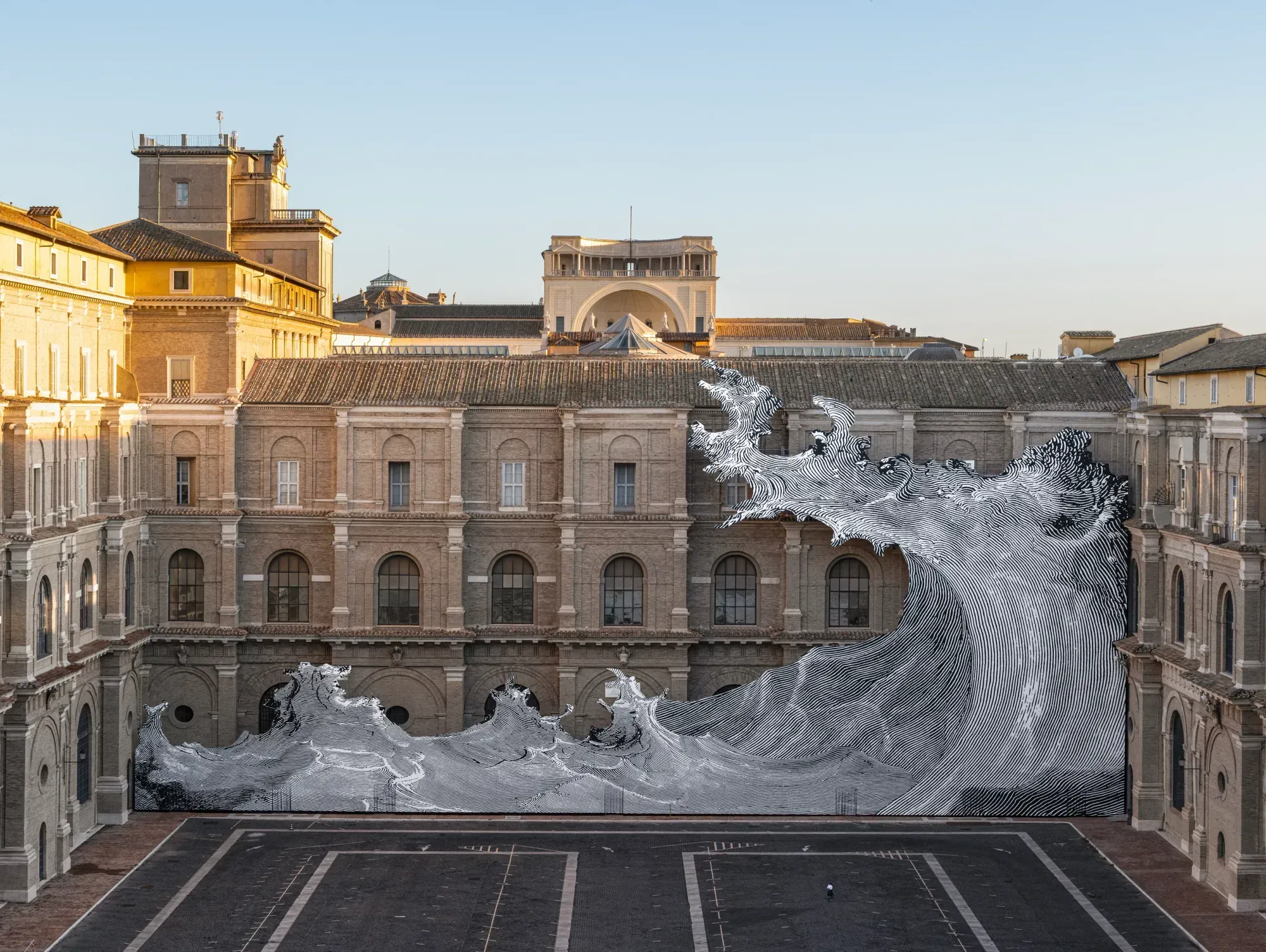
For the first time, the Vatican Apostolic Library has given its outside wall to an artist. JR's DILUVIUM, a black-and-white wave roughly 70 meters long, now runs across the library's 16th-century facade on the Cortile del Belvedere. The water is caught at its crest, in the instant before it breaks onto the stone. Pope Leo XIV unveiled it on September 14, his 71st birthday.
A flood drawn in 1866
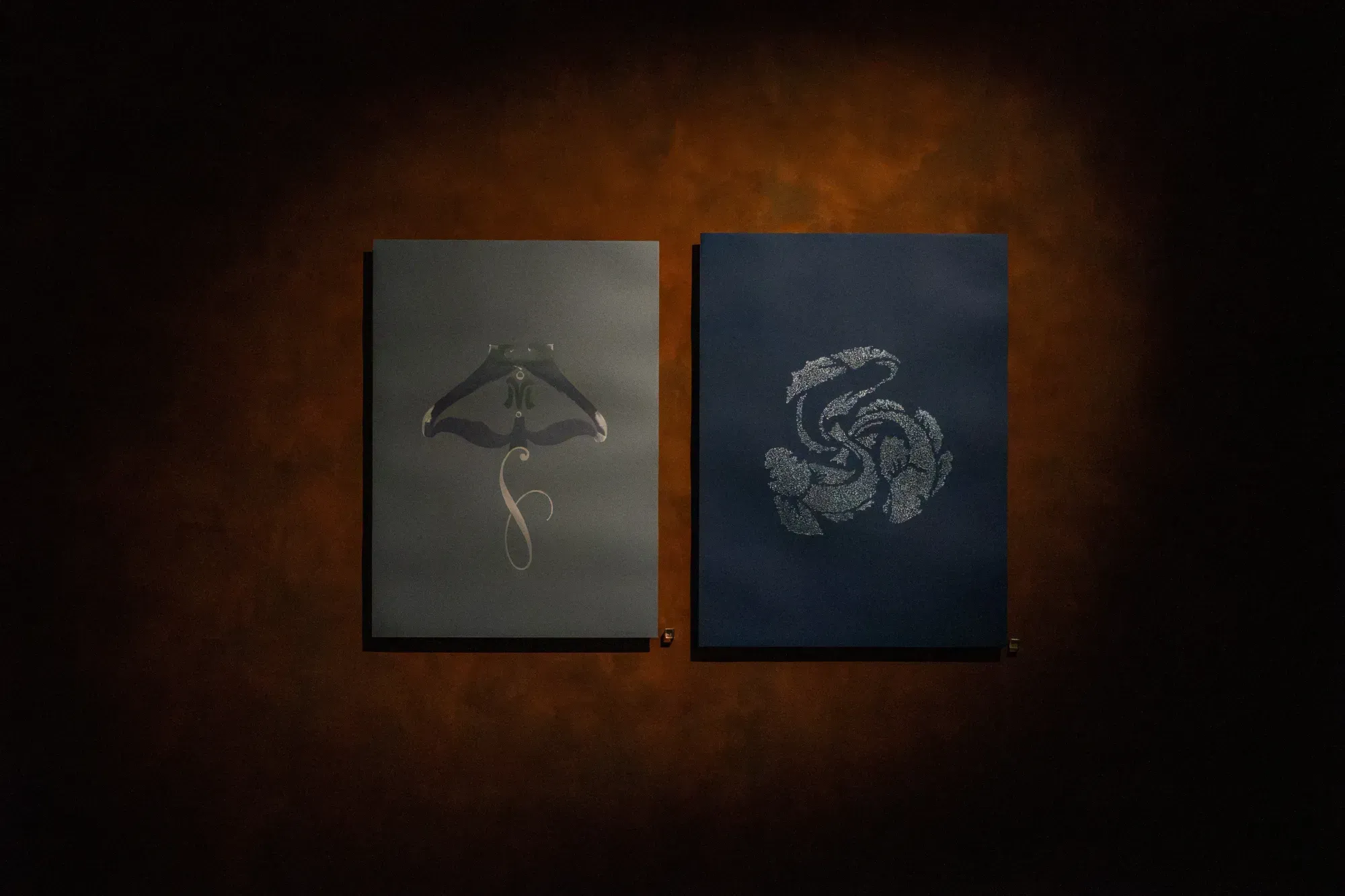
The image starts from Gustave Doré's wood engraving of the Great Flood, made in 1866 for his illustrated Bible. A rare 1870 Milanese edition of that Bible, published by Treves, is on display inside. JR has said the library came to him because water is the thing it fears most: the one force that could wash away the memory of a civilization it has spent centuries keeping. He has described books as fragile objects that carry voices and knowledge across centuries, even though paper withstands none of the elements. The wave, and a second JR work inside the building titled UNDAE, sit on that contradiction and ask what can survive and what we choose to keep.
AQVA, inside
The facade opens AQVA, the first exhibition in Catastrophe and Wonder, a five-year cycle about the forces that have historically threatened the written word: water, fire, light, insects and human intervention. AQVA treats water from both sides, as the thing that ruins paper and the thing conservators use to save it.
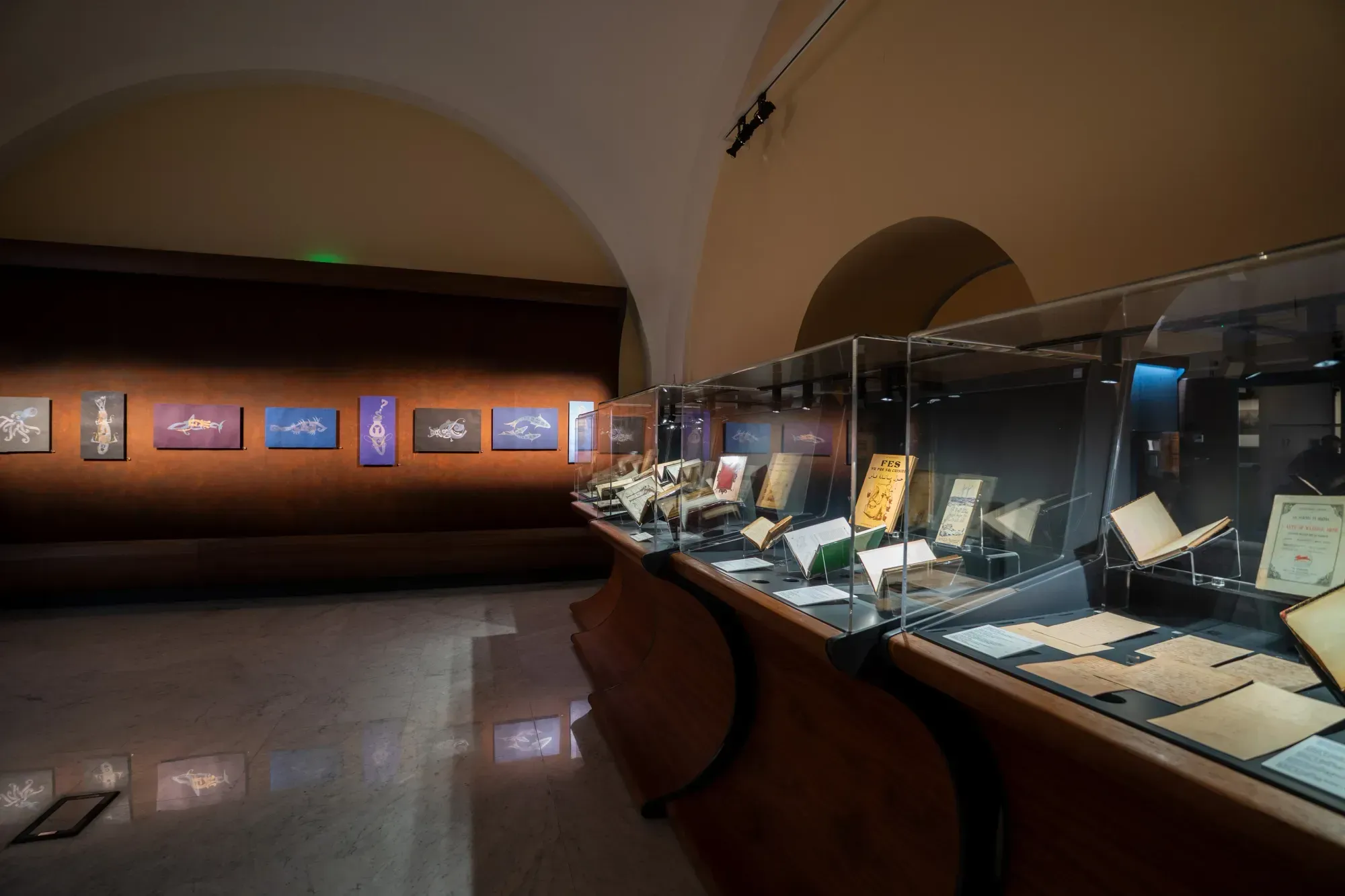
The centerpiece is Ippolito Salviani's Aquatilium animalium historia, a treatise on fish published in Rome in 1557 at the library's own initiative and expense. Two copies are on view for the book's 470th anniversary. Salviani, a physician, recorded only species he had seen himself, and called on the Holy See's diplomatic corps to gather dried specimens and life-size color illustrations from across Europe.
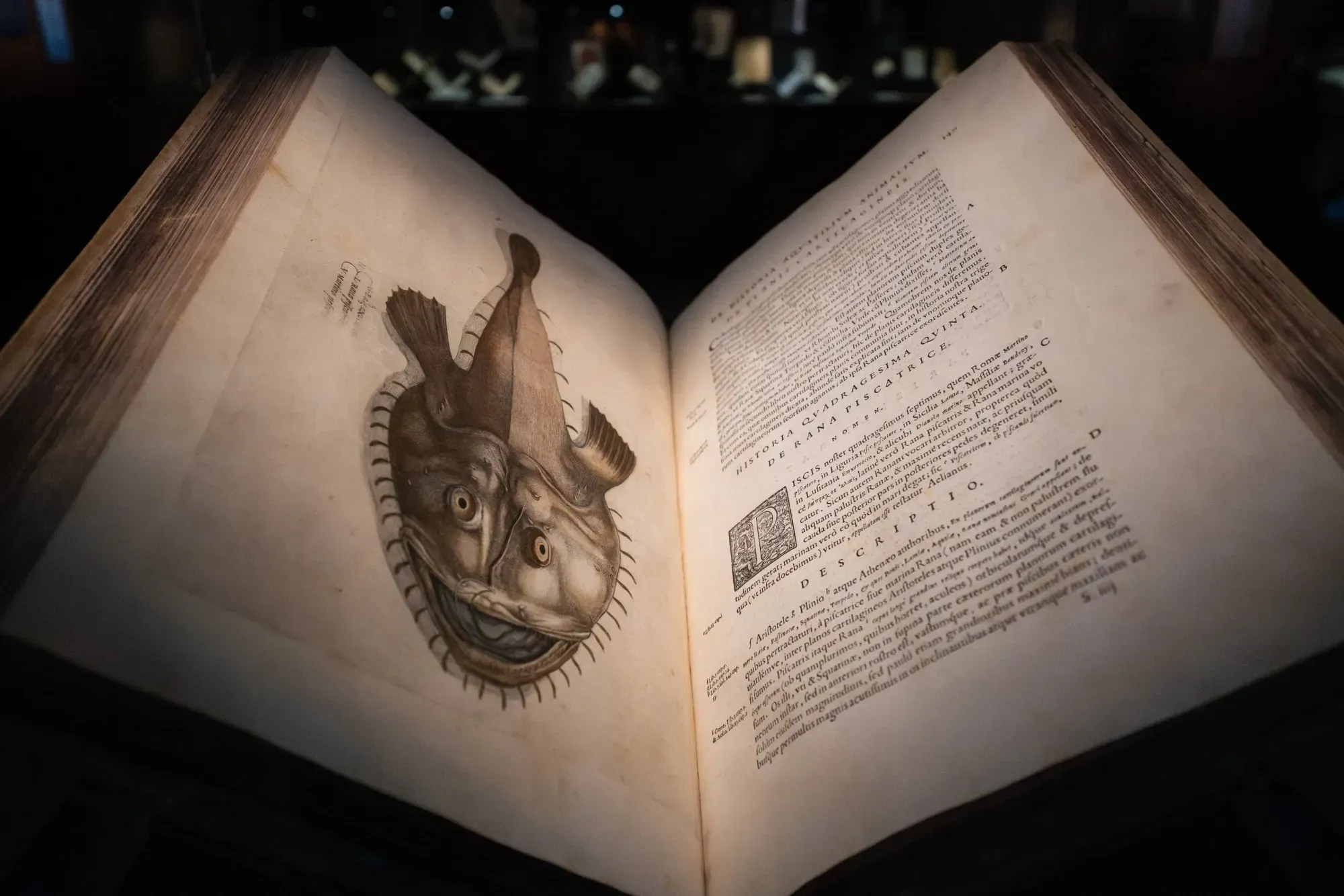
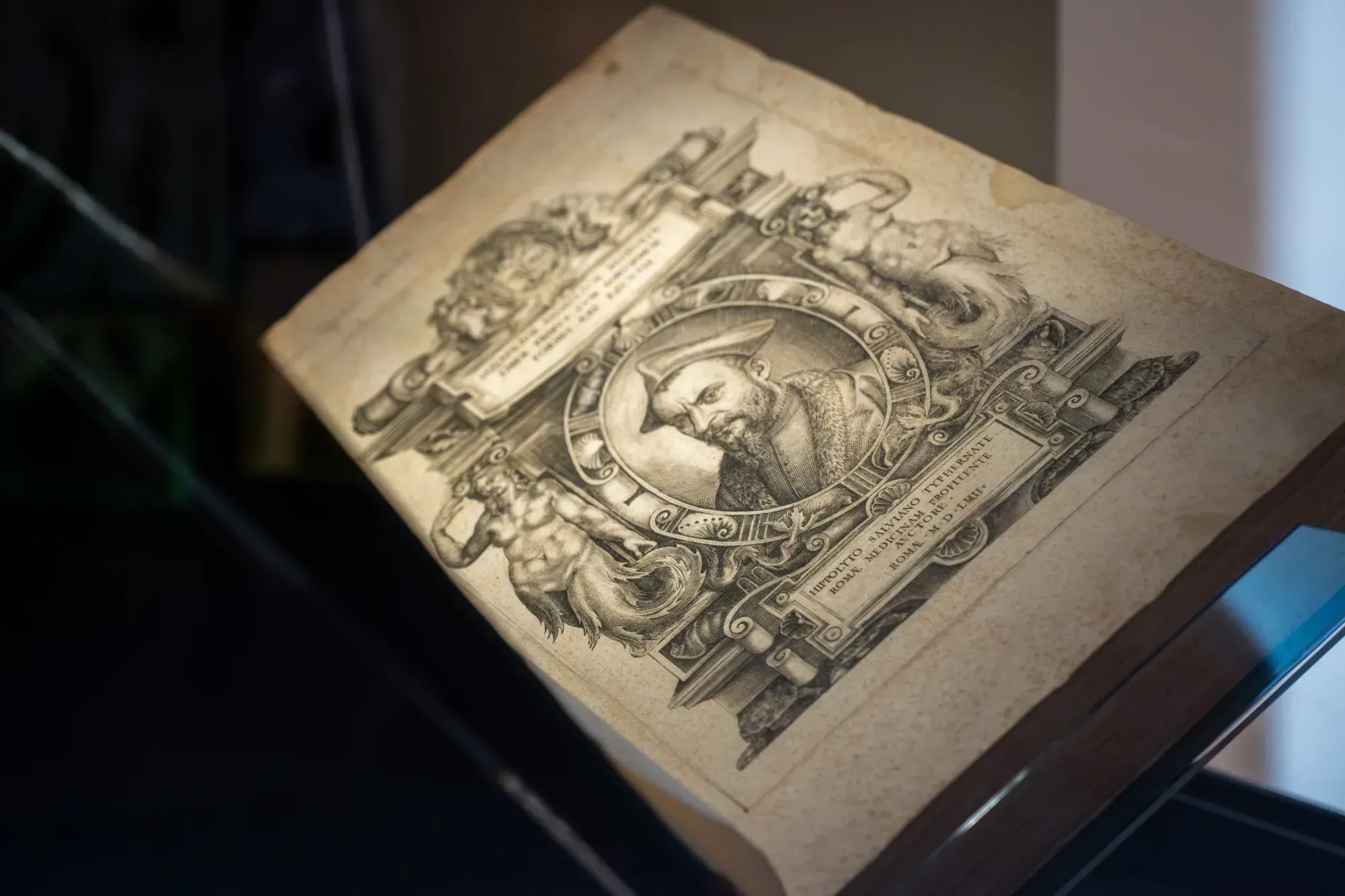
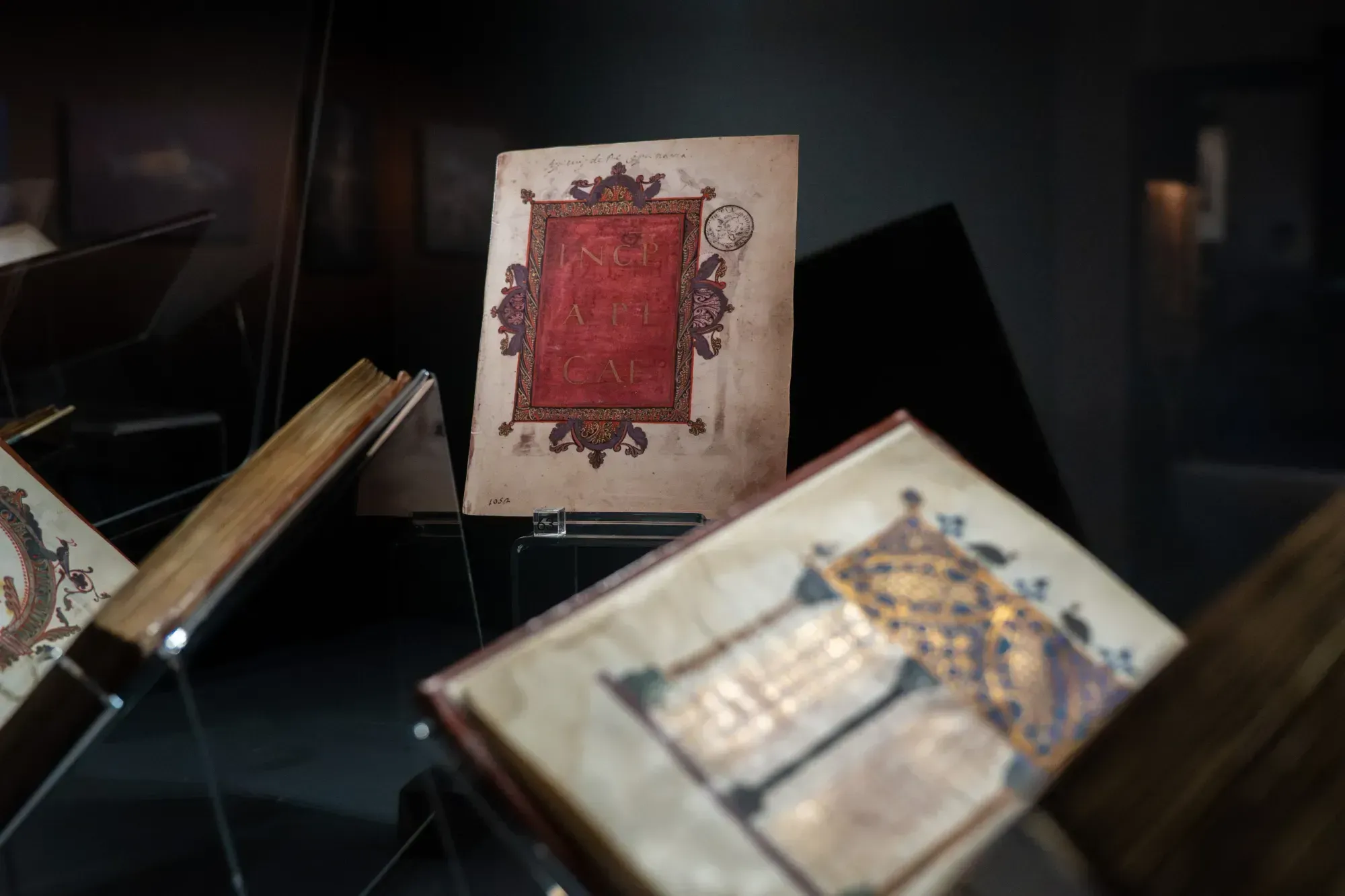
Around it, the curators have pulled manuscripts, printed books, engravings and coins from the collections. A survey of seafood cookery spans Europe, China, South America, Russia and Japan, and includes one of the two oldest surviving manuscripts of Apicius's De re coquinaria and a rare Chinese cookbook held in the Vatican since the mid-1500s.
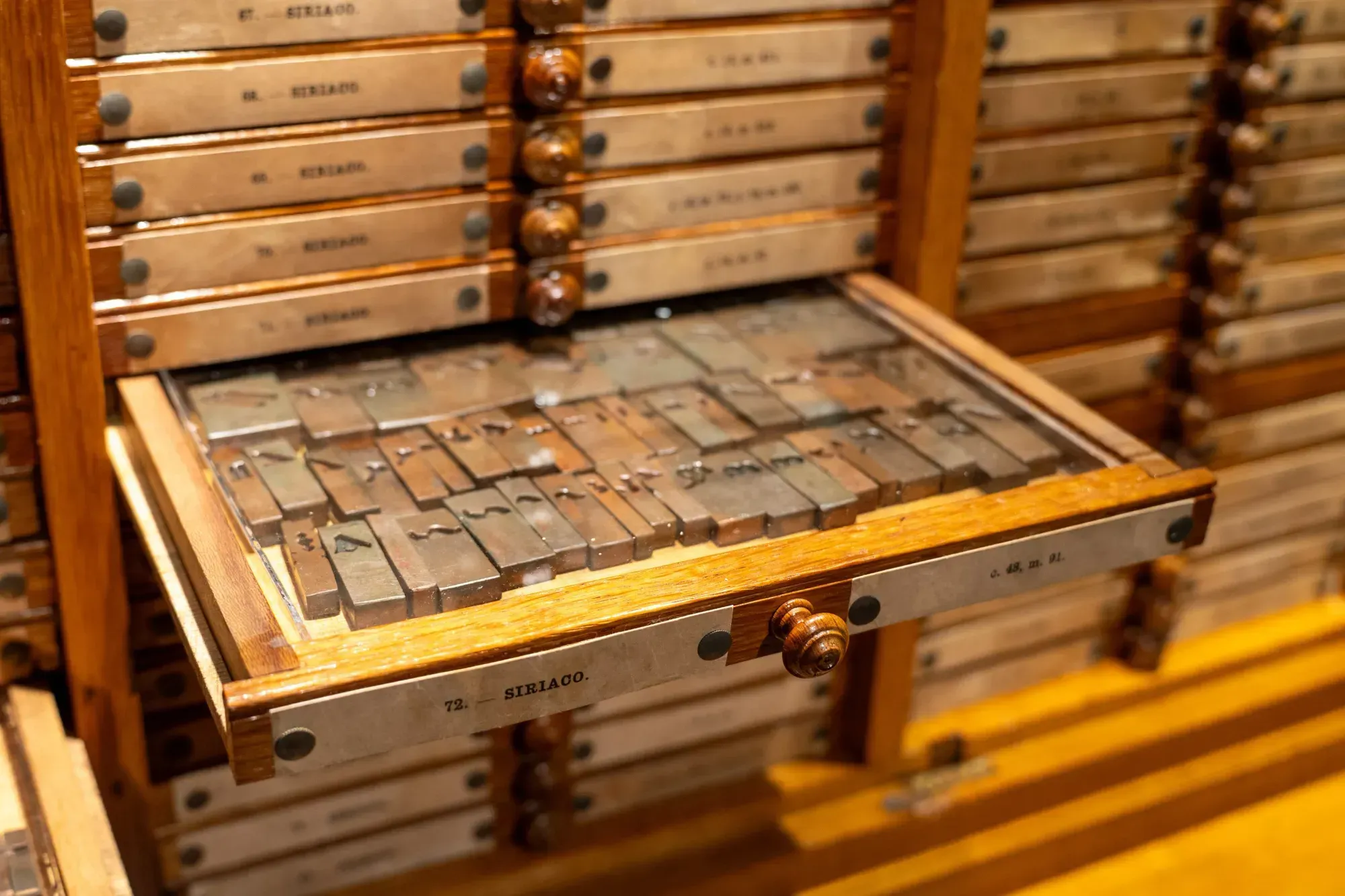
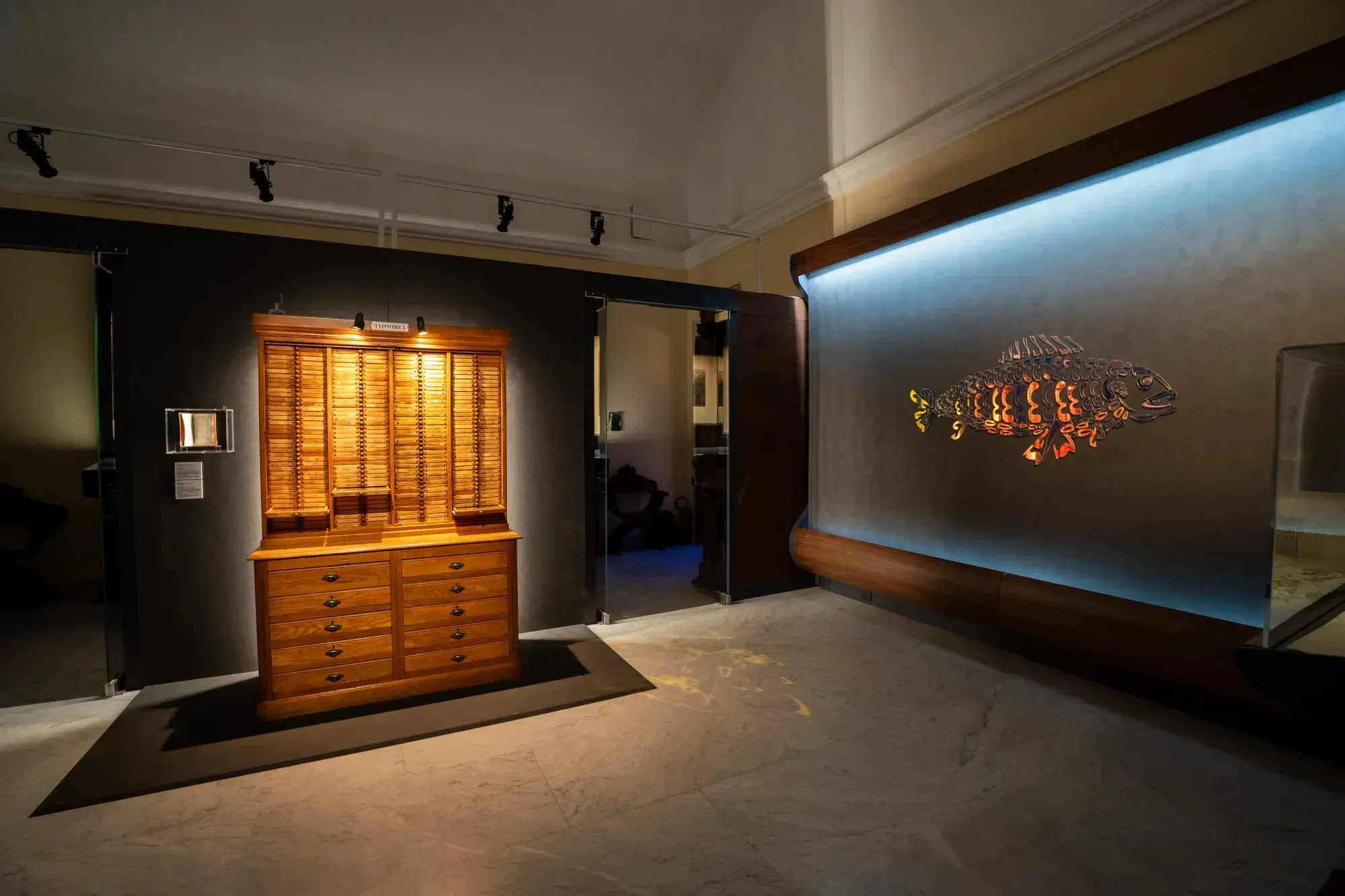
The Typotheca Vaticana cabinet, an original A. Fouchier type cabinet recently returned to the library with its contents, is shown to the public for the first time. Its 160 upper drawers once held the copper matrices used to cast lead type for the many alphabets the Vatican Press printed over the centuries.
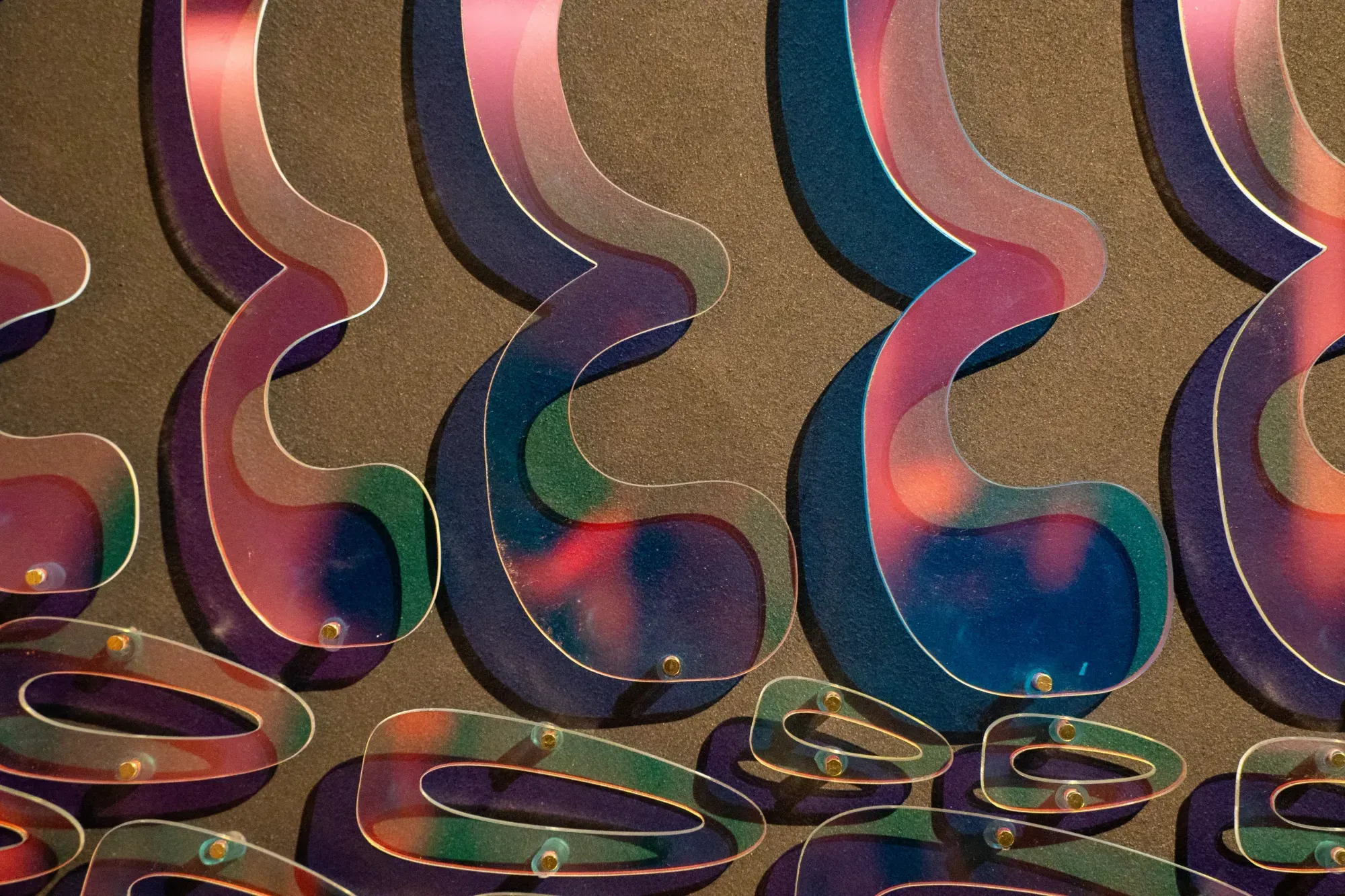
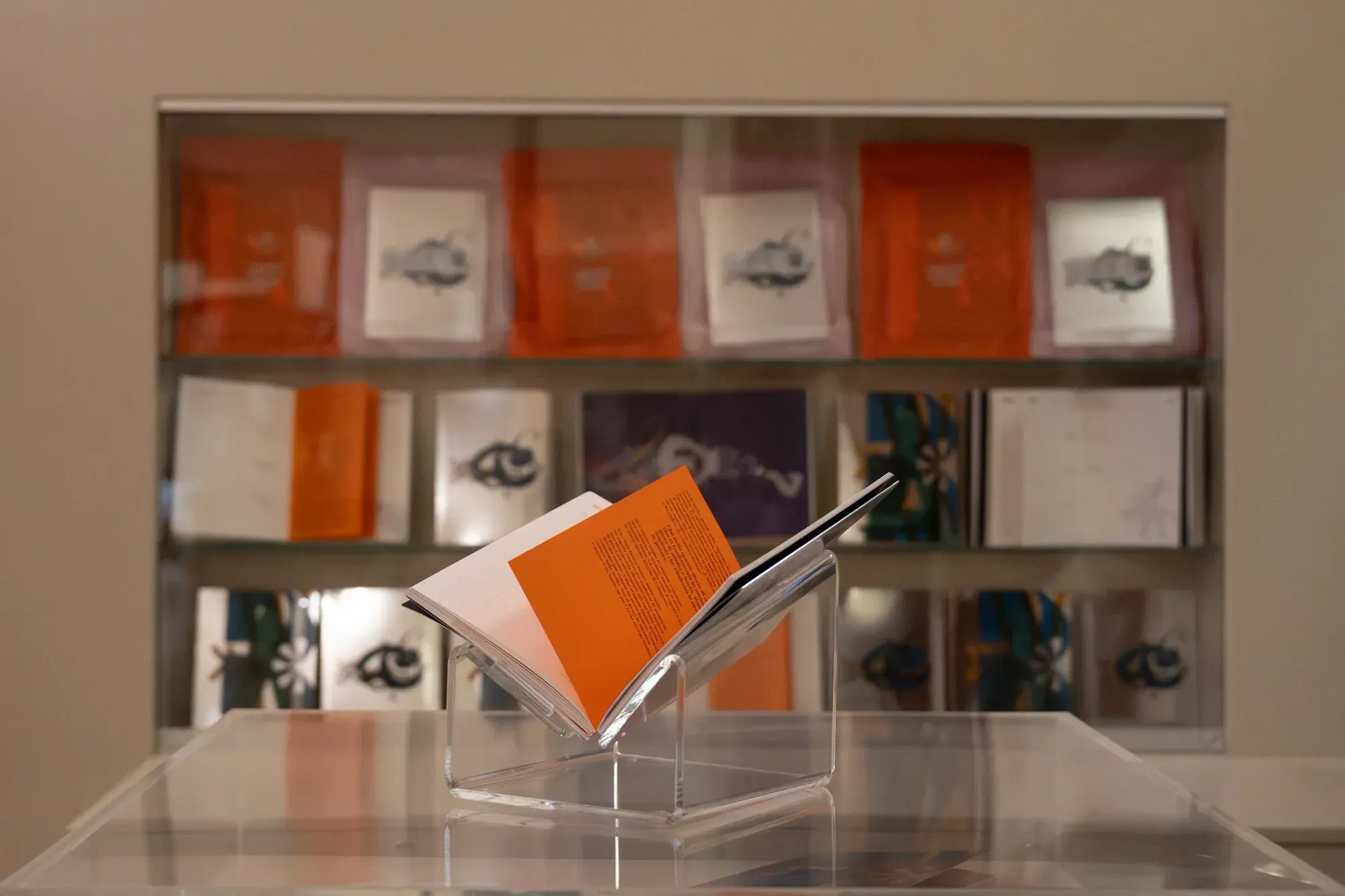
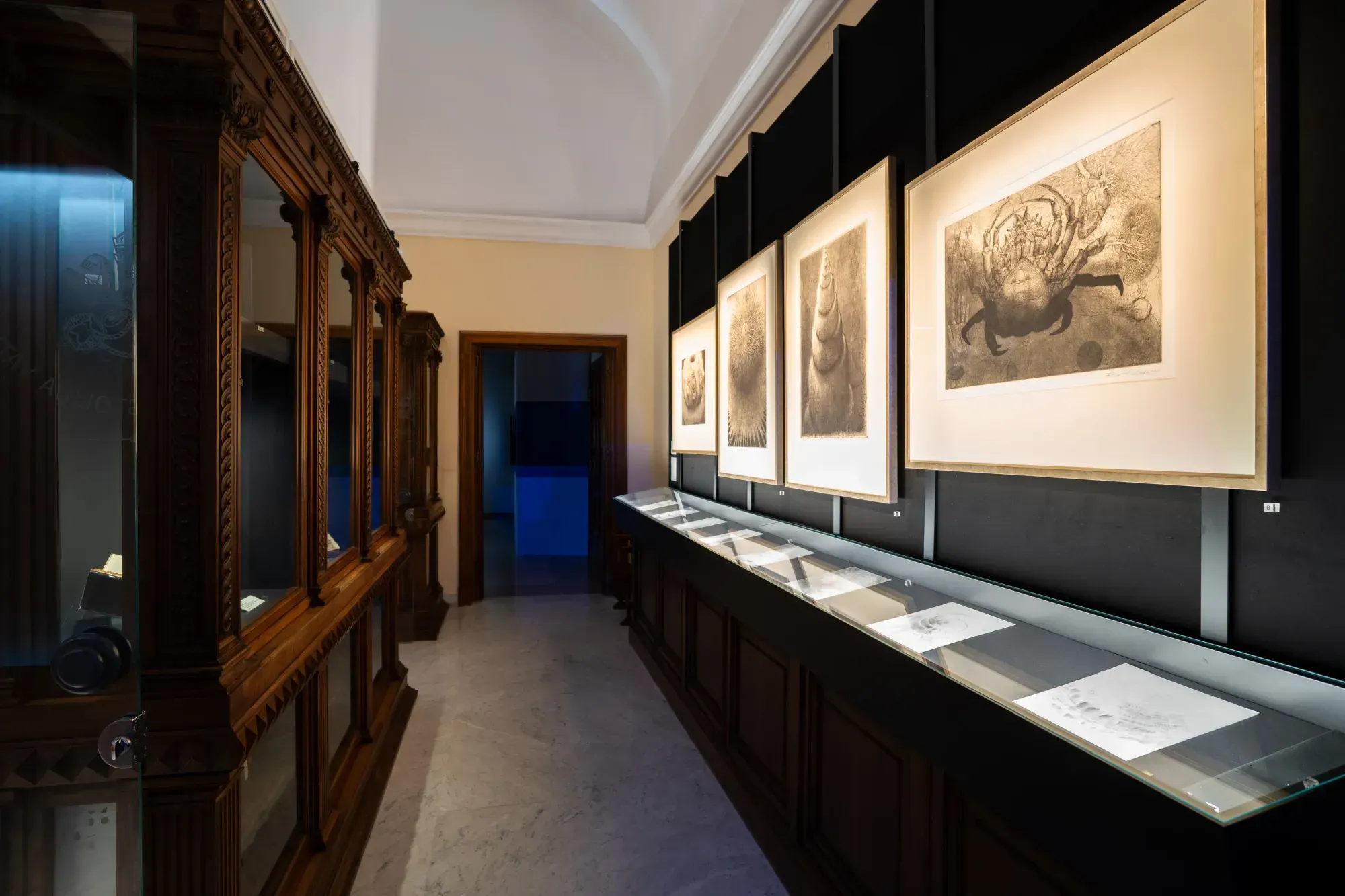
Two other contemporary figures work alongside JR. Typographer Bill Moran shows 14 pieces from his Letterfishes series, marine creatures assembled entirely from movable type, numerals and punctuation, made with his family's printing equipment and vintage wood type. Chef Fulvio Pierangelini contributes six short stories written for the library's official 2027 agenda, his own readings of the fish recipes in a book the library has kept for centuries.
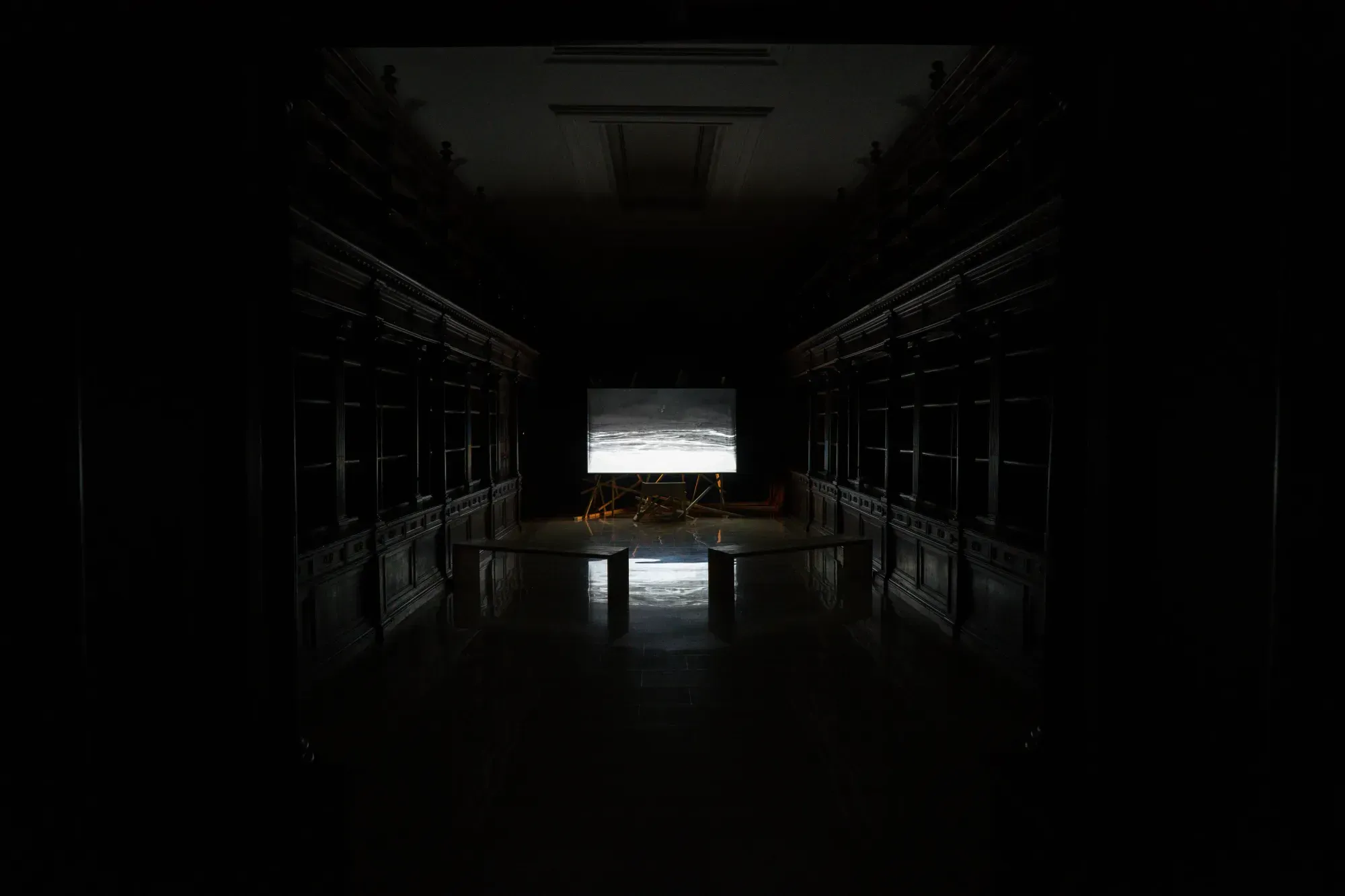
At the top of the grand staircase, enlarged archival photographs mark the 60th anniversary of the Arno flood of November 4, 1966, which devastated the collections of the National Central Library of Florence. The images come from an album presented to Pope Paul VI. Near the end, a section on the library's Conservation and Restoration Laboratory shows water from the other side: the main cause of physical decay, and also an essential tool for restoring paper and parchment. The route culminates in the Barberini Hall, darkened for quiet contemplation, where JR's UNDAE plays a black-and-white wave on a single screen between the wooden bookcases.
The exhibition is curated by Don Giacomo Cardinali, Simona De Crescenzo, Francesca Giannetto and Delio Proverbio, with Fondazione Roma as institutional partner and support from Intesa Sanpaolo.
Visiting
AQVA runs from September 25, 2026 to May 14, 2027 at the Vatican Apostolic Library, entered from the Cortile del Belvedere. It is open to the public on Saturdays from 10am to 8pm on a set schedule. Tickets are booked through the exhibition's official site, catastrofeemeraviglia.it.