The Largest Akari Noguchi Ever Made Is On View in New York for the Lamp's 75th Anniversary
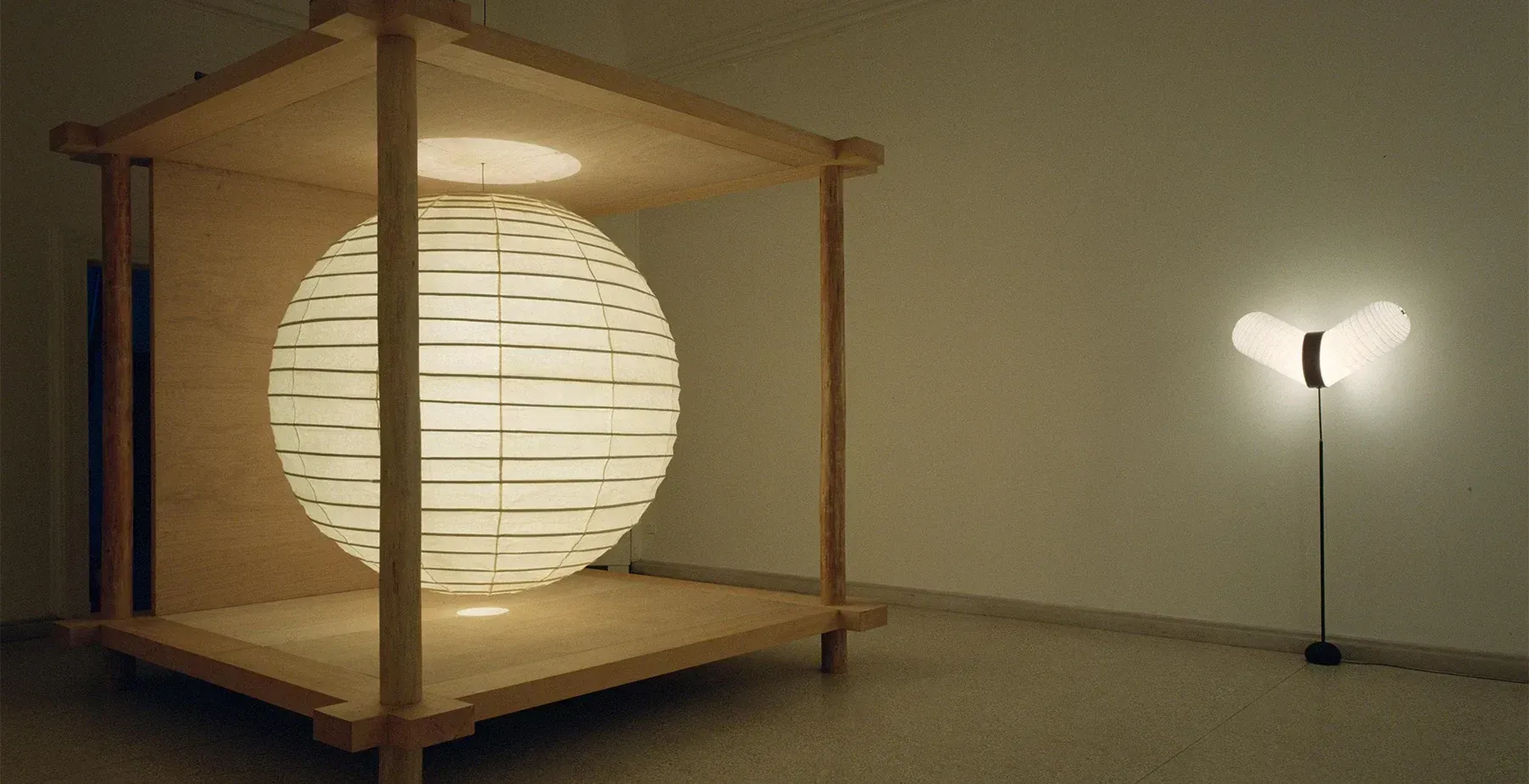
The 200D, the largest Akari Isamu Noguchi ever produced, is on view in Long Island City, Queens, inside a pine enclosure designed for his 1986 Venice Biennale presentation. It is part of No Ordinary Light: Akari at 75, which marks 75 years since Noguchi made his first paper and bamboo light sculptures and runs at The Noguchi Museum through September 5, 2027.
Organized by curators Kate Wiener and Matthew Kirsch, the show places Akari beside Noguchi's sculptures in stone, metal and clay, in settings that range from domestic interiors to monumental installations. It opens with the lamps' first appearance in the US, at a private tea ceremony Charles and Ray Eames hosted in 1951 at their home, Case Study House No. 8 in Pacific Palisades, California. An archival display of his sketchbooks shows how he designed new lantern shapes.
Gifu, 1951
Noguchi first visited Gifu, Japan, in 1951, where he watched a night of cormorant fishing on the Nagara River lit by chochin, handmade lanterns of mulberry bark paper and bamboo. Production had dwindled by mid-century, and the city's mayor invited Noguchi to help revive it. He kept the lanterns' handmade collapsible structure, added sculptural shapes, electric bulbs and wire bases, and named them Akari, the Japanese word for light, which to him meant both illumination and weightlessness. "Akari is no ordinary light," Noguchi said, and he described each model as a luminous sculpture.
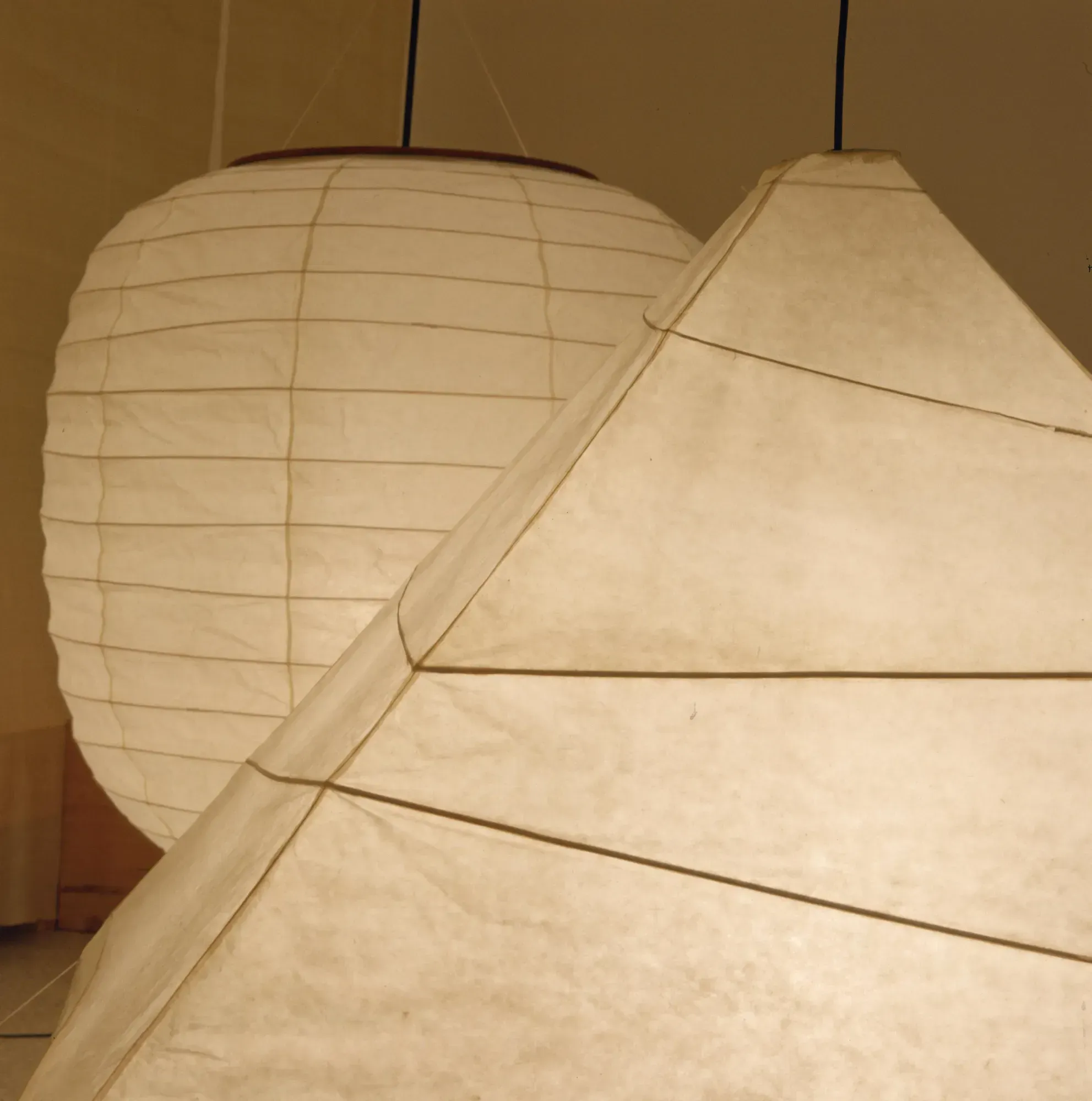
Over the next three decades he produced more than 200 distinct models, and he kept developing new designs until his death in 1988. Ozeki & Co., a family company founded in Gifu in 1891, still makes them from washi paper over bamboo ribbing. No other project in his more than six decades of work lasted as long. Late in his career, Noguchi said Akari was "the one thing that I've done out of pure love."
Venice, 1986
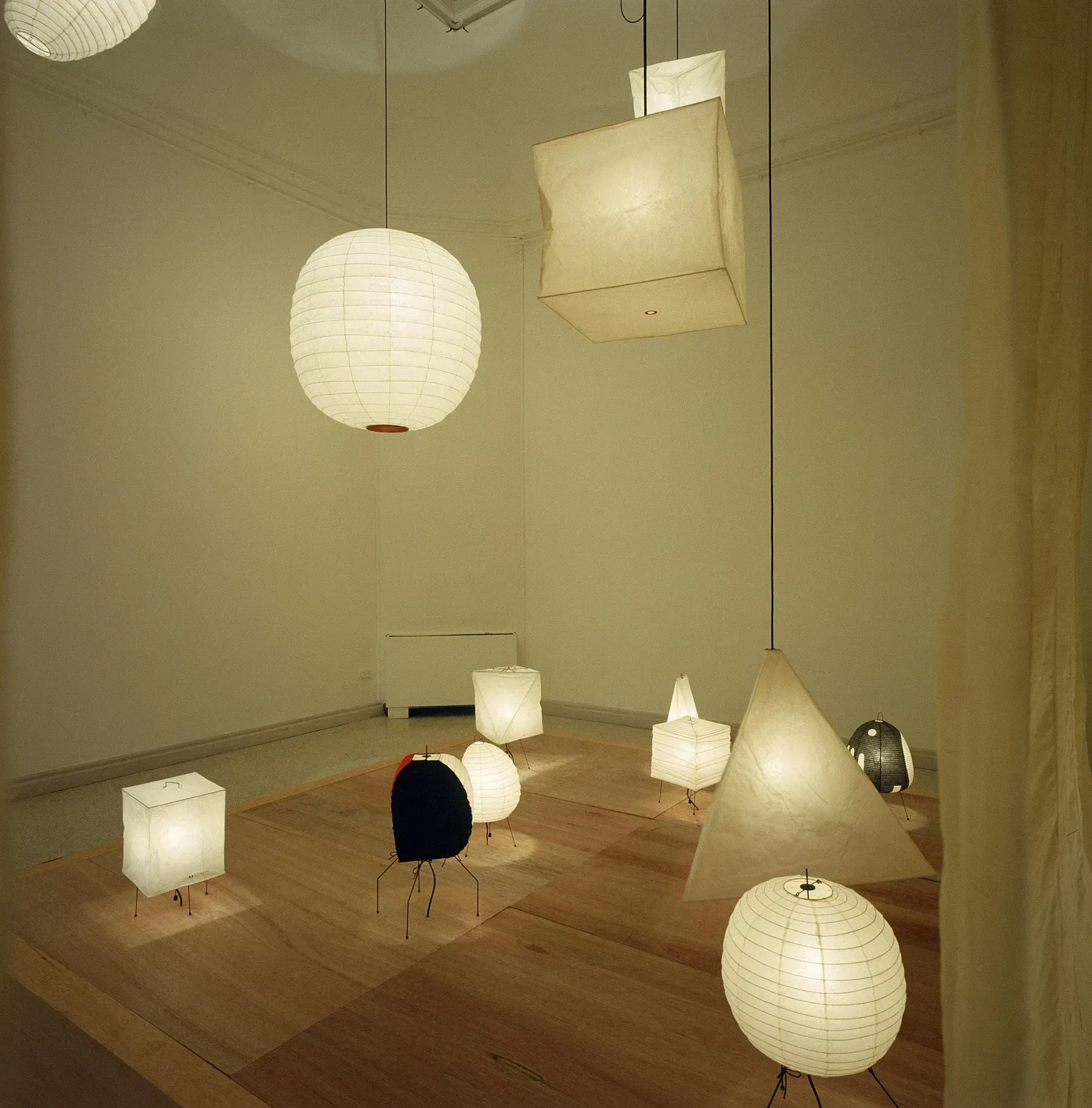
The show closes by revisiting Isamu Noguchi: What is Sculpture?, his presentation at the 1986 Venice Biennale, where he was the first solo artist to represent the US. Henry Geldzahler curated it, and Noguchi included Akari despite strong reservations from Geldzahler and other peers that the lamps' commercial associations would draw criticism.
The museum last showed the 200D in Akari: Sculpture by Other Means, from February 2018 to April 2019. This time it is shown alongside other Akari made for Venice from sketches of the previous decade. On the museum's first floor, Light and Stone, a single-gallery archival show on the 1986 Biennale, runs through May 9, 2027.
Visiting
The Noguchi Museum, which Noguchi founded in 1985, is at 9-01 33rd Road at Vernon Boulevard in Long Island City and is open Wednesday to Sunday, 10 am to 5 pm. Admission is $16, and free for everyone on the first Friday of every month.